This year marks the 30th anniversary of Jesse and Céline meeting in Vienna with no phones, no photos, and no future. Richard Linklater's romantic comedy about their intense attention has never looked more attractive.
]]>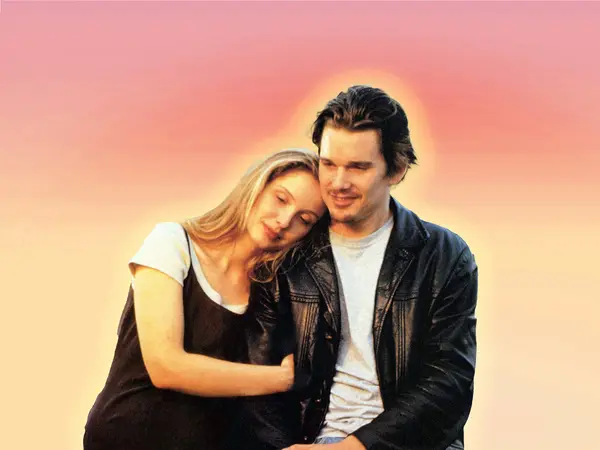
This year marks the 30th anniversary of Jesse and Céline meeting in Vienna with no phones, no photos, and no future. Richard Linklater's romantic comedy about their intense attention has never looked more attractive.
If a charming stranger asked you to get off the train with them in a foreign city, would you? Let’s say this happened in the summer when you’re on holiday, and you’re young and full of wild belief that magical things happen all the time – so why not?
On 16th June 2025, known as ‘Before Sunrise Day’ among fans, it will be 30 years since a charmed encounter just like this took place on a train rolling into Vienna. Before Sunrise is an extreme case of the out-of-time encounter, as Jesse (Ethan Hawke) persuades Céline (Julie Delpy) to get off the train they’re both on, to walk around together until morning before parting ways. No one knows they’re doing this, and because it’s 1995 there are no text updates to friends from the loos, no location pins on social media, and not a single photo of them looking adorable in the vinyl shop or on the ferris wheel. But the most striking thing about watching Before Sunrise today is how intimate it feels to witness these two pay such focused attention to each other, never breaking the flow to document their aventure for their friends or even their future selves.
Starring a Gen X counterculture dreamboat Ethan Hawke in his greasy-haired prime, alongside Julie Deply as an otherworldly and slightly neurotic Parisian, Richard Linklater’s 1995 film has long since become a cult classic, even though it’s ostensibly a film in which nothing really happens. Two 20-somethings walk around Vienna at night, just talking. Maybe that’s the fantasy – to simply have someone’s undivided attention. Even before mobile phones became so ubiquitous that Erykah Badu serenaded her lover with the words “I can make you put your phone down”, having someone’s eyes on you like this would be pretty incredible. Whenever I re-watch this film, I’m so struck by the vanishing beauty of the uninterrupted moment that it makes me want to hurl my phone – and everyone else’s too – into the ocean.
I first saw Before Sunrise in the cinema as a young teenager, before I’d had so much as a first kiss. It was the first time I’d seen a girl and a boy talk like that – it was a formative experience, to put it mildly. I didn’t yet have strong ideas of what I wanted my future to be, but this film made me feel like life would be an adventure, full of exceptional people and enchanting moments, waiting to be experienced on beautiful summer evenings in European cities. My VHS copy got warped with repeat plays. I only watch the film once a year now, but each time I’m pleased to find that not only does it hold up, but there’s a genuine sincerity that never fails to brush away my cynicism. Even now, the hottest part is all that intense talking.
But is that just because Jesse and Céline know they only have one night? So great was their youthful belief in the generosity of the universe, sure to send them endless amazing dates in the future, that they decided not to exchange numbers – they don’t want to spoil their relationship by letting it fizzle out. Usually the obstacle in the “missed connections” film genre is external – at least one party is engaged or married (Lost in Translation, Sleepless in Seattle, Casablanca), there’s some medical issue like a coma or memory loss (Eternal Sunshine of the Spotless Mind, Forever Young), or time travel throws a spanner in the works (The Lake House, The Time Traveler's Wife). The decision to not exchange numbers is hard to watch for anyone who’s been alive in the era of Tinder, or indeed past age 22. But as a cinematic tool it really cranks up the emotional intensity, and as the pre-dawn light fills the screen you can practically feel the agony of the characters, not wanting the encounter to end. They’re desperately savouring every detail.
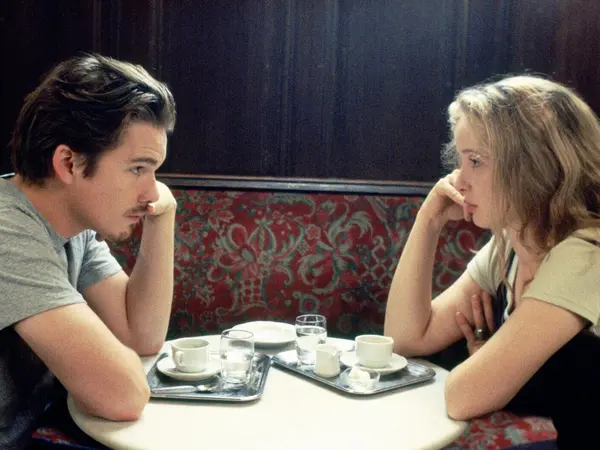
Before Sunrise spawned two sequels, starting with Before Sunset which is set in Paris nine years later – that’s how long it takes Jesse and Céline to find each other again. (While the fact that we can now dig up the life story of a Hinge match in less than ten minutes with just a first name and a profession is pretty invasive, it would admittedly have been useful here.) Completing the trilogy is Before Midnight, set in Greece a further nine years later, which is the married-with-kids chapter where the fairytale comes back down to earth somewhat. But as interesting as it is to watch Jesse and Céline grow and change together, nothing beats the tender optimism of Before Sunrise. That’s before they’ve realised, as Céline observes in Sunset, that “when you're young, you just believe there'll be many people you'll connect with. Later in life, you realise it only happens a few times.”
There’s a moment in Before Sunrise where Jesse tells Céline he’s going to take her picture, but he doesn’t have a camera so he just stops and looks at her, committing her to memory. “I remember that night better than I remember entire years,” he says in Sunset, and we believe him – he paid such close attention.
The message of Before Sunrise is not to manufacture scarcity, nor should you necessarily get off the train in a random city with the next stranger who asks (but if you do, definitely shoot off a quick text to alert someone). Instead, the real thrill of Before Sunrise, and the source of its ageless appeal, is how insanely hot it is when someone gives you their full attention, resisting the urge to text and Google and take photos. It’s a reminder to leave my phone in my bag and just focus on the person I’m with – even if I’m going to see them again tomorrow – because doing so really changes the atmosphere, leaving space for new connections to form.
I once spent a week in Berlin with someone who I’d known for a few short months, after meeting on a dating app. We took a chance on a full week’s holiday, walking around in the light European summer nights as it slowly dawned on us that this thing was something else – luckily, we were both old enough to realise. People knew where we were, but we were far from home and focused only on each other. My memories are a potent mix of sunshine and graffiti and sweat, interrupted by an agonising A&E visit after I got a UTI from all the fun (worth it). It’s now nine years later and we live together, and a lot has happened since then. But I remember that week better than I remember entire years.
On Truth & Movies this week, we discuss the live action remake How To Train Your Dragon, and Daisy-May Hudson’s powerful fictional feature debut, Lollipop. Finally, for film club, we turn our attention to Ken Loach’s Ladybird Ladybird.
]]>
On Truth & Movies this week, we discuss the live action remake How To Train Your Dragon, and Daisy-May Hudson’s powerful fictional feature debut, Lollipop. Finally, for film club, we turn our attention to Ken Loach’s Ladybird Ladybird.
Joining host Leila Latif are Laura Venning and Yasmine Kandil.
Truth & Movies is the podcast from the film experts at Little White Lies, where along with selected colleagues and friends, they discuss the latest movie releases. Truth & Movies has all your film needs covered, reviewing the latest releases big and small, talking to some of the most exciting filmmakers, keeping you across important industry news, and reassessing great films from days gone by with the Truth & Movies Film Club.
Email: truthandmovies@tcolondon.com
BlueSky and Instagram: @LWLies
Produced by TCO
A gang of small-town drug dealing gym rats are set upon by a murderous stranger in this satisfying Welsh genre piece.
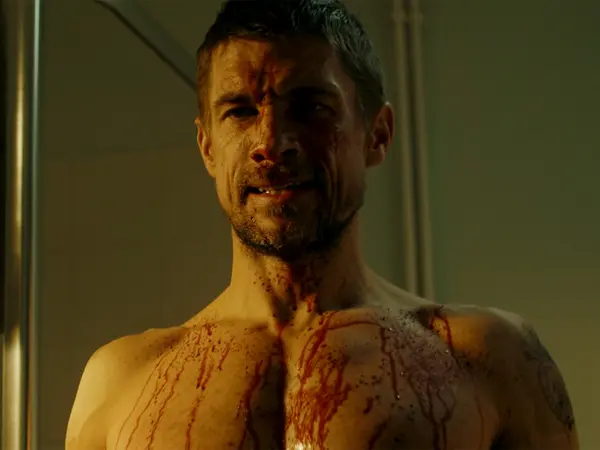
A gang of small-town drug dealing gym rats are set upon by a murderous stranger in this satisfying Welsh genre piece.
There are worse films to be obsessed with than Shane Meadows‘ Dead Man’s Shoes, and that film’s blood-flecked paw prints are all over writer/director Tony Burke’s witty, Welsh revenge yarn, Protein. The film cheekily adopts its title from the supposed nutritional qualities of human flesh among the more desperate echelons of the body building community, as our hooded, monosyllabic protagonist, Sion (Craig Russell), is in town to take out some tinpot trash and then feast on their freshly carved entrails.
On the sidelines is kindly gym worker Katrina (Kezia Burrows) who attempts to befriend the shell-shocked Sion, and while he very much remains a closed book emotionally, he does offer her a secret assist by butchering a chauvinist local lout who’s giving her grief. In fact, the horror/slasher element of the film is perhaps the least interesting thing about it, as Burke builds up an ensemble of characters who are all more than mere functional bit-players serving a hackneyed plot.
For example, two drug-dealing goons who work for a smarmy local kingpin are secret lovers who have been forced to conceal their relationship due to the air of unreconstructed machismo that pervades their grubby little community. Similarly, the two cops investigating this rash of disappearances come freighted with their own traumas, and an initially frosty relationship eventually thaws into something that’s rather toughing for a film that, in the main, focuses on violence, bigotry, exploitation, humiliation and which household tools are best for administering pain to your fellow man.
The link to Dead Man’s Shoes doesn’t begin and end with its angular loner with zero moral scruples when it comes to offing his targets. Burke injects a much-needed hit of parochial humour into proceedings, exemplified by Steve Meo’s hilarious, hapless Kevin, a wannabe wideboy who loves nothing more than to play dress-up Travis Bickle in his bedroom and have yelled arguments with his (always off-camera) mother.
There’re no wheels being reinvented here in terms of tone or narrative, but it is a very solid genre runaround that is elevated by its occasional and welcome lapses into soulful introversion. It’s highly satisfying to see a filmmaker transition from a career making music videos and shorts to a work which expends time and effort to flesh-out all of its characters – even if that flesh might be eventually eaten by its cannibalistically-inclined antihero.
The ambiguous and sometimes tragic nature of motherhood is the subject of writer/director Daisy-May Hudson’s forceful debut, Lollipop.
]]>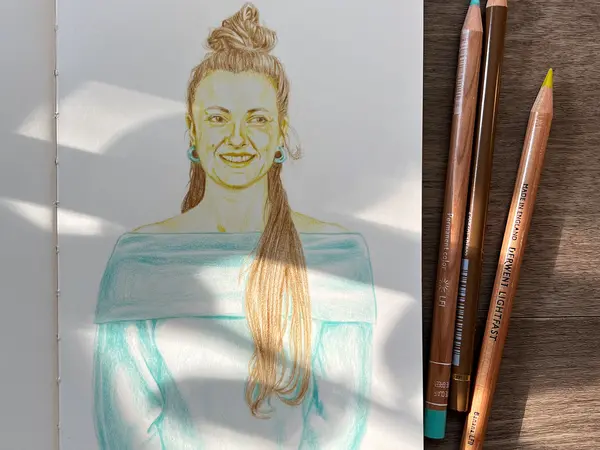
The ambiguous and sometimes tragic nature of motherhood is the subject of writer/director Daisy-May Hudson’s forceful debut, Lollipop.
In 2013 Daisy-May Hudson was studying for a degree in English and Drama in Manchester. At the same time, her family back in Essex were being evicted from their home, outpriced on the rental market and forced to go through the social housing system. Hudson rushed home, picked up a camera and decided to film their experience which resulted in her acclaimed documentary Half Way. For her first fictional feature film, Lollipop, Hudson draws from her real-life experience and the women who have inspired her along the way.
LWLies: Your film has many thematic layers to it and one of those is a beautiful tribute to the complexities of motherhood. Can you talk me through the many mother characters we meet and how you decided to portray them in the film?
Hudson: Molly was inspired by these women I met outside the Houses of Parliament who were protesting to have their children back after they had been removed by social services. Also another mother who became an advisor to the film who also had her children removed. They were these Lioness women who were so determined by that unbreakable bond between a mother and child. I’m also really interested in generational trauma and the mirroring of mother and daughter relationships. Molly is so determined to be a cycle breaker but she ends up falling into some of the same cycles that her mum went through. She parents her mother just like her daughter parents her. And of course, Amina, they just have this magical connection that happens on screen but also off screen when Idil and Posy get together. They have this ability to see each other beyond their roles as mothers.
I loved Amina and Molly’s ride or die friendship. In your writing of female friendship what were the most important things for you to depict?
I think there’s a magical thing that happens when we allow ourselves to be seen and it takes courageous vulnerability. When we do it there’s this depth of connection where we can meet with someone that is transformational. That’s what happens with Molly and Amina. They start by hiding and fear of showing the darkest parts of ourselves. Ultimately, they show those parts, and they fall in deeper love, a deeper sisterhood. The thing I’ve always felt about Molly is that she had always been in survival mode and Amina provides a safe space where she can put down her guard. She can lean back into love. That softens her and enables her to start loving herself and making new choices and then showing up to life in a different way. Amina really feels this deep gratitude for Molly because she actually feels seen as a woman beyond all expectations. That was so healing for Amina, but also for Idil in real life.
You’ve been very careful not to paint any of the people we meet in your film as villains. The social housing system was something you and your family experienced first-hand so can you talk to me about the things you drew from real life?
The thing we came up against as a family was the limitations of the rules. You may be speaking to a human being but they are working within this framework. When I was researching for the script, I was meeting really genuine people who went into the job because they cared and wanted to make a difference. Then they get limited by this red tape… particularly this dehumanising language that they are trained to say. I remember when we were homeless, we kept being told, ‘in due course.’ It’s this purgatory basically. It was really important to me that there was no baddie or goodie because I don’t think people go into a job to become bad guys. Also I think we’re just one choice away from being on the other side of the table. When we were casting I wanted to find people that looked like Molly, or could be Molly’s friend or auntie… that’s the thing about working class communities you can be on any side of the table just trying to do your best and do right by your family.
What are the guiding factors for the type of cinema you want to make?
I want to make films that crack people’s hearts open in the most beautiful way. For me humanity is about experiencing this full spectrum of emotion. That can be the deepest grief but the highest heights of joy. I think that’s what you experience in Lollipop.
Through its visionary cinematography and costume design, Federico Fellini’s 1963 film masterfully blurs the lines between memory, reality and fantasy.
]]>
Through its visionary cinematography and costume design, Federico Fellini’s 1963 film masterfully blurs the lines between memory, reality and fantasy.
This feature is the first in our summer series, La Dolce Vita: A Celebration of Italian Screen Style, in partnership with Disaronno.
Asked to describe the anarchic ‘plot’ of what would turn out to be one of his greatest cinematic achievements – a towering, madcap, melancholy exploration of artistic endeavour, male ego and personal failing – writer/director Federico Fellini settled on a rather ambitious statement. He sought to depict, he said, the three different planes “on which our minds live: the past, the present, and the conditional – the realm of fantasy.”
You might say that when it comes to the costuming of these impish, dreamlike figures, fantasy is as much a factor as is any impetus toward realism. They are symbolic as much as they are corporeal, with protagonist Guido Anselmi (played by the dashing Marcello Mastroianni) an autobiographical stand-in for Fellini himself. Piero Gherardi was the man for the job: the costumer and set designer would become a second-time Academy Award winner for 8½ off the back of his 1960 win for La Dolce Vita.
For the insouciant elegance of Guido, a trim black suit is the uniform of choice. Guido dons Neapolitan-style tailoring in the form of this silk suit – some say it’s Brioni – along with a white cotton shirt, black tie and black-frame glasses. His suit is less angular and more rounded around the shoulders than traditional 1960s tailoring – not to mention paired with penny loafers to suggest a rather more bohemian, unconventional side to his character’s supposed professionalism. You can also see it in the character’s unusual choice of headwear – a rather incongruous, old-fashioned hat – which is remarked upon by other characters in the film.
Meanwhile, in contrast to the rather tidy black-clad Mastrioanni, the women of the film are peacocks, dressed in various degrees of surrealist adornment. Guido remains both tormented by and in thrall to the women of the film – Anouk Aimee is chic and miserable as Luisa, his long-suffering wife, disguising her malaise behind black wraparound sunglasses.
Guido’s mistress, Carla (Sandra Milo), wears only negligee, ostentatious white furs and heavy makeup – vulgarity writ large. But Claudia Cardinale plays an actress (who shares her first name) whom Guido casts as his ‘Ideal Woman’. She’s enigmatic and carefree, a beguiling and unknowable figure who can only exist in fantasy. “You’ll be dressed in white with your hair long, just the way you wear it,” Guido tells her, notably mentioning clothing.
But we never actually see this vision materialise; instead, Claudia is black-clad in their nocturnal foray through Rome, far from the innocent pastoral figure he seems to be idealising her as for his screen role. Her LBD drips with matching black feathers – not the only bird-like echo in the film, and reflecting the more stark reality: less dove, more raven. Indeed, the hatwear worn by women throughout the film is strikingly avian – no doubt a reflection of the symbolic importance of flying and birds to traditional Jungian dream interpretation.
It is ultimately Cardinale’s style which has the greatest import for 8½ because she is a figure of such projection and fantasy, the muse to an artist desperate for inspiration and a man who is spiritually and sexually conflicted. Failing to fall into the Madonna-mistress dichotomy, the playfulness of her clothing seeming to be either entirely in black or white feels ironic. There’s no objectivity in the way she is seen by Guido. And it’s that subjectivity which is the guiding principle of Fellini’s world of dreams.
To find out more about Disaronno’s 500-year anniversary* celebrations, visit disaronno.com
*1525: The legend of Disaronno begins.
Dreamworks’ first foray into the world of live-action remakes is fairly unremarkable despite occasional sparks of magic.
]]>
Dreamworks’ first foray into the world of live-action remakes is fairly unremarkable despite occasional sparks of magic.
Live-action remakes have come to dominate the kickoff of the summer movie season. Dean DeBlois and Chris Sanders, the creative duo behind early 2000s animated hits Lilo & Stitch and How to Train Your Dragon, have gone their separate ways, each now attempting to win the hearts of longtime fans and a new generation of moviegoers through live-action adaptations of their beloved animated classics. While Sanders has stepped back into the recording booth to reprise the voice of his mischievous alien creation, Stitch, DeBlois takes the reins as director of DreamWorks’ first ever live-action remake, steering the project in its entirety.
A live-action remake carries far more to answer for than an original film or even a sequel. In the case of How to Train Your Dragon, the adaptation largely follows its source material beat for beat, raising the question: what does the use of real actors and CGI bring to the table that animation does not and can that added tangibility truly offer an experience that surpasses the magic the original still holds to this day?
Like everyone else in the Viking community on the Isle of Berk, Hiccup (Mason Thames) longs to prove himself by slaying the dragons that terrorize his village, setting rogue fires and making off with their livestock. But when he finally comes face-to-face with a Night Fury, one of the most feared and elusive breeds of dragon, the moment that should define his bravery once and for all reveals something deeper. Blade in hand, he falters, not out of fear, but out of empathy, and makes a choice that sets him on a path no one in his tribe could understand.
Unlike his peers, such as Astrid (Nico Parker) – one of the tribe’s most promising young members – Hiccup struggles to meet the expectations of his father, Stoick, the tribe’s formidable chief. Time and again, Stoick is frustrated and embarrassed by his son's perceived lack of toughness. But what Stoick doesn’t realize is that Hiccup’s empathy and inventive mind may be exactly what their community needs to survive.
Slowly but surely, Hiccup begins to train and heal the Night Fury he names Toothless, inspired by the dragon’s retractable teeth and endearing, gummy expression. As fans of the original will remember, Toothless’s behavior was famously modeled after a cat, and this adaptation preserves that playful, curious energy, emphasizing the timeless dynamic of a boy and his pet. The bond that forms between Hiccup and Toothless remains the film’s undeniable heart, just as it was in the animated classic.

What truly sets this live-action adaptation apart from its animated predecessor is the heightened sense of danger, driven not by changes to the story but by the dragons’ new designs. Rendered with CGI, the creatures feel visceral and imposing, their scale and textures giving them a physical presence that animation could only suggest. As Hiccup, Astrid, and the rest of the teen trainees come of age and step into the perilous task of dragon training, the stakes feel sharper. The threat of harm is real, and in the character’s interactions with the dragons is a more intense sense of fear and awe.
Mason Thames proves himself a strong choice to take up the mantle of Hiccup, capturing the character’s essence both physically and emotionally. He embodies Hiccup’s awkward charm, intelligence, and quiet empathy, though notably without the character’s iconic nasal voice (provided by Jay Baruchel in the animated films). Nico Parker delivers a faithful portrayal of Astrid, serving as a fierce and grounded foil to Hiccup, and together form a budding romantic tension that feels authentic. Notably, Gerard Butler effortlessly reprises the role of Stoick, bringing a natural authority to the character he has already shaped for years.
On the whole, the live-action How to Train Your Dragon plays it extremely safe. It’s perfectly passable, but only because it closely mirrors a narrative that’s already well-loved. Rather than evolve or reimagine, it delivers a near carbon copy of the original, and in doing so, loses some of the whimsical charm that made the animated version so special. What it does offer is visual richness in the form of stunning, tactile landscapes and impressively rendered CGI that give the world a more grounded and cinematic feel. Still, there’s little here that distinguishes it enough to become the definitive version. For most audiences, it’s hard to imagine this remake replacing or even rivaling the original.
In collaboration with the Queer East Film Festival, this year's Emerging Critics cohort offer their responses to the film programme.
]]>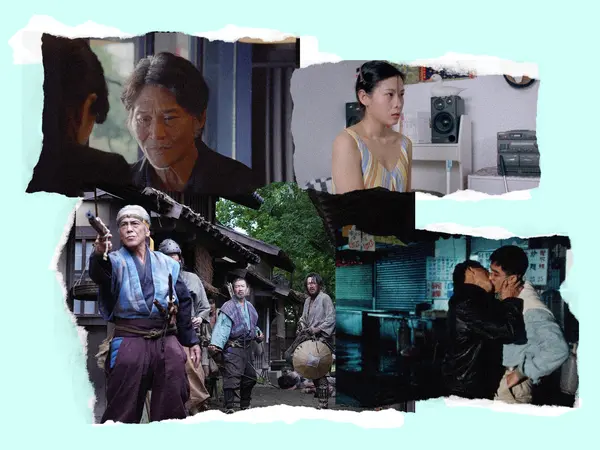
In collaboration with the Queer East Film Festival, this year's Emerging Critics cohort offer their responses to the film programme.
This is the first of three pieces published in collaboration with Queer East Film Festival, whose Emerging Critics project brought together six writers for a programme of mentorship throughout the festival.
Qinghan Chen
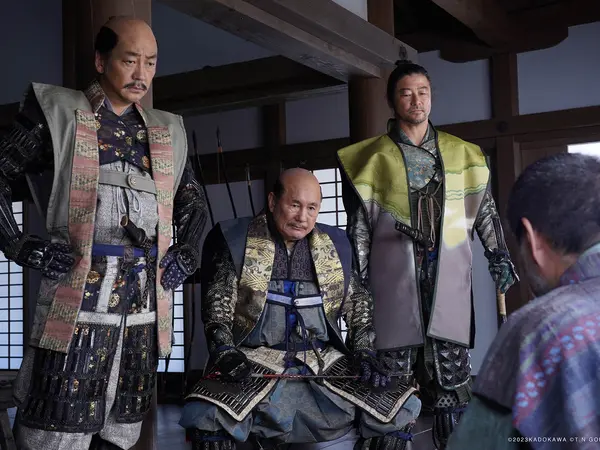
This year, Queer East presents a more defiant stance to the public. I felt it within the first three minutes of Takeshi Kitano’s Kubi, the festival’s opening film. When a headless corpse suddenly appeared on screen, I covered my eyes and nearly screamed out loud. In the next two hours, heads were severed with the flash of blades; homoerotic scenes were folded into the political intrigue. I closed my eyes more than once, retreating into the darkness, anchoring myself emotionally. When a disfigured head was kicked off-screen, the film ended. I fully understood what curator Yi Wang had joked about in his opening introduction: if you feel uncomfortable, please close your eyes.
In the cinema, I never know whether each passing moment will shock or stun me. Moving images pour down like a waterfall, an overused metaphor for queer desire, yet they are still potent enough to shatter my boundaries. But I can choose to close my eyes. With this act, my attention shifts away from the images on screen and turns inward, toward my own body. As a result, I become more aware of my existence. It feels like my eyes are building a temporary shelter, guarding my perception and granting me respite. When I am ready, I can open my eyes and jump back into that fleeting in-between space between myself and the screen. Perhaps I could discover new interactions between films and space.
I experienced a perfect accident after traveling an hour and a half to reach the ESEA Community Centre, where the short film programme Counter Archives was held. The screening room is a narrow space with a skylight, loosely covered by a piece of black fabric. Due to British summer time, the lingering daylight disrupted the images on the screen, making them blurry and erratic. Yet this imperfection created a unique feeling for me.
Six short films awakened buried history through body performance and experimental images. The programme began with artist Cok Sawitri chanting a lament for the missing dead in Indonesia’s 1965-66 genocide, then shifted to the strobe effects of Hong Kong’s street protests. As night had fully fallen outside, the final film, Kitty Yeung’s Private View: Joshua Serafin, appeared on the screen, in which a Filipino artist used their non-binary body to dance into a black swamp, resisting the imperialist ideologies that still exist within post-colonial societies. It was unlike anything I had experienced in cinema. The sequence of the films, together with the slowly fading daylight, gradually restructured the space: public became private, outside turned inward. The daylight eventually became a specific material invading the erased history.
Elsewhere in the festival programme, queer characters also navigate different spaces, seeking shelter for their hidden desire. Jo-Fei Chen’s Where Is My Love? depicts the struggle of gay men in late 1990s Taiwan. In this film, writer Ko (Chih-xing Wen) stands at the crossroads of coming out, hesitating whether to publish his novel about gay love. Here, the interaction between bodies and spaces channels the sorrow that enveloped Taiwan’s queer community at the time. The lonely writer wanders the park at night to meet a mysterious man, later embracing him in the dim bedroom. What impressed me most is their kiss on the street at night, exposed by the harsh light from a lamp post. This moment dissolves the boundary between the public and the private. Finally, the ghost-like lover decides to leave, while the writer chooses to publish his novel and walk out of his room. The place has served as both Ko’s writing corner and a private refuge where the gay couple can freely kiss and embrace. The two men are romantic fugitives and their farewell shows a tragic retreat: they try to flee into a liberating space, but fall back into the noisy public space dominated by heteronormative social expectations.
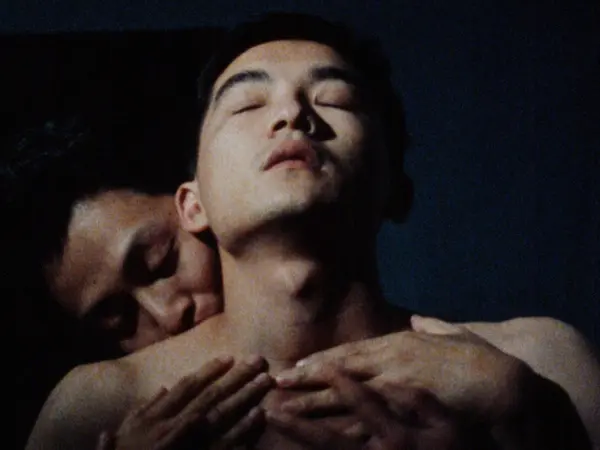
Another contemporary queer film that explores queer spaces is Jun Geng’s Bel Ami. In a snowy northeastern Chinese town, shot in black and white, lesbian couple Ying Liu (Qing Wang) and Bu A (Xuanyu Chen) walk the street with a secret: they want to have a child with the help of gay barber Shangquan Li (Zixing Huang). At the same time, the women remain wary of Shangquan and install a surveillance camera in a wall clock to monitor his behavior. Via this camera, a strange coexistence of public and private space is constructed. On the screen of a laptop, Shangquan is seen suddenly hugged by a female customer. He struggles and feels embarrassed, as he stands in the empty barber shop. Meanwhile, on the other side, the lesbian couple begins to kiss and make love in the bedroom after laughing at Shangquan’s experience. Compared to the awkward barber, the women are the boldest figures in the film. The final scenes bloom into color as they kiss while posing for wedding photos. Compared to the furtive kiss in Where Is My Love?, this audacious gesture of tenderness signals a small victory.
From the flickering rays of the summer sun piercing through the screen to the wandering queer characters, these movements disrupt spatial boundaries and create a new freedom. Queer East reflects this sense of liberation not only through their subversive programming, but also through their use of alternative screening spaces that exist outside of exhibition norms. While I was there, I used to scribble notes in my notebook, trying to capture details that held traces of freedom. As I write this piece now, looking back at those near-indecipherable marks, I can still sense the joy that filled me in that moment.
Lydia Leung
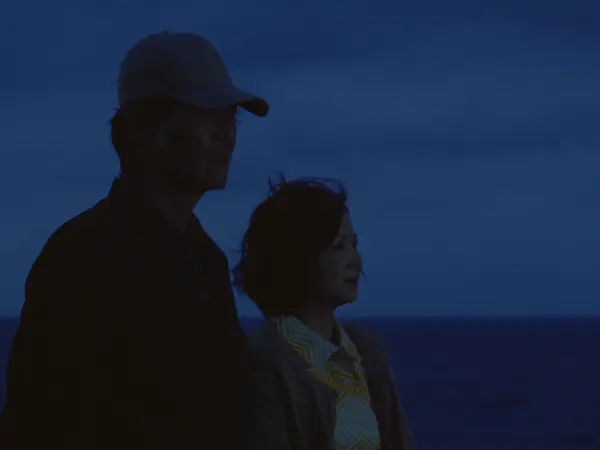
Many of the films selected for this year’s edition of Queer East draw a clear line between private and public space. Home is often thought of as somewhere private, a place where we feel free to express ourselves, whereas in public we must temper our self-expression for fear of being judged by others. This division is clear in Wang Ping-wen and Peng Tzu-hui’s A Journey in Spring, as we watch elderly protagonist Khim-hok (Jason King) and his wife Siu-tuan (Yang Kuei-mei) move around in their country house. They spend their initial few scenes arguing about everything everywhere, from bus stops and shops to the rainy mountain path leading to their home. Only behind old wooden doors do we really see the tenderness they share, as they laugh at stupid pop songs on TV or struggle to open a stuck jar of plum wine. Their house, with its peeling concrete walls and domestic clutter, feels like a window into a disappearing world, in which hazy snapshots of their private lives gently play.
Tragedy strikes, however, when Siu-tuan suddenly passes away, and Khim-hok is forced out into the unfamiliar urban landscape of Taipei. The camera deliberately isolates him in places meant for building community, as he eats alone in a cafe, sits by himself in a dark park, and wanders through an arcade. Clearly uncomfortable in this rapidly modernising world, he creates a facade through which he faces the public, unprepared to deal with the reality of his wife’s death. Home is a safe place for him, but it also enables him to cling to entrenched beliefs. We share in his sorrow, while also understanding that part of his discomfort stems from his inability to accept his estranged son’s queerness. Khim-hok’s traditional views mark him as a remnant of the past, widening the gulf between who he is in private and who he is forced to be in public, especially given the changing attitudes in recent years towards acceptance of queer people in Taiwan.
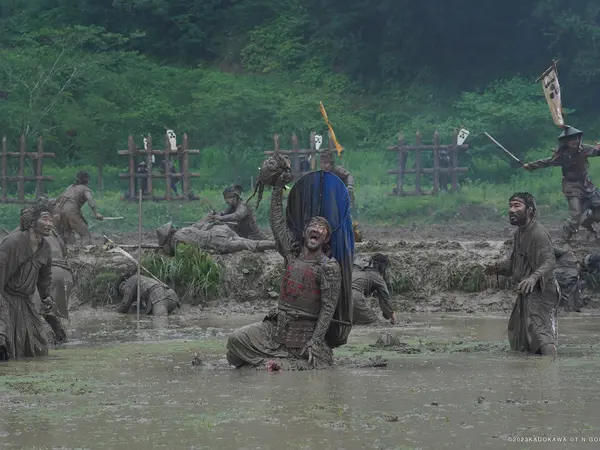
What is more public than the history of a nation? In Kubi, Takeshi Kitano takes a revisionist approach, adding elements of queer desire and jealousy to the battles waged between rival warlords fighting over control of 16th-century Japan. We see the capricious lord of Japan, Oda Nobunaga (Ryo Kase), humiliating his vassal Araki Murashige (Kenichi Endō), forcing him to his knees and feeding him a sweet from the tip of his dagger. Inside his opulent, painting-adorned reception room, and in front of his assembled generals, Nobunaga brutally twists the blade inside Murashige’s closed mouth and kisses him as blood spews from the wound. Kitano leans fully into homoeroticism, suggesting that Murashige’s eventual rebellion against Nobunaga was motivated in part by his private, unrequited feelings of love for him.
Even their own homes are no refuge: Murashige goes into hiding with another general, Akechi Mitsuhide (Hidetoshi Nishijima), with whom he is in another overtly queer relationship. In contrast to his reception space, Mitsuhide’s private quarters are simply furnished, lit only by candlelight. But the translucent shoji walls provide only an illusion of privacy: a brief moment of genuine intimacy between these lovers-turned-enemies-turned-lovers is interrupted by the discovery of a spy hiding in the rafters. Great power comes with the caveat of private affairs becoming public knowledge, and nowhere is safe.
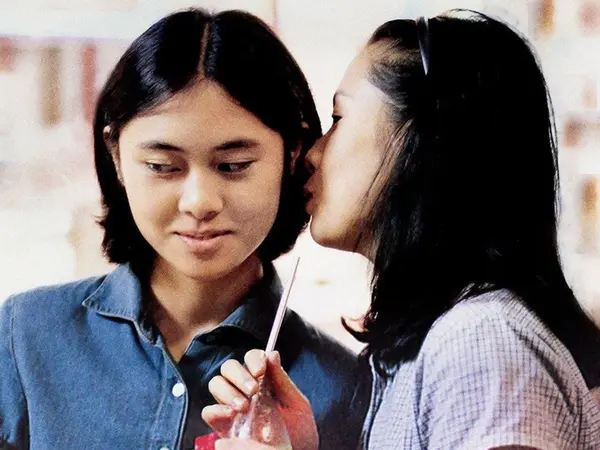
The opposite is true for the unusual setting of a cinema box office featured prominently in Lin Cheng-sheng’s Murmur of Youth, where a friendship between two adolescent girls working there blossoms into romance. Seemingly a claustrophobic, public-facing space, the ticket booth becomes a refuge from their turbulent home lives, its velvet curtains allowing them to hide in plain sight. Both girls are named Mei-li, but come from markedly different socio-economic backgrounds: the cashier job enables them to develop a natural camaraderie that would not otherwise have formed.
In this sense, the cinema occupies a unique, liminal space between the public and the private, a venue accessible to all that still affords its patrons a certain degree of privacy. In Close Up magazine, author Dorothy Richardson describes the cinema as a place of “universal hospitality,” separated from the rest of the world with its own behavioural and social rules. The act of film watching is in itself a private act—no one can see through your eyes, or feel what you feel—but having an audience around you indelibly changes your experience. Strangers found kinship by experiencing films with like-minded people, forming micro-communities that dispersed a mere two hours later. To this end, cinemas even served a purpose as early queer spaces, and it’s only fitting to see that reflected in Murmur of Youth. Sometimes a push out of our comfort zones is what we need, and the perfect place to do that is at the cinema.
Daisy-May Hudson’s impressive fiction debut lays bare the bureaucratic cycles a young woman has to face as she attempts to regain custody of her children.
]]>
Daisy-May Hudson’s impressive fiction debut lays bare the bureaucratic cycles a young woman has to face as she attempts to regain custody of her children.
The past couple of years have seen an influx of women filmmakers bringing timely, working-class stories to the big screen with lived reverence and fresh talent, from Rocks to Scrapper to Bird. The latest addition to this new social realist niche is Lollipop, a gut-punching debut from writer-director Daisy-May Hudson. The film follows Molly (Posy Sterling), a young mother released from jail but placed in a different prison when she tries to reunite with her children, who are being held in foster care. She finds herself in a hellish Catch-22: she can’t gain custody of her children without a roof over her head, but she can’t get a house via state assistance because her kids don’t live with her.
Hudson’s sharp film, inspired by her own experiences, passionately takes aim at the pitfalls and paradoxes of the social care system. After painfully short supervised visits with her children and missing out on key moments of their growth, Molly reaches a breaking point. Hudson isolates Molly when her conscientious smile cracks as, off-screen, the voices of social workers dictate that her children will remain in foster care until she has sorted herself out. Cinematographer Jaime Ackroyd frames Molly through the worker’s legs, like the bars of a cell. Sterling’s restrained performance transforms into something explosive; anger crumbles into devastation as the system repeatedly and harshly fails her. “You need to do more for me,” she begs, only to be met with: “There’s nothing more I can do.”
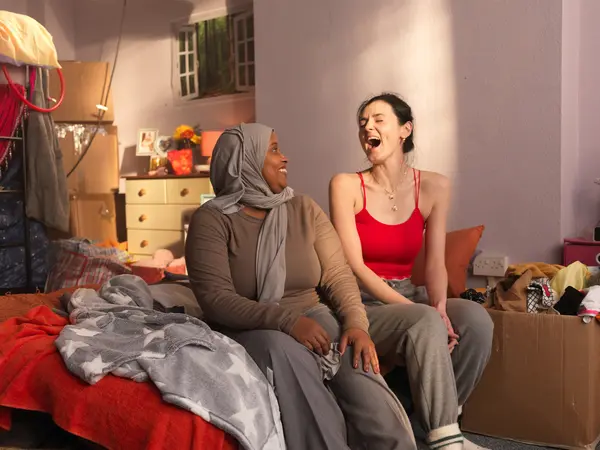
Though some of the film’s most devastating moments occur inside the council office, it’s also where Molly reunites with her greatest supporter, college friend Amina (Idil Ahmed), who is living in a hostel for homeless families. Both women are soldiers fighting with a fierce love for their children. Their sisterhood interrupts the solemn tone as they find pockets of joy amid the devastation, gossiping in bed and dancing to UK garage music.
These moments highlight the distinct absence of men in Lollipop, bar Molly’s 5-year-old son Leo (Luke Howitt). The companionship of other women is the foundation of Molly’s life, underscored by the challenging relationships with the all-women care workers or her overbearing but inattentive mother, Sylvie (TerriAnn Cousins).
The impressive nature of the performers is thanks to casting director Lucy Pardee, who recognised Sterling’s powerhouse leading potential but also discovered the brilliance of Tegan-Mia Stanley Rhoads. The latter, who plays Molly’s 11-year-old daughter Ava, takes centre stage when she tearfully pleads with her mother to obey the rules to avoid getting in more trouble. But Molly is desperate. The mother-daughter back-and-forths are sensitively penned and downright heart-wrenching to witness. It’s a stark reminder of the pain caused by a system that slashes welfare spending and demands a person to jump through hoops with their legs tied. Hudson’s film makes room to acknowledge that this is a family affair. Molly is at the epicentre, but the reverberations impact everyone around her.
To keep celebrating the craft of film, we have to rely on the support of our members. Join Club LWLies today and receive access to a host of benefits.
John Maclean aims for Sergio Leone and Akira Kurosawa, but this 18th century samurai western leaves only a superficial impression.
]]>
John Maclean aims for Sergio Leone and Akira Kurosawa, but this 18th century samurai western leaves only a superficial impression.
An entire decade has slipped by since the release of John Maclean’s debut feature, the frisky meta western Slow West, which, if nothing else, presented a savvy operator hankering to get his mitts dirty in the world of genre. His belated return to writing and directing retains a dash of eccentricity and a fondness for folding up and repurposing convention like it were a little origami bird, but this sadly feels a lot more like a roughedged first film than Slow West did way back when.
Drawing on the macho, high-plains sagas of Sergio Leone as well as Akira Kurosawa’s games of psychological chess, Tornado follows a Japanese father-daughter duo trundling down the muddied byways of rural Scotland in the late 1700s and plying their trade as performers of a samurai-themed puppet show. She, named Tornado (Kōki), is bored with her lot, while he (Takehiro Hira), embraces the hushed nobility of this artisan profession.
It’s not long before a hoard of gurning, grime-covered goons, each tooled-up with their own signature weapon, are chasing her across the landscape, because she pounced on the split-second opportunity to relieve them of two sacks of gold coins, the plunder from a criminal enterprise and en route to be divvyed out among them. The gang is led by Tim Roth’s Sugarman, who is basically Tim Roth were Tim Roth a poetically-inclined 18th century miscreant, who is at loggerheads with his son, Little Sugar (Jack Lowden), who wants nothing more than to get one over on his abusive pop and his pals. Maybe this snafu involving Tornado might be the right time to stick the knife in?
You can see what Maclean is aiming for here, but it feels as if he’s carefully selected a few modest ingredients, and rather than combining them to concoct a subtle, gourmet dish, we have a few strong flavours that don’t really work in concert. The heist/chase mechanics are decent, but it’s all too schematic, and the twists are often stealthy plot devices rather than ways into the drama.
On the atmospherics front, the film fares much better, with Robbie Ryan’s cinematography drawing out an autumnal haze of the spartan landscape, and some lovely little folksy production design embellishments from Elizabeth El-Kadhi. Part of the story takes in an encampment of travelling players, and the design of the mobile lodging and painted signage is a joy. It’s just a shame that these elements have so little to add to the story.
The real problem here is a script which favours bathetic proclamations over any real desire to get under the skins of the characters. Tornado herself as the feisty heroine is tragically one dimensional, and the only real tension in the film derives from the testy father-son relationship between Roth and Lowden. And even that comes to a head in a way that’s both anticlimactic and illogical.
It’s laudable that Maclean wants to breathe new life into unabashed “B” material, but unfortunately the idiosyncratic touches have usurped rather than bolstered what should be robust, time-honoured noir framework, and we’re left with a film which leaves only a superficial impression and little sense of purpose.
To keep celebrating the craft of film, we have to rely on the support of our members. Join Club LWLies today and receive access to a host of benefits.
This summer we’re inviting you to indulge in a slice of the sweet life with Disaronno.
]]>
This summer we’re inviting you to indulge in a slice of the sweet life with Disaronno.
To celebrate Disaronno’s 500-year anniversary*, we’ve teamed up with the iconic Italian liqueur makers to bring you an extra special cinematic treat: a two-month celebration of Italian screen style, inspired by the timeless spirit of la dolce vita.
Honouring half a millennium(!) of tradition and innovation, our ‘La Dolce Vita’ season – curated in partnership with Disaronno – kicks off in style this June with a deep dive into four of our favourite Italian films, spanning from the 1960s to today. Each one captures the essence of this age-old Italian philosophy, which is all about living well, appreciating beauty, and savouring every moment.
On the weekend of 4-5 July, we’re taking over London’s historic Regent Street Cinema for two nights of movies, cocktails, and a true taste of Italy. First up on Friday 4 July, we’re bringing Paolo Sorrentino’s dazzling 2013 film, The Great Beauty, back to the big screen, starring the one and only Toni Servillo in one of his best-loved roles.
Then, join us on Saturday 5 July for Michelangelo Antonioni’s atmospheric 1960 film, La Notte, featuring the impossibly glamorous ménage à trois of Marcello Mastroianni, Jeanne Moreau and Monica Vitti. Each screening will be accompanied by an introduction from a member of the LWLies team, and an on-stage Q&A with an Italian film expert. We’ll also be serving up a delicious selection of Disaronno cocktails and Italian-themed goodies.
The legend of Disaronno can be traced back to the most famous creative period in Italian history: the Renaissance. In 1525, the artist Bernardino Luini, a student of Leonardo da Vinci, was commissioned to decorate the Sanctuary of Our Lady of the Miracles in Saronno. For the Madonna in one of his paintings, ‘The Adoration of the Magi’, he chose a local innkeeper as his model. In appreciation, she presented him with a special gift: a flask filled with a fragrant, delicate, amber-coloured liqueur.
Since those humble origins, Disaronno has grown into the world’s favourite amaretto liqueur, famed for its unique aroma and sweet character – not to mention its iconic “square cap” bottle, created in the 1970s by a master Venetian glassmaker. Today, it embodies the elegance, refined taste, and unmistakable Italian style that has been immortalized on screen time and again by Italy’s most revered filmmakers.
If you attend one of our ‘La Dolce Vita’ screenings, you’ll not only have the chance to enjoy a signature Disaronno cocktail – aptly named Dolcevita and created by mixologist Patrick Pistolesi and his team at Drink Kong Bar in Rome – but you’ll also get your hands on a limited-edition zine filled with original content and gorgeous illustrations.
Stay tuned for more information about our ‘La Dolce Vita’ screening events, and head to disaronno.com to find out more about Disaronno’s 500-year anniversary celebrations.
*1525: The legend of Disaronno begins.
On Truth & Movies this week, we discuss Dangerous Animals and Ballerina, we speak to activist, photographer and filmmaker Misan Harriman about Shoot The People, a documentary about his work. David speaks to Steven Leckart - the director of Stans, about the fervent fandom of Eminem, and finally, for film club we revisit a video nasty with one hell of a shark scene in Zombie Flesh Eaters.
]]>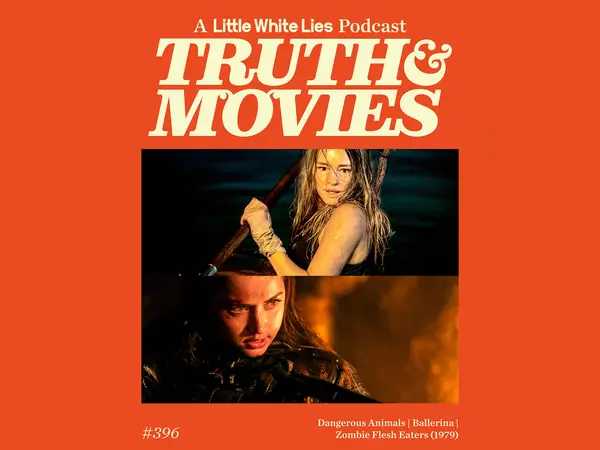
On Truth & Movies this week, we discuss Dangerous Animals and Ballerina, we speak to activist, photographer and filmmaker Misan Harriman about Shoot The People, a documentary about his work. David speaks to Steven Leckart - the director of Stans, about the fervent fandom of Eminem, and finally, for film club we revisit a video nasty with one hell of a shark scene in Zombie Flesh Eaters.
Joining host Leila Latif are Billie Walker and David Jenkins.
Truth & Movies is the podcast from the film experts at Little White Lies, where along with selected colleagues and friends, they discuss the latest movie releases. Truth & Movies has all your film needs covered, reviewing the latest releases big and small, talking to some of the most exciting filmmakers, keeping you across important industry news, and reassessing great films from days gone by with the Truth & Movies Film Club.
Email: truthandmovies@tcolondon.com
BlueSky and Instagram: @LWLies
Produced by TCO
Kei Pritsker and Michael T Workman chronicle the student movement for Palestine through the Gaza Solidarity Encampment at Columbia University.
]]>
Kei Pritsker and Michael T Workman chronicle the student movement for Palestine through the Gaza Solidarity Encampment at Columbia University.
With documentaries exploring very recent events, filmmakers can source all the relevant footage and interviews needed in a short period of time. But conventional wisdom suggests that the longer you spend grappling with your subject, the greater the delivery of your message. That said, the urgency of an ongoing issue can far outweigh the merits of sticking to standard journalistic practices.
A faster turnaround was necessary for Kei Pritsker and Michael T Workman’s The Encampments, which arrives barely a year after the specific student protests that it covers. The film’s main focus is the Gaza Solidarity Encampment on Columbia University’s lawn in April 2024, pressuring the New York City university to divest from companies manufacturing weapons used by Israel that target and kill Palestinians – two of the main organising groups were Jewish Voice for Peace and Students for Justice in Palestine.
This engrossing documentary tracks organisers at Columbia as they’re thrust into the spotlight during their fight for divestment, facing congressional pressure, abuse from Zionist counter-protestors and, eventually, violent police repression, though not before they’ve helped to encourage a wave of further encampments at other universities. Presenting a far more clarifying and empathetic document of the peaceful protesters’ activities and rationale than was ever permitted during the media firestorm that ensued, The Encampments proves essential as an exposé on wild distortion of messaging and the betrayal of institutions’ promoted values.
The film bears no signs of being a rushed job. But if the directors had sat on it for longer, the barely 80-minute feature would likely have greatly expanded in length thanks to still-unfolding developments. Among the events laid out in addendums before the end credits is that in March 2025, ICE agents, acting under orders of the Department of Homeland Security and presenting no warrant, abducted Mahmoud Khalil from his New York home, putting him into immediate deportation proceedings despite Khalil being a permanent US resident with no criminal charges.
An Algerian citizen of Palestinian descent, Khalil is one of the more frequent and warmly engaging on-camera presences in The Encampments, having been a lead negotiator in the Columbia protests. At time of writing, Khalil is still in detention but getting op-eds out regarding the breakneck erosion of his rights. By the time this review runs, his fate as an American resident could still be undetermined as the Trump administration continues attacking civil rights, the groundwork having been laid by the Biden administration’s encouragement of crackdown on peaceful protests against genocide and ethnic cleansing.
Yet there is hope: Gazan journalist Bisan Owda is among the talking heads, given appropriate space in the film’s moving closing moments to reflect on the rippling global awakening concerning freedom for the Palestinian people; on the importance of feeling, regardless of how gradually, that they are not alone.
To keep celebrating the craft of film, we have to rely on the support of our members. Join Club LWLies today and receive access to a host of benefits.
Aylin Tezel writes, directs and stars alongside Chris Fulton in this meet-cute romantic drama set between London and the Isle of Skye.
]]>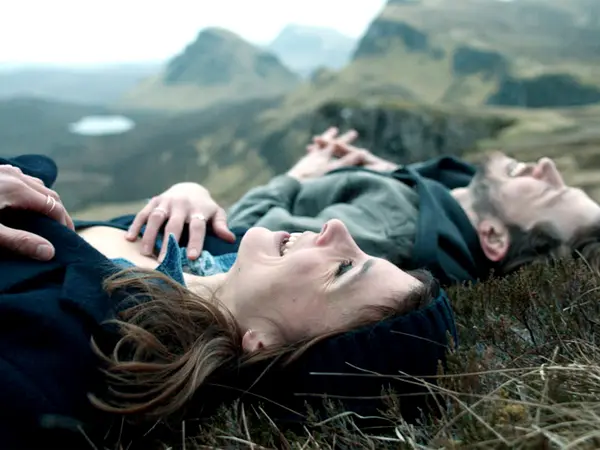
Aylin Tezel writes, directs and stars alongside Chris Fulton in this meet-cute romantic drama set between London and the Isle of Skye.
Someone has been reading a little too much Sally Rooney, and that someone is director/writer and star Aylin Tezel, whose ambitious debut feature, Falling Into Place, plays like a finely-honed piece of Rooney-core for the big screen. Not a criticism, per se, but definitely a signifier of the film’s strident views on love, happenstance, shame, trauma, romantic demons, family demons, professional demons, and any type of demons really.
Tezel plays Kira, a speak-as-you-find German living in the UK, who meets cute (twice!) with Chris Fulton’s ultra-sensitive modern guy, Ian, initially while the pair are holidaying on the Isle of Skye, and later back in their normal lives in the urban hellscape of London.
Their idyllic first contact is represented via milky lens flares and bursts of euphoric, Eno-esque ambient noise, as their tentative connection swiftly blossoms into something magical, but that “something”, it transpires, can be no more in this moment.
As both have to return to the dismal drudgery of their personal and professional lives, not to mention their actual romantic partners. The idea of finding that perfect other but having to back away due to circumstance certainly has value, though Tezel does paint Kira and Ian as the only pure souls in a world of self-involved fools. And as such, they’re never entirely likeable or relatable heroes.
To keep celebrating the craft of film, we have to rely on the support of our members. Join Club LWLies today and receive access to a host of benefits.

Predators and prey share the same terrain in this psychologically twisted shark thriller from genre filmmaker Sean Byrne.
Near the beginning of Sean Byrne’s Dangerous Animals, Surfers Paradise local Moses (Josh Heuston) asks American free spirit Zephyr (Hassie Harrison) if she likes the aisle or the window seat. It is is his way of getting to know her which immediately teases out the obvious differences between them: he is an aisle person, open and sociable, while she is very much the window type, private and aloof. Still, his gambit pays off, for they are soon sleeping together in the back of her van, parked outside his house that she is not yet willing to enter – and in spite of her vaunted independence, she likes Moses, and is thinking of seeing him again.
Unfortunately, though, Zephyr is about to fall into the clutches of Tucker (Jai Courtney). A much more solitary creature even than herself, Tucker takes tourists out on his boat for shark dives, but he is also a serial killer who gets off on filming his clients, especially the women, being torn apart in the predators’ jaws.
Like the sharks here that spectacularly swim around these chum-filled waters before moving in for the kill, Byrne has come full circle. For his career started in his native Australia with the prom pandemonium of 2009’s The Loved Ones, then moved stateside for the Texas-set saga of art, evil and errant masculinity in 2015’s The Devil’s Candy. Now, he returns to Australia’s Gold Coast. Yet the one constant in his films is horror of a psychologically twisted variety, where predators and prey share the same terrain and where survival of the fittest often requires a reversal of roles.
Dangerous Animals might sound like just another of the countless, typically direct-to-video shark movies that have come in the wake of Steven Spielberg’s Jaws (1975), but in fact this is more like a merger of Irving Pichel and Ernest B Schoedsack’s The Most Dangerous Game (1932) and Greg McLean’s Wolf Creek (2005). For here in fact the title refers to the human players, with the sharks just there as objective correlatives for the characters’ unfolding psychodrama.
So why sharks? The simple answer is that they are cinematic, as Tucker knows full well. He is after all filming these deaths so that he can savour all the gory details later while eating his own meal – and he regularly talks about his murders as a “show”, declares, “Brief intermission, ladies and gentlemen” when the ritual has to be paused, and even likes to force one prisoner to watch the other’s agonising dismemberment. There is a strong metacinematic element to all this showmanship, and as Zephyr must work out just how much like Tucker she is capable of being, we too are confronted with the nature of our own spectatorship, uncomfortably similar to Tucker’s, for in our window seat on events, we are no captive audience.
To keep celebrating the craft of film, we have to rely on the support of our members. Join Club LWLies today and receive access to a host of benefits.
On Truth & Movies this week, the LWLies team will be talking us through the biggest and best titles from the Cannes Film Festival this year.
]]>
On Truth & Movies this week, the LWLies team will be talking us through the biggest and best titles from the Cannes Film Festival this year.
Joining host Leila Latif are Hannah Strong and David Jenkins.
Truth & Movies is the podcast from the film experts at Little White Lies, where along with selected colleagues and friends, they discuss the latest movie releases. Truth & Movies has all your film needs covered, reviewing the latest releases big and small, talking to some of the most exciting filmmakers, keeping you across important industry news, and reassessing great films from days gone by with the Truth & Movies Film Club.
Email: truthandmovies@tcolondon.com
BlueSky and Instagram: @LWLies
Produced by TCO
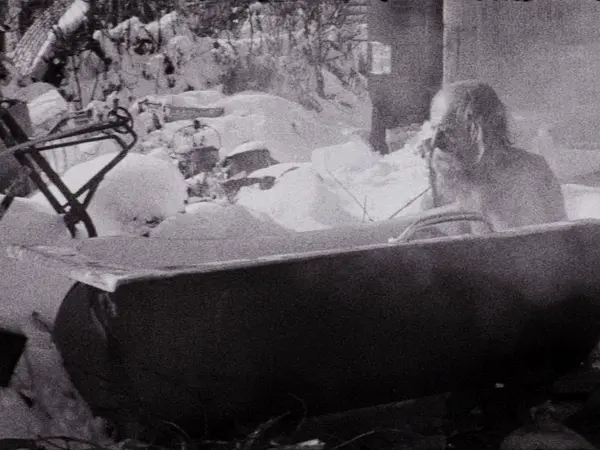
The lure of the Scottish wilderness was too much to resist as Ben Rivers returns there for his latest feature.
In his 2011 film Two Years at Sea, artist/filmmaker Ben Rivers decamped to Scottish wilds with his hand-cranked 16mm camera and hung out with a bearded loner named Jake Williams. The film did little more than capture the everyday minutiae of a man who had chosen to partition himself from urban society and the company of others, yet the resulting film played more like a pastoral post-apocalyptic riff on something like The Omega Man. It’s over a decade later and we’re back in the woods with Jake, still eking out a happy existence in his tumbledown shack and drinking in the pleasures of the rugged and serene landscape.
The key difference with this new film, Bogancloch, is that there is more interaction with other people, with Jake now presented as someone slowly reintegrating with a primitive form of society – but strictly on his own terms. There’s a sequence where he’s shown with a group of intrigued highschoolers as he demonstrates the working of the cosmos with use of a wilting pub parasol and some old bits of string. Later on, he’s seen leading a nighttime sing-along of thematically fecund Scottish folk music. There’s something enlivening and hopeful in Jake’s world this time, where he sees potential and companionship in other people, even if for very short and sweet bursts.
The material is elevated by Rivers’ typically-fastidious formal approach, where high contrast black-and-white film is processed in a way to leave glitches and blemishes in the frame, like the film itself is a relic that’s been dug up from underneath a trees tump. Indeed, all of Rivers’ films contain some element of this “found” quality to them, and in this instance you’re made to feel as if Jake himself would have concocted this thing from old ends of film reels discovered in a ditch. The film and landscape are as one, with the visual degradation echoed in the moss, rust and grime we see on the screen.
With so little context given about Jake’s situation and how he came to be out there alone, the film allows you instead to impose your own backstories and psychological justifications. There’s one sequence in which he starts rifling through a box of old music tapes and giving a couple of them a listen; the crackling music sounds like it’s from Asia somewhere, maybe India. You begin to wonder if Jake had been there and kept these tapes. Or maybe he was once married to an Indian woman way back when and we’re suddenly party to his own little trip down memory lane. It’s refreshing that Rivers and Williams have an understanding that, just because the camera is pointing at you, it doesn’t mean you need to narrate your actions and speak to the audience down the lens.
And yet, there are elements of performance in the film, where scenes have been pre-agreed and set up for show. In the climactic shot of Two Years at Sea, Jake is seen floating slowly across a lake. In this film, he warms up the water in an old tin bath and just marinates there, this time the camera itself floating away like a bubble caught on the breeze, leaving us with another vision of blissful contentment.
To keep celebrating the craft of film, we have to rely on the support of our members. Join Club LWLies today and receive access to a host of benefits.
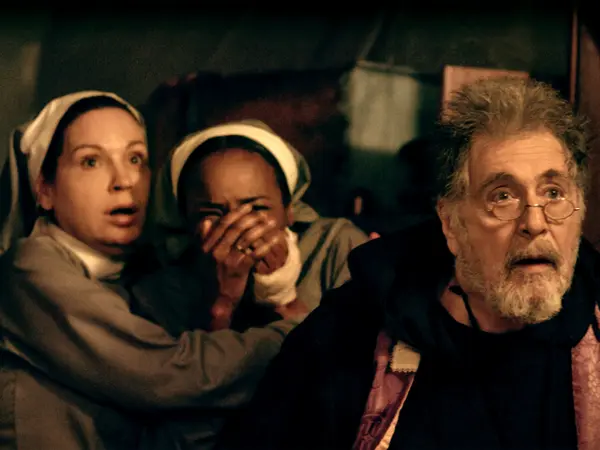
Al Pacino and Dan Stevens can't save this awful excuse for an exorcism thriller.
The release of a new exorcism movie has become a rather mundane ritual, but the latest, unimaginatively named The Ritual, follows in the footsteps of recent Russell Crowe vehicles The Pope’s Exorcist and The Exorcism by luring an unlikely older star to the project. Playing the “poor soul”, Father Theophilus, assigned the task of performing an exorcism on the stricken Emma (Abigail Cowen) is none other than gangster extraordinaire: Al Pacino. Reluctantly at his side is horror’s recurrent weirdo Dan Stevens as Father Joseph in his most straight laced genre role yet.
Beginning like any fake-real film with the statement that the following scenes are based on true events, The Ritual follows the most documented exorcism in American history: that of Emma Schmidt, 46 at the time of the alleged possession, in 1928. Even as The Ritual declares its authenticity it tries to blur the lines of fact and fiction, mainly done with handheld shaky camera work that attempts to create the feel of a documentary but ends up feeling more like The Office than Ghostwatch. The use of the crash-zoom is so relentless that had the camera technique managed to gain autonomy, it might have filed a cease and desist against all involved.
The umpteenth horror film in the last decade to be named The Ritual, David Midell’s film claws at realism as desperately as the demon scratches at its vessel, however one gnawingly distracting factor is the amount of nipped, tucked and filled faces among the cloister. Evil may have fallen over Father Joseph’s convent but the Holy Spirit has blessed all inside with surgical precision and poreless skin. And no matter how often the flock comment on how dangerously dehydrated Emma is – appearing here in her early 20s – even as her condition worsens, her skin remains incredibly dewy.
The fountain (or knife) of youth thankfully has refrained from touching Al Pacino, who appears as the scruffy granddaddy of exorcisms, complete with hair that sticks up like he’s just been electrocuted in an episode of Looney Tunes. He is here to dole out wisdom and to ground Father Joseph, whose wavering faith makes him a detriment to the cause. But an astoundingly inconsistent script breaks any trust audiences may have in Theophilus, especially when he insists that the priests and nuns involved must hold their resolve on the final eve of exorcism and “not let up” – only for everyone to inexplicably leave the possessed girl at the same time, presumably for a coffee break.
All of which would have been excusable if Midell had directed an exorcist film more akin to The Pope’s Exorcist, where Russell Crowe jauntily zips out from the Vatican on a bright red Vespa, rather than what is clearly intended as a sincere dramatisation of a real exorcism. With its insistence on truth even as it strays from the historical accounts it hinges on, The Ritual fails to scare, entertain or convert. Even though the seasoned professionals attached manage to hold their own, Pacino and Stevens can’t save The Ritual from itself.
To keep celebrating the craft of film, we have to rely on the support of our members. Join Club LWLies today and receive access to a host of benefits.

Katell Quillévéré’s poetic French period drama is powered by an understated chemistry between Anaïs Demoustier and Vincent Lacoste.
At a funeral, a character reads out the deceased’s favourite poem; it’s a blazing, lonely love poem that articulates the private space where passions light up the night. “For where secrets exist, life also begins,” says the character in a voice strong enough to force back the tears threatening to fall.
The life force created by keeping a secret proves to be lightning fuel in Katell Quillévéré’s post-World War Two French family drama that takes the same epic sprawling form as her brilliant 2013 film, Suzanne. A black and white prologue depicts images of women having their heads shaved and swastikas painted on their bodies before the film switches to colour and we meet Madeleine (Anaïs Demoustier) and her child on a beach in the 1950s. Five-year-old Daniel has raced into the sea and is brought back to his mother by a helpful stranger. This proves to be the chicly fragile PhD student, François (Vincent Lacoste, looking every inch the French Paul Dano).
François woos Madeleine by showing up at the restaurant where she waitresses – clad in a gargantuan bow – and buying them both champagne. Both are watchful characters who inch into their passions with one eye on the possibility of disaster. The halting chemistry between Demoustier and Lacoste is thrilling. He toasts to kairos, explaining it as a Greek term meaning “the luck you catch on the fly”. The collateral damage here is Daniel, whom Madeleine treats with abruptness. She is unmoved when they light a candle in church and he says that his prayer was that she will love him one day. “I forbid you to ruin my happiness,” she snaps at him after he runs off on their wedding day.
Working from her own screenplay, co-written with Gilles Taurand, Quillévéré charts the course of this mini family as the years fly by. Each new episode is written, shot and acted with such vividness that the lulls between narrative reveals never feel frustrating. Maddy, François and the pathologically overlooked, Daniel, are compelled to start again after a man from François’ past burns down their apartment.
Period details present with subtle authority through not just costume and production design, but by a social conservatism that colours characters who are too ashamed to admit core truths. Maddy and François are bound by an intimate understanding that transcends words so that their scenes are textured, full of glances and harmonious movements.
Dialogue is written as a dance, never as exposition. Heads are kept down for as long as is humanly possible which, it turns out, is not forever. Along Came Love essays a type of bond where shared secrets eventually erupt, causing both tragedy and release.
To keep celebrating the craft of film, we have to rely on the support of our members. Join Club LWLies today and receive access to a host of benefits.
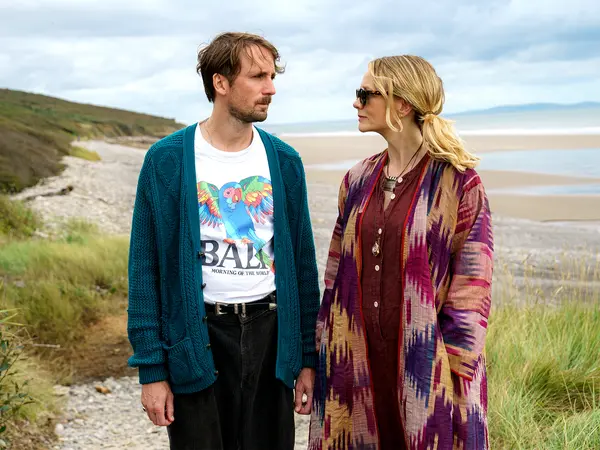
Comedian collaborators Tim Key and Tom Basden co-write and co-star in James Griffiths’ pleasant bromance flick.
“No man is an island,” so goes the poem by John Donne, which was an idea resolutely rejected by Hugh Grant’s dedicated bachelor in the adaptation of Nick Hornby’s About a Boy who stated, “I am an island. I am bloody Ibiza!” It’s a sentiment that may have been embraced by the two main characters in this gentle British bromance written by comic genius Tim Key and Tom Basden who both star as men who are a little lost. It’s directed by James Griffiths and based on a short film from 2007 which has been expanded to include more characters and tenderly composed folk tunes by Adem Ilhan.
Key plays Charles, an eccentric millionaire who inhabits a mansion on an isolated island off the coast of Wales. Motivated by nostalgia for indie folk duo McGwyer (Basden) and Mortimer (Carey Mulligan) who were big in the ’00s and acrimoniously broke up, he invites them to his island to play a private gig. McGwyer is blindsided by Mortimer’s presence which leads him on an existential crisis. He begins to question whether he sold out for his solo career and why exactly their romance failed. The only man that has his shit together is Michael (Akemnji Ndifornyen), Mortimer’s loving partner and bird enthusiast. They’re also joined by Sian Clifford who plays the local shopkeeper.
It sounds like the set up for a classic horror film but it plays out as charming comedy and upbeat musical. Its lightness of tone is a throwback to 00s British comedies starring the aforementioned floppy-haired Grant such as Music and Lyrics and About a Boy. The film contains lovely notions about the interconnectedness of humans but its main focus is on the odd couple dynamic between Charles and McGwyer. As it leans into their bromance it places males in crisis, their fragile egos and emotions under the microscope. Perhaps a necessary tonic for modern times.
Charles is grieving and struggling to move on, while McGwyer’s glamorous lifestyle has disconnected him from reality and from forming any meaningful bonds. The screenplay addresses this through his past relationship with Mortimer who has traded in music for a grounded home-life. Even if Mortimer gets a small amount of screen time, she is at least a character who is shaded in enough to make her credible, plus her boho Lucy & Yak inspired outfits are to die for. Mulligan and Basden also share great chemistry especially in the scenes when they’re engaging in musical joviality and melancholy.
The screenplay written by the duo relishes in daft physical comedy, the absurdity of the situation and Charles’s awkward ways. It’s fair to say that Key gives himself all the best one-liners which are of course delivered with perfect deadpan hilarity. It may be a tad uneven and repetitive in places but it’s also enjoyably sweet and silly. If this film were a folk band, it may not headline the Pyramid Stage at Glastonbury but it would make a pleasant afternoon watch over at the Other Stage.
To keep celebrating the craft of film, we have to rely on the support of our members. Join Club LWLies today and receive access to a host of benefits.
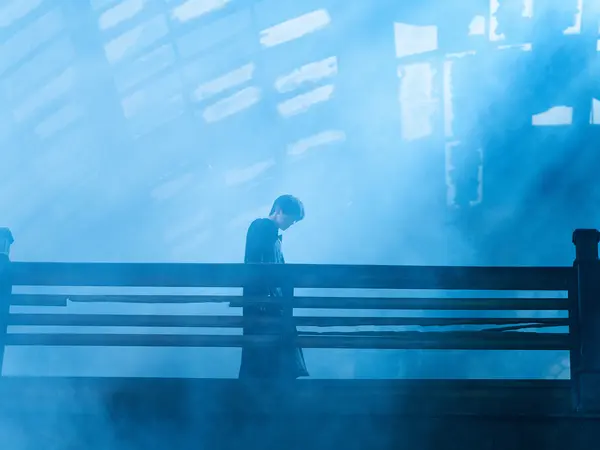
Bi Gan's third feature is an epic in every sense of the word, taking viewers on a sprawling odyssey through cinema.
Bi Gan’s Resurrection opens with a title card that sets the scene for his third feature: we’re in a future where the secret to eternal life has been discovered. It’s simple – don’t dream! Humans who give up dreaming can live forever. But there are some hold-outs who choose to dream in secret at the risk of having shorter lives and going mad in the process. These ‘fantasmers’ are assisted by ‘Big Others’ who wake the dreamers, keeping them from being lost to the dream realm forever. The life of one fantasmer plays out across five chapters in Gan’s film (co-written with Bai Xue), a sensory odyssey spanning the history of cinema, with more references than it’s possible to comprehend in a single viewing.
Since he began his filmmaking career in 2015 with Kalil Blues Bi Gan has been establishing quite a reputation for himself on the global film stage – in 2018, when his second feature Long Day’s Journey Into Night premiered at Cannes, the audiences arrived to find 3D glasses placed upon their seats, to be used half-way through the film. It’s quite astounding that at just 35 years old Bi Gan is operating at such a level of ambition and scale – in Resurrection he doubles down, condensing a century of film history into a 160-minute epic. It’s obvious from the start that ‘dreams’ here are representative of ‘films’ – the ‘fantasmers’ are the wily, reckless visionaries who think them up – but Gan does help out the clueless with a late mention of the ‘forgotten language of cinematography’ which feels like a cheeky sideswipe at the content mill mindset of the modern film industry.
Gan traces the life of one fantasmer – a monster made in the image of F. W. Murnau’s Nosferatu or Robert Weine’s The Cabinet of Dr. Caligari played by young heartthrob and skilled physical performer Jackson Yee – across five dreams, from a wartime noir to a vampire nightclub at the dawn of the new millennium, each with its own distinct visual identity. The fantasmer, played by Yee, takes on a different identity each time, but there is inevitably some conflict that plays out. He’s a wanted murderer in one dream; then a thief confronting the Spirit of Bitterness; a card shark teaching a young girl the art of the con in another; a young punk who falls in love with a vampire in the stunning 40-minute one-take finale. (Resurrection operates with such a deluge of ideas and themes it’s quite baffling that Cannes chose to programme the film in a 10pm slot at the end of festival when audiences were already jonesing for a decent’s night’s sleep.) He is looked after by his Big Other, played by the seemingly ageless Millennium Mambo star Shu Qi (the casting of veteran Shu Qi and newcomer Yee feels like another Bi Gan easter egg) who develops an almost maternal tenderness towards him as the film progresses, promising the fantasmer a gentle death as he lives out his final handful of dreams.
As well as the vastly different tonal and narrative beats Resurrection hits, Gan encorporates different styles, from the silent-era style of the film’s opening with its paper puppetry and title cards displaying dialogue through to the bold and brash neons of the final Y2K segment, where he delivers some solid camera wizardry in a ‘single take’ cribbing from his own Long Day’s Journey playbook. It’s a staggering feast for the senses (each segment revolves around one of them) but even more so a true love letter to cinema written bold and brilliant. Despite its inconsistencies – the noir section in particular feels incomplete, as though it was shaved down to meet a mandated runtime – Resurrection has to be seen to be believed, and Bi Gan continues to ascend in both his imaginative and filmmaking capabilities. It’s as thrilling to watch Resurrection as it is to imagine what the director might do next.

An art theft spells disaster for Josh O'Connor in Kelly Reichardt's excellent Vietnam-era heist dramedy.
It’s difficult to say what truly motivates James Blaine Mooney (Josh O’Connor) to blow up his own life. Frustration, perhaps, with an uninspired suburban existance with his wife Terri (Alana Haim) and their two rambunctious sons Tommy and Carl (Jasper and Sterling Thompson). A juvenile desire to embarrass his father, a county judge, in front of their community? Perhaps it’s sheer, pig-headed hubris – he’s an art school drop out relying on hand-outs from his parents which he claims are to fund his bespoke furniture-making business, while scheming to steal four Arthur Dove paintings from the small but well-appointed Framingham Art Museum he takes his family to visit on the regular. He recruits some acquaintances into the scheme (whom will prove his eventual undoing) but the theft is entirely JB’s brainchild. Besides the obvious benefit of financial gain, it’s such a deeply unwise thing to do, Kelly Reichardt’s Vietnam era heist drama is immediately engaging in its opaqueness.
The crime itself is a comedy of ineptitude, but once it’s over JB – with his staggering hubris – fancies himself home free. When the heat inevitably close in, JB ditches his family, hitching rides across the Midwest in search of a way out of the hole of his own making, seeking out old friends he can bum accommodation or money off for a night or two. Mooney, an aged-out hippie with a withering stare and effortless talent for deception, seems to feel no remorse or regret, and in the phone calls he makes to his wife and kids, his platitudes are half-hearted at best. For O’Connor, it’s a turn that resembles his sublime performance as tomb-raider Arthur in La Chimera, but there was always something half-hearted about the melancholy architecture expert’s life of crime – JB is a different animal, unmoved by morality. With his Dylan-esque getup, he’s a regular rolling stone, emblematic of the Nixon era of individualism ushered in by the turn of the decade.
As JB scrambles like a rat in a paper bag, the anti-war movement plays out in the background, with protestors clashing against law enforcement, while dispatches crackle through the radio static and appear in black and white newsreels. The brash isolationism of Mooney stands apart from her usual ruggedly solitary characters; this is a man who had a comfortable middle class handed to him on a plate and decides to torpedo it for a curiously low-stakes art theft that seems to have more sentimental value than monetary. There are shades of Elliot Gould and Gene Hackman in O’Connor here, a chameleon as much as a chimera, while Alana Haim’s small but crucial supporting performance as his had-enough-of-this-shit wife is further proof of her captivating on-screen presence.
Although the premise evokes the golden age of The Coen Brothers and their money-hungry n’er-do-wells, The Mastermind is a tragicomedy as only Reichardt can fashion, shot by Christopher Blauvelt (her regular DoP since Certain Women) drawing inspiration from the era-defining work of William Eggleston and Robby Müller to create images that feel lived-in – warm but distant snapshots of an America on the cusp of permanent fracture. This is Reichardt in Night Moves mode, but with a little more of the comedic energy (culminating in a lilting sadness) found in First Cow. It’s a film that understands there’s nothing to be gained from making oneself an island, but remains stoic and unsentimental in its vision of the past. By the time the film’s crushing, riotous hammer-blow ending comes, we’re left with more questions than answers about what JB’s gambit was all for. Greed? Well, isn’t that just another word for the American Dream?
To keep celebrating the craft of film, we have to rely on the support of our members. Join Club LWLies today and receive access to a host of benefits.

We speak to the mastermind behind The Phoenician Scheme about family, fathers-in-law, and the great, grand plan of all things Wes Anderson.
The Phoenician Scheme marks Wes Anderson’s twelfth feature film, starring Benicio Del Toro as Zsa-zsa Korda, a rich, ruthless businessman who sets out on a complex journey to secure his legacy with his estranged daughter and a bewildered scholar in tow. As well as featuring an entire cosmos of stars, the story hits on themes of family, legacy, beauty and death. With a career retrospective taking place in Paris and London this year, artistic legacy has been weighing on Anderson’s mind.
LWLies: Am I correct in thinking that The Phoenician Scheme is a story you first conceived of a while ago?
Anderson: I think I first mentioned it to Benicio when we were screening The French Dispatch in Cannes. So that’s maybe like three or four years ago, something like that. There wasn’t much to it at that point. I didn’t really know what it was. I just had the vague idea of a movie built around him with a character like this.
Ah, so did you write the character of Zsa-zsa with Benicio in mind?
Yes. You know, I worked with Benicio before when we did The French Dispatch, and I asked him to do that one because I had been wanting to work with him for years before that, and he has something really quite mesmerizing about him. I loved working with him on The French Dispatch, but even more, when we were in the editing room, I just saw the most striking moments, and there were places where I could barely choose what to use. From that I knew I wanted to make a movie with him at the centre and that’s what this grew out of.
It definitely feels like there’s a relationship between Moses Rosenthal and Zsa-zsa Korda in terms of their appreciation of art and criminal aspects.
Yeah. You know, I’m not sure if I would think to cast Benicio as someone who is smaller than life.
No, and rightly so! How did Mia Threapleton and Michael Cera come into the picture?
Michael and I had met many years ago and we talked about working together. I think it was probably about 20 years ago. I’m sure he was a teenager, and it was only when I wrote this part that I thought, ‘Oh, here’s the chance to have Michael.’ and it was quite early in the process. I don’t think we finished writing it before I told him about it. He came over to my apartment in New York and we sat down together and he read… some of it. Mia, on the other hand, we searched for many, many months and saw hundreds and hundreds of actresses, and so she just was the person we kind of discovered from that search.
Is that unusual for you? It feels like oftentimes you’re working with people that you know, so this feels more like Moonrise Kingdom, where you had the big search for your two leads.
Yes, whenever you’re casting very young people – and Mia’s on the border – it’s always a search, and when we did Asteroid City we had a group of teenagers, and we had a big, long search for each of those parts, a lot of people that we were exploring. I didn’t really particularly want to have somebody who I knew or who audiences know. But Mia, the first audition I saw of her, which was just her reading a scene that we had prepared, she just seemed totally authentic and I could just sort of feel her thinking on camera. But it really came together when we figured out what the character would look like and when we got her in costume. We did this in London with Benicio and Frances Hannon, our old hair and makeup designer, who didn’t even work on the movie, she was just with us for a day. Mia really became Leisl and it was only then we said, ‘We know exactly what we’re doing here and we have the right person and she’s perfect.’
She did an amazing job. In her interview for this issue she said that she remembered watching Fantastic Mr. Fox in the cinema when she was nine, and I felt ancient all of a sudden.
Not compared to me!
For you it must be even more surreal. Speaking of costuming, obviously Liesel is a nun and Zsa-zsa has these biblical dream sequences within the film. As a former Catholic school child myself, I’m aware that never really leaves you as a person, but it did stand out to me because your films don’t tend to have strong religious overtones or connotations. Are you able to tell me where that came from?
Well, this character is somebody who has empowered himself and feels empowered to, let’s say, change the landscape for everybody else. He’s one of those people who, historically, we’ve seen put themselves in a position to exert their will on populations and regions and so on. So Zsa-zsa takes it for granted that he should have these powers. He doesn’t question them, but over the course of the movie he is constantly confronted with his own death, and it does begin to change his priorities and sense of his place in life, and he begins to see death somewhat differently. In his mind it takes on a biblical sort of aura, and although Zsa-zsa tells us he’s an atheist, there’s this biblical motif that is a part of this process of him dealing with life and death and penance and atonement. As well as it being part of his character, this is something that we discovered in the writing process because as soon as seconds after the movie starts, he’s dead, at least for the first time.
But there’s another influence which we had in mind all along, which is [Luis] Buñuel, and I mentioned this to Benicio. Buñuel is like the film version of your Catholic upbringing that never leaves you. Buñuel is the most exaggerated form of that. He has this satirical look at the world, but it’s not quite satirical because it’s also surreal. Everything is infused with something to do with religion, and its iconography and its rules, and his bristling in relation to it. Somehow that was a part of our character and our story from the beginning. I even think, while Benicio is the perfect casting, Buñuel himself might have played Zsa-zsa quite well too.
That leads me onto Phoenicia itself, because one of the things I’ve always loved about your films is the creation of these whole worlds that exist beyond ours. Phoenicia is an ancient civilization, but I’m curious about the relationship between your Phoenicia and reality, and how you wanted your own version to feel?
My wife is Lebanese, so over the last 20 years or so, I feel very connected to Lebanon and one of the inspirations for this character is my father-in-law, who was a businessman and very different from Zsa-zsa, but with details that he shares with him. He was a wonderfully intimidating person, and I think our Phoenicia has a bit of Lebanon and probably a bit of Egypt, reaching across into the Middle East. We wanted to draw on the European and Western exploitation of the Middle East by businessmen. It filters its way into our story.
But ultimately our story is a pastiche, our land is a pastiche, and our history is a pastiche, and it is a bit of a fantasy. So not so atypical for me, I find myself naming a new region, which I’ve done over and over again. I will say this one just seemed to announce itself to us right at the beginning.
I did wonder about the connection to your father-in-law, as the film is dedicated to him. I imagine he was a better father than Zsa-zsa.
He certainly was, but you know, he had a thing: he was a generous, wise person, unlike Zsa-zsa really, but he did have this aura of terrifyingness. Just to walk into a restaurant with him was to get everybody’s attention.
He had a gravitas?
Yes. Waiters had a tendency to snap to it when he arrived. You can’t really learn that. You just have to be that.
My perception is that Benicio has a similar presence, is that correct?
My feeling is Benicio can hide it if Benicio wishes to. I think Benicio is a gentle person, but it takes very little effort for him to seem like he isn’t.

Like many of your films, The Phoenician Scheme features a lot of fine art, and I liked that you show all the paintings in the end credits. How do you decide on the art you use in your work?
Well, usually we’re making things for a movie and there may be some inspirations. We had these Russian forger brothers who worked on The Grand Budapest Hotel, and they did wonderful work, and they made a Klimt for us. They’ve also made other pictures for us: some cubist paintings that we had in the Henry Sugar movies we did, and they made me a Kandinsky that I have at home, all these fakes. And they’re wonderful fakes; they age them and they’re great.
In the case of this film, I had the notion that I would like to use the real thing which you never do on a movie because, if you say, ‘We’re going to use a Renoir,’ well, it means that there’s a group of people who come with that painting, and there are rules, and you can’t get a light too close to a Renoir, and the temperature of the room and the dust level in the room has to be maintained, so it becomes an obstacle. And of course people don’t really want to give you their Renoir. But our friend Jasper Sharp, who’s a curator, we went about the process and we found pieces that were not too far away, that we weren’t transporting across the globe, so we borrowed things, and we did have a team of different security and different gloved people looking after them, and it was fine. It takes a bit of effort, it has a bit of cost, but it was a great thing because you could feel it on the set. These pieces never just appeared, they arrived with some fanfare and with a bit of warning. ‘Everybody, here’s the real thing.’
The actors felt it. They were in the presence of these real pieces, and Zsa-zsa is a collector. He likes to own things. He’s a possessor. For instance, he gives his daughter this rosary, and we decided, ’Well, let’s use real diamonds, real emeralds, real rubies.’ We went to Cartier, and they made this piece for us, and they own it, but they loaned it to us. Every time Liesel is holding this in her hand, she’s holding however many thousands of euros of diamonds and rubies. It took Mia some time to feel comfortable, because it would break sometimes and it had to be repaired, but it was interesting and fun to do it that way, and I think they look better.
As someone who is so particular about aspect ratios and film formats in your films, I’m curious to know if there’s any film formats you’d be interested in working with. VistaVision is having a renaissance at the moment…
Well, I wanted to shoot on VistaVision.
Oh, no way!
We didn’t do it in the end because the logistics of it seemed to defeat us. At a certain point, we were just trying to make a certain budget work, but VistaVision was my first choice. What I actually am planning to do and just am doing some tests right now to determine is… so, I shoot on film. This movie is shot on 35 millimetre film, but as you know, 99% of the theatrical screenings in a cinema are a DCP, and the DCP is almost like you’re screening the negative. When you make a print, there’s grain in the print. So you have the grain from the negative and you have the grain from the print, and it’s not as sharp as the DCP. The DCP is as sharp as the original negative. I’ve watched my films as a DCP against the 35 millimetre film print, and the print is… it has the quality of film, and the film print is different. It has the magical thing of being a film print, but it doesn’t have the detail of the DCP. So what I’m going to try to do here is to make 70 millimetre prints from our 35 millimetre negative, which has been made into a 4K DCP, and see what that’s like because I think that that might be a kind of combination which hasn’t quite been done, and which might produce a very good film print.That’s a response to what you just said, which is not really an answer to your question.
No, no, you did answer the question! That’s fascinating to hear – and it’s interesting given how many films shot on digital are transferred to prints nowadays.
Well the idea is you just shoot on 65 the old way, 65 millimetre and you print on 70, but maybe using the digital intermediate at 4K might match something like that… but anyway, I guess we’ll see. I probably will not accomplish the same effect, but it’ll be some other thing in between.
And you always discover something from doing these experiments. Sometimes the things that you end up creating are not what you wanted to create, but they’re great anyway.
Yes. You’re hoping for the right accident.
What a lovely way of putting it! Speaking of fathers and daughters, your daughter has a small part in this film, and I was curious to know if this was her idea or your idea?
I think virtually every filmmaker’s daughter who’s ever been in one of their films, it was the daughter’s idea. [laughs] I was reluctant to put my daughter in a movie. But I’m glad I put her in because I love what she did.
Oh, I loved what she did! She understood completely her role.
She was very thoughtful about it and very focused, and it was a great experience for her, but you know, I don’t particularly think everybody needs to know that that’s who that is, but I guess anybody who’s interested will quickly figure that out. She loved doing it, though. I will say she wants to do it again.
The Phoenician Scheme is rooted in the idea of legacy, whether that’s familial legacy or artistic legacy, and what we leave behind, and what is left to the wider world when we die. Not to sound horribly morbid, but I’m curious, is that something that you end up thinking about a lot?
Let me think… I’ll say this: I have never made a movie where I would feel comfortable saying, ‘oh, that one was a mistake’. I’ve only made the movies I really wanted to make: my own movies. If somebody likes one and hates another, they’re still part of my family, and I just have to live with whatever they all are, how they are. I’ve always tried to treat them as a body of work to some degree, and even now we’re doing a thing with the Criterion Collection, they’re releasing my first 10 movies as a boxset. We’re doing a similar thing with the soundtracks, and we have the books about the films, and so on. So it’s something that I am conscious of and have been conscious of. I want these movies to all sit together as a set.
After the event of my death, I don’t really know if there’s really much point, but I do think about it in relation to my daughter. She’s going to be the one who is responsible for this stuff and I want it to all be in order for her. And I feel like so many people’s work, my own and all my collaborators – and there’s a lot of collaborators and a lot of artisans of so many kinds, all these actors, my co-writers and directors of photography, and production designers and painters and sculptors and puppet makers – all this work is contained in these movies. I feel it’s partly my job to look after them.
This ties into the exhibition that is happening at the Cinémathèque Français at the moment and that will be in London later in the year at the Design Museum, and making sure that this work isn’t lost to time like so much amazing art and so much amazing film history is.
You know, the exhibition wasn’t something I particularly wanted to do because I knew it was gonna take some time. It’s too much trouble! But I’ve been saving all this stuff all these years. I’ve been storing all these props and pictures and all these puppets, and so every now and then someone would want to show them. I kept saying, ‘I need to be older for this,’ but then when the Cinémathèque wanted to do it we decided it was time. The Cinémathèque to me is something that’s important to support, and the fact they wanted to do this, turned out to be a way for us to get everything organised for it to be an ongoing thing, so it’ll go to London, and then it has other destinations after that. I was dreading the process because I just want to work on my movies! But then in the course of it, working with a lot of people who I know well, and then Cinémathèque and the Design Museum, it turned out to be a good experience. I was there yesterday, in fact, because I had an official task to do, and there were all these kids and students in there, looking at our puppets… there was something rewarding about it.

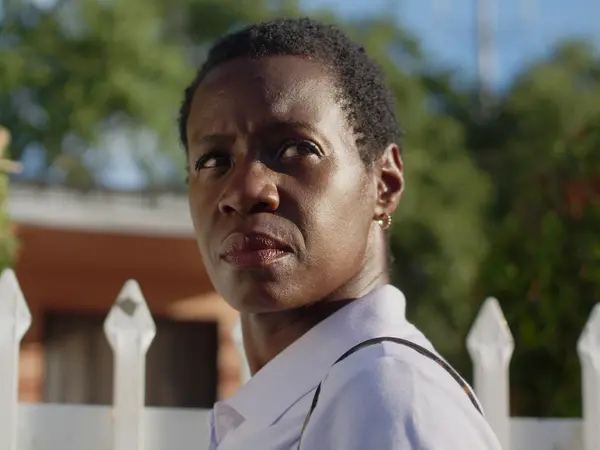
As her debut receives a UK premiere as part of the BFI's Black Debutants season, Miami filmmaker Monica Sorelle reflects on the making of Mountains.
For the people who live in South Florida, everything seems in flux. Every bit of landscape, every building we cherish, every person we walk by – they all seem to be disappearing over the months and years. The gentrification of the city is all too real for those who live here and filmmakers like Monica Sorelle, whose debut feature Mountains is having its UK premiere as part of the BFI’s Black Debutantes series, are keenly aware of this fact.
Perhaps that consciousness is precisely what makes Mountains so compelling; it’s not just a portrait of Miami’s Little Haiti neighborhood and the people that inhabit it – focusing on a Haitian demolition worker and his family navigating the realities of redevelopment – but actively in conversation with the uncomfortable ways we can participate in our own displacement.
The seed for this picture was planted when Sorelle moved back to Miami after film school, coming home so that she could be around her culture again. She grew up in North Miami and her mother worked in Little Haiti, but she notes that she quickly “realized that Little Haiti was changing in a very subtle way.” Sorelle credits the short film Right to Wynwood for “illuminating what gentrification looks like and who the players were, especially in South Florida, where the same developers who bought up Wynwood property are now buying up property in Little Haiti.”
Early on, she tried community organizing and was quickly burnt out on it, but this remained with her, especially while working for Third Horizon out of O Cinema (whose space in Wynwood was later demolished), where she had the idea for what became Mountains. As Sorelle and her co-writer Robert Colom were walking to lunch one day, she noticed “there were still a lot of houses in Wynwood, but they were all slated for demolition. A demolition worker trying on his shoes caught my eye, leaving his coworkers and just crossing over towards the still-residential side of the neighborhood.”
“The thought of ‘what if he lived there’ crossed my mind,” she continues. “What are the implications of being part of the gentrification of your own neighborhood?” This train of thought led them to apply for (and subsequently win) Oolite Arts’ Cinematic Arts Residency, where the microbudget feature would take form. “I think we believed that we could sound an alarm. It’s bleak out here, and I don’t know if this microbudget film is going to be the catalyst for anything, but I think we changed our outlook to being archival instead of preventative. We were able to document a space in time before it changed drastically.”
Though the film is only making its London premiere now, Monica has had time to reflect on her film since it premiered in 2023, as well as the way the place she captured on film has continued to change. “I’m really working through my grief about Miami changing so rapidly and violently, knowing how these developers are playing monopoly with our homes, our neighborhoods, and our cultural institutions, and not feeling like there’s a way to truly stop it.”
And that sensation of impending doom amidst the quotidian goings-on of life in South Florida is precisely what one can feel throughout Mountains. “I could have approached this in so many ways and, for some people, it would have been much more melodramatic if the characters were fighting a developer with a cigar and a map saying ‘I’m going to take over this town’,” Sorelle says with a laugh, “But I’m more interested in taking gentrification from this political concept and exploring what it looks like on the ground floor for this family.”
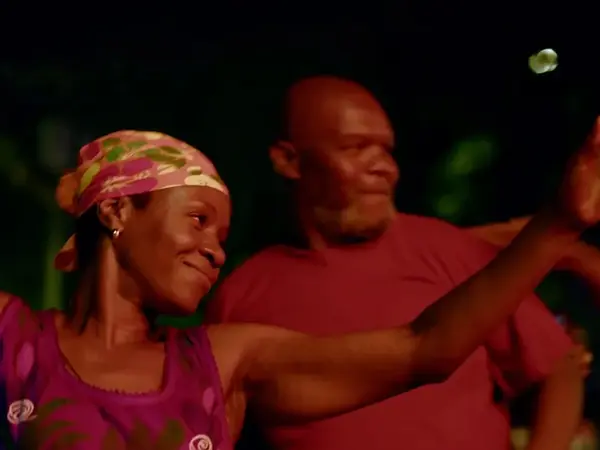
The politics of the film are impossible to ignore though, especially as those in power in the United States perpetuate falsities about Haitian immigrants and strip them of rights. Monica is, rightfully, baffled that she has to have this kind of conversation: “It feels so stupid to have to do this, but I also thought a lot about demystifying Haitian culture for a lot of people. Even though we have such large populations in major metropolitan cities, I feel like we’re underrepresented and a lot of what you hear about us is geopolitical tragedies and news from the island. In a way, I just wanted to talk about the culture I grew up in and the family members I know, just honoring them in a way that I don’t think they’ve been honored in cinema before.”
Films like Fernando Frías de la Parra’s Ya no estoy aquí and Ira Sachs’ Little Men were influential to the approach Sorelle took with Mountains – the former in how to find “relatability in specificity” in its depiction of Monterrey and the latter in its “quiet beauty in approaching gentrification, power, and economic status” – but Italian neorealism also directly influenced its creation. “We’re watching, in real time, an entire city and neighborhood being changed before our eyes, so having a mostly realist approach was the best way to show how capitalism really sucks the magic out of everything.”
“Haitians and other Caribbean folks are so magical. There’s a mysticality to our experiences and our spirituality, but I wanted to ground the film in realism to imagine that the only thing that existed for our lead, Xavier, was the pursuit of material success. We only lean into magical realism near the end to usher him out of that mindset,” she explains. That realism even ties into the way that language is approached in the film, with characters and actors actually speaking Creole like the Haitian immigrants in our fair city actually do. It’s something that Sorelle is conscious she could not have managed with a bigger movie, but the limitations of the microbudget feature did not stop her from making the film she wanted to make.
“I was motivated by the personal ethos of the film and the small crew,” Monica says, noting that the community she built with this film is a grand part of what made the experience worthwhile. “Production was really mobile in case of anything, like if a neighbor passed by that we could interview. We kept our footprint small in the community, but there were things that happened that made shooting hard. We’d be on a demolition site and thought they were on break and in the middle of the dialogue, the work started up again and we’re having to scream at each other through the scene.”
“We had to roll with those punches, but everyone showed up. Everyone who’s there, on screen or off, put their all into it because they believed in the story, and that’s indicative of the kind of community filmmaking that I hope to continue being a part of, even as I scale up. Maybe a smarter filmmaker would make something that can be shot in Belarus or something, but I’ve built a community in Miami and I’m in love with them and want to continue making films about us.”
For now, she’s continuing to prep and create new work and, as she jokes, Monica is “pretty gagged” about her place in BFI’s Black Debutantes series, which she is thankful to Rógan Graham for putting together and placing these works in front of audiences in the UK. “I’m showing with so many heroes and elders that I look up to, like the fact that my name is anywhere near Cauleen Smith is amazing. Even with the constraints that these women had on their budgets, on their films, on their creativity, they were somehow still able to make groundbreaking work. I’m so proud to be standing arm-in-arm with these brilliant women.”
Mountains plays at the BFI on May 29 2025 as part of the Black Debutants season.

Sebastián Lelio's musical take on Chile's MeToo movement is a misjudged gum-smacking mess.
There is a delicate threshold separating self-awareness from petulance, and the directors who know how to best thread it understand that saying less often does the most. With The Wave, Sebastián Lelio offers a staunch, loud example of the opposite, crafting a film that is not only comfortable to stay within the realm of the self-congratulatory but expects you to applaud him for it too.
The Chilean director follows up his Oscar-winning drama A Fantastic Woman with a musical loosely based on the 2018 #MeToo-adjacent demonstrations that closed multiple colleges in Chile after students occupied the buildings to demand stronger punishment for sexual harassment within the campus. In this fictionalized effort, one such student is Julia (Daniela Lopez), a music pupil whose big ambitions are juxtaposed with the humble setting of her mother’s mini-mart, where the family also lives.
Lelio creates Julia as a stand-in for the many young women who bravely came forward with their stories of abuse during the titular movement, having her as the face of the rebellion and the key witness for the protestors’ case. This pivotal narrative choice is the first of many mishaps in a deeply misguided film, as it burdens with responsibility a character whose entire arc revolves around a pronounced resistance to victimization. The director isn’t explicitly asking for sympathy as much as empathy for Julia, but there is no sheltering the character from the purposefully exhausting framing she is seen through.
Julia pointedly chews gum, the impossibly irritating, moist noise a frequent sensorial companion to her screen presence. After draining it of flavour, she plucks it from her mouth and, still wet, pushes it under whichever surface is nearest — be it a diner table or the cold, metallic work desk in the corner of a police station. It is as if Lelio is trying to hammer in the point that women do not need to be likeable and contained to be believed, a plot boomerang that ricochets with great force only achieving condescension.
The gum-chewing isn’t the only thing Lelio hammers at with gusto throughout the musical. He often dwells inside the mini-mart, the camera almost a safari guide introducing the viewer to this world that could not possibly elicit anything else than a flight response. At the university, several scenes consist of the same beats, tracking the young women as they gather and disperse, gather and disperse. On the musical front, with the exception of a big number within its first minutes, the film’s first hour is almost entirely dedicated to extensively laying out a story that has already been made clear almost from the get-go, a tiresome stretch that dilutes the dramatic, grandiose potential of the genre.
As it finally steps on the gas, The Wave at last dedicates some time to properly prod at the thorniness of trauma and denouncement, zooming into Julia’s assault by fellow student Max and the spiral of guilt and shame it sent her downwards. Although the musical sequences are welcome as they at least add some dynamism to the repetitiveness of what came before, the music proves uninspired and the lyrics exacerbate the tonal issues of the script. “Paradigm shift, no more stigma,” boasts Max, echoed by other assailants and those who support them in a sequence that is meant as satire but lands as bitterly as the mindbogglingly self-indulgent number that follows, when Lelio goes meta to let the audience knows that he is well aware there will be be agnostics when it comes to a man directing a film about feminism and women’s rights.
But here’s the thing: the issue at hand is not as much that this is a man tackling conversations around women’s bodies and political sisterhood, but that the man in this case directs with such a grave masculine gaze and foreignness to the complexities of womanhood that what lingers is the sour taste that the call is coming from inside the house. South America has the world’s highest rates of misogynistic violence, with femicide rates growing every year, and abortion is still largely illegal across the continent. To have a high-profile South American director shine a light on the real-world impact of feminism in a continent ungoverned by the intricately American politics of #MeToo is a heartening proposition, but, unfortunately, it feels like The Wave doesn’t want you to empathise with the cause as much as it wants you to praise its director.
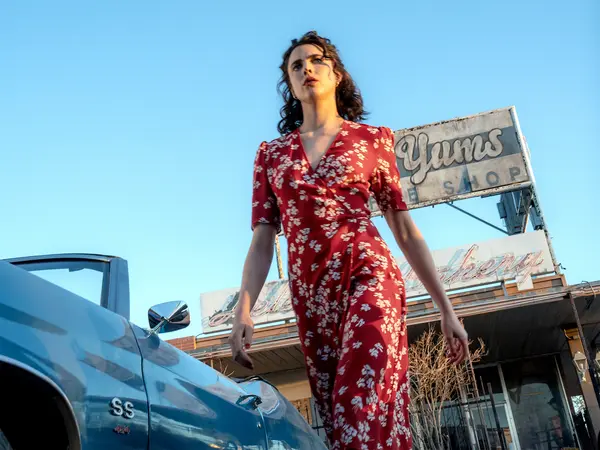
The second instalment of Ethan Coen and Tricia Cooke’s lesbian genre film trilogy manages to just about snag a passing grade.
Ethan Coen has earned the right to do whatever the hell he wants when it comes to making art. Whether that translates to whatever the hell WE, the audience, want is another matter entirely, as this new one, co-created with partner and long-time editor Tricia Cooke, is the blithely inconsequential middle chapter of a proposed trilogy that was kicked off in 2024 with the glibly amusing lesbian exploitation caper, Drive-Away Dolls (née Drive-Away Dykes).
Honey Don’t! reteams with Dolls star Margaret Qualley who stars as power-suited private shamus Honey O’Donahue. She’s investigating the strange death of a female parishioner from a local superchurch run by Chris Evans’ kinky priest Dean. Meanwhile, she strikes up a sexual relationship with Aubrey Plaza’s low-rank basement cop, MG, as the result of some nonchalant and covert finger-banging right in the middle of a busy police drinking den.
There’s some neat hardboiled patter and a smattering of humour that is never quite able to elicit more than a knowing titter. There’s also the nagging sense that Qualley is too youthful to be playing this world-weary detective who claims to have seen all the angles before and is repulsed by the transgressions of absolutely no-one. The flippant tone also makes it very hard to take any of the more earnestly emotional relationships seriously, such as that between Honey’s wayward emo niece who becomes embroiled in this seamy underworld.
The overriding feeling you glean from Honey Don’t is that it’s an example of two formidable filmmakers working in a register that almost punkishly rejects the intricacy and breathtaking formal panache of their past work. From someone with The Big Lebowski and Miller’s Crossing on their CV, this cheeky noir runaround is sadly missing a few layers of intrigue and almost any satisfying pay off, opting for more of an eye-rolling, Columbo-esque reveal than anything with any lasting impact. And a sex-positive stance and a surfeit of sass can only get you so far in this game.
Coen and Cooke already have the early pieces in place for the final chapter in their lil off-the-cuff trilogy, so there’s still time for them to really pull something out of the bag.
To keep celebrating the craft of film, we have to rely on the support of our members. Join Club LWLies today and receive access to a host of benefits.
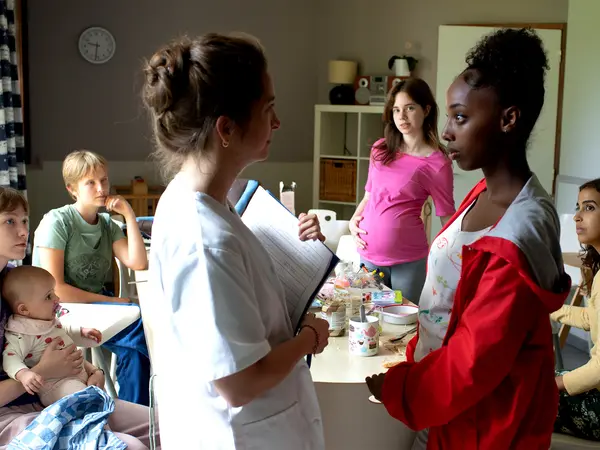
Belgium’s Dardenne brothers return with a typically emotive film about a group of very young women dealing with the dramas of childbirth.
The opening ceremony of this year’s Cannes Film Festival acknowledged the recent death, at just 43 years of age, of Émilie Dequenne, who won Best Actress for her role as the title character of Jean-Pierre and Luc Dardenne’s Palme d’Or winner Rosetta, a teenage girl clawing her way out of desperate poverty with feral determination and heartbreaking innocence.
The brothers’ new film, Young Mothers, opens at a bus station, one of the unlovely and liminal spaces where their dramas, including Rosetta, tend to unfold; we’re in the company of another young girl with baby-fat cheeks, rabbity eyes, and coiled nerves, but soon, a slight downward tilt of the handheld camera reveals that Jessica (Babette Verbeek) is pregnant, her belly all out of proportion with her scrawny frame.
Jessica, whose little girl Alba is due in a few weeks, is the newest arrival at a group home for teenage mothers outside the Dardenne brothers’ native Liege. There, they change and wash and feed their infants under the watchful eye of nurses and social workers who step in when they become too flighty or frightened to let the maternal instinct take over; they take it in turn to cook group meals, and sign out at the front desk when they’re ready to return part-time to education or trade school.
They receive counselling and legal support as they embark upon life as a mother, alone or with the support of a boyfriend or extended family, or else choose to place the baby in foster care, as many of them are considering — it’s this dilemma which shapes the narrative arc of the Dardennes’ new film, and rhymes earlier ones, particularly their other Palme winner L’Enfant, in which the purity of parental love is tested against the cruelties of a transactional society.
Jessica wants to meet her birth mother, who placed her into foster care as a teenager; she’s wants to love her Alba, but fears she’s too damaged to do so. Julie (Elsa Houben), first seen as the home’s most experienced resident and an example to the other teens, is about to marry her daughter’s doting father Dylan (Jef Jacobs), but, as a recovering addict, the prospect of her impending independence triggers panic attacks and a fear of relapsing.
Perla’s (Lucie Laruelle) baby daddy is in the picture, too, and she wants to play house with him, maybe more than she wants to be a mother, despite his evident fecklessness. Both Perla and Ariane (Janaina Halloy Fokan) are the daughters of alcoholics; Ariane’s mom is in the picture, and has made up a nursery in her shabby flat, but Ariane isn’t sure she wants to bring her baby into a home with mum’s abusive partner.
These stories are all dripping with emotion — there are mother-daughter fights with things said that can never be taken back; there are moments of shocking callousness when characters simply turn their back on a family member; equally, there is great tenderness or boundless sadness pouring forth from the smallest moments, like when Julie, riding on the back of Dylan’s moped, warms her hands in the pockets of his denim jacket, or when Jessica asks her birth mother for a photograph, so she can show it to her daughter some day. This is what the Dardennes can do: overwhelm us with the enormity of our obligation to one another.
Any one of the young mothers, whose lives offer intimate and sympathetic views of proletariat problems, could have been the central figure in a Dardennes film — the brothers had originally planned a movie around an early conception of the Jessica character, but were so taken with what they found in their research that they conceived a sort of baton-pass narrative to allow them to tell more stories.
Alas, it’s a shame they did so. A classic Dardennes film is first and foremost a process, in which the verité camera follows a figure traversing a recognisably frayed and tatty modern-day Belgium. They are in constant contact with the world, and each small step on their journey, from shopping for their family to negotiating with a bureaucrat to caressing or cursing a friend, is an impression left behind by it.
In this way we see, with an uncommon particularity, the social factors and personal foibles that contribute to straitened circumstances and desperate choices. There’s too little of this in Young Mothers — we learn about apprenticeship schemes and deposits for landlords, but not the complications that can bend a life off-course.
There are few interactions or disagreements revealing different class or life backgrounds between the mothers and the staff and administration of the home, the benevolence of which is unquestioned — uncharacteristically, the Dardennes find very few holes in the social safety net. The stories, each given a quarter of the movie, are so compressed that supporting characters are reduced to heroes and villains.
There’s pathos here — so much pathos — as these girls struggle to do right by themselves and their babies, together or separately, with or without family support. The film got me good in the final minutes, as one of them writes a letter to her daughter, to be opened when she turns 18 (“three years older than I am now”). With a pink pen, in a girlishly looping cursive script, she writes the date of her daughter’s 18th birthday, pausing to do the math in her head before writing the year: 2042.
Then she runs off to catch the bus to school. It’s enormously affecting — so much here is, and the Dardennes’ project, with its material rigour and spiritual conscience, remains important beyond the vagaries of festival-circuit fashion that seems to have moved on from their brand of humanism. After so many punishing stories, most recently 2022’s Tori and Lokita, it’s hard to begrudge them the raw sentiment and mostly happy, hopeful endings of their newest one. But it comes too easy, in a film so artfully and opportunistically structured, which jumps from dramatic peak to dramatic peak as if skipping tracks on an album.
To keep celebrating the craft of film, we have to rely on the support of our members. Join Club LWLies today and receive access to a host of benefits.

Love and humour gives way to bitterness and rancour in this slick and involving portrait of an Iranian family in turmoil from Saeed Roustaee.
It’s hard to imagine that you could go from loving a person deeply to loathing their guts and wanting them dead within a matter of seconds. Yet that sorry notion sits at the core of the new film from Iranian writer/director Saeed Roustaee in which friends, family members and lovers suddenly find their various relationship statuses flip-reversed as a result of a series of tragic and unpredictable events.
Though the film draws on the lives and experiences of a wide ensemble of players, though at the centre of it all is Parinaz Izadyar’s widowed nurse Mahnaz, bringing up her two kids with the help of sister Mehri (Soha Niast) while also attempting to bring back some familial stability by courting the dashing and witty paramedic Hamid (Payman Maadi).
One big curveball in her life is that her son, Aliyar (Sinan Mohebi), is, to quote The Life of Brian, a very naughty boy, and when he’s not manipulating family members out of doing chores, he’s scampering across rooftops and involved in a schoolboy gambling circle. He’s exactly like Jean-Pierre Léaud in The 400 Blows, a charming, mature-beyond-his-years scamp who always pushes things just a tad too far.
Mahnaz adores him even though her demands and protestations never penetrate his psyche, but she needs to ship him and little sis Neda (Arshida Dorostkar) off to their father-in-laws for a bit while she does a little bit of manipulating of her own; specifically, making it seem as if she only has one child from her previous marriage when Hamid’s parents come to discuss possible wedding plans.
Yet this innocent scheme goes wrong on every conceivable level, leaving relationships in tatters and even bodies in the ground. Though Mahnaz saddles some of the blame for the fallout, her guilt quickly transforms into rage and her life duly becomes dedicated to taking down all those she perceives to have wronged her, including her son’s schoolmaster who she believes is the cause for his erratic behaviour.
Roustaee weaves this complex family web with artful rigour and skill, and his film makes a satisfying transition from a coolly-observed family portrait to a knuckle-gnawing soap opera at around the half-way point. Indeed, there’s a point where it feels as if the story here may even be a little too eventful, as by the time a character has been able to square their emotions away, another big twist is making itself felt on the horizon.
Where the film excels, however, is in its refusal to paint Mahnaz as the lovable heroine, even if she suffers the lion’s share of the indignities. Niast’s impressive, expressive performance never allows us to pity this set-upon matriarch, even as she refuses to give an inch to those who have suddenly become the enemies that she must conquer. The film is shot and edited with stylish reserve, and even makes time for the odd visual flourish, most notably via a bird’s eye shot of the courtyard beneath the family apartment where so many key interactions take place.
To keep celebrating the craft of film, we have to rely on the support of our members. Join Club LWLies today and receive access to a host of benefits.
On Truth & Movies this week the LWLies team will be talking us through the latest from the Cannes Film Festival and we spoke to Benicio Del Toro and Michael Cera about The Phoenician Scheme.

On Truth & Movies this week the LWLies team will be talking us through the latest from the Cannes Film Festival and we spoke to Benicio Del Toro and Michael Cera about The Phoenician Scheme.
Joining host Leila Latif are David Jenkins, Sophie Monks Kaufman and Elena Lazic.
Truth & Movies is the podcast from the film experts at Little White Lies, where along with selected colleagues and friends, they discuss the latest movie releases. Truth & Movies has all your film needs covered, reviewing the latest releases big and small, talking to some of the most exciting filmmakers, keeping you across important industry news, and reassessing great films from days gone by with the Truth & Movies Film Club.
Email: truthandmovies@tcolondon.com
BlueSky and Instagram: @LWLies
Produced by TCO
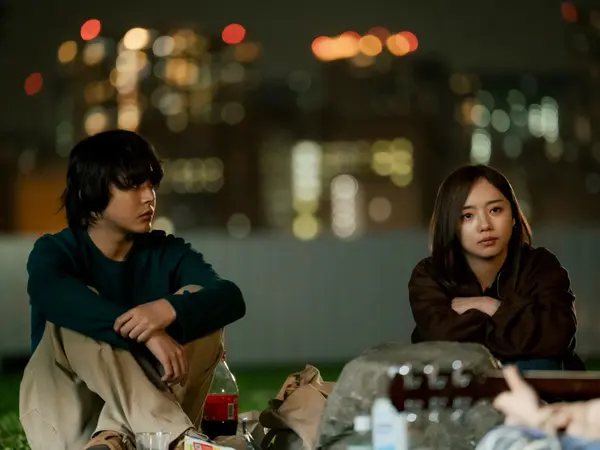
A young J-pop singer must choose between love and stardom in Koji Fukada's gentle romantic drama.
It’s no secret that the young stars of Japanese pop music are held to extremely high standards, both by fans and their labels. The members of upcoming J-pop band Happy Fanfare are acutely aware of what is expected of them, drilled into them constantly by the suited, serious staff who stand just off to the side during their performances and fan signings and tell them everything they’re doing wrong. Every moment of their time is accounted for, and their days are long – they’re expected to attend rehearsals before shows and livestream to their fans after they get home. It’s an awful lot of pressure to place on anyone, let alone a group of young women, and the restrictions extend to their private lives as well. The girls are contractually forbidden from having boyfriends despite being sexualised by their legions of mostly male fans, and have very little free time. Mai (former idol Saito Kyoko) is the most popular member of the group, but there’s stiff competition from bandmates, and as the label like to remind them, the ranking can change at any time.
Becoming increasingly disillusioned with her restrictive life, Mai is elated when she runs into an old classmate, who’s working as a street performer. Kei (Yuki Kura) shares Mai’s artistic inclinations but is bother literally and figuratively free (he lives in his van). As the pair become firm friends, they also start to fall in love – at the same time, Happy Fanfare faces backlash when another band member’s secret relationship with a popular livestreamer is discovered. Not only does this anger their label, the incident sends their fans into a maelstrom and even threatens the girls’ safety. It becomes increasingly clear to Mai that they’re only of us to the label as a product, rather than as people.
While the title of Fukada’s drama suggests that the film’s focus will be the court case between Mai and her label that stems from her relationship with Kei, the majority of the film actually focuses on the lead-up to this moment, carefully tracking the girls as they navigate their first taste of pop stardom. The wide angles keep us at the same distance as the fans, but also create a sense of voyeurism as we linger during private moments. The decision to focus on a band at the beginning of their stardom might make them slightly more relatable, and highlight that it’s not just stars at the top of their game who are subject to strict contracts, but it does somewhat reduce the tension, as it’s unclear how much Mai will lose by walking away from a career she doesn’t seem that wedded to in the first place.
It’s certainly an intriguing premise for a film, and Kyoko’s performance is sympathetic and charming, but Love on Trial meanders along with all the drama of a gentle boat ride, never quite kicking into gear, and the lack of development afforded to the supporting characters reduces Mai’s studio opposition to cartoon-like villains. It also feels like Mai and Kei’s relationship takes a backseat once they finally get together, but without much exploration of how Mai’s court case impacts them beyond sudden financial worries. It’s a story with a lot of potential, but this iteration never quite brings the drama in the way JPop stars themselves know how to.

This semiautobiographical drama from Golden Bear-winner Carla Simón makes for a heartfelt exploration on the joys and pains of extended family.
In her Golden Bear-winning Alcarrás, Carla Simón meets a family standing on the brink of a monumental life change, chronicling the minutia of their lives as it begins to morph into something foreign. In Romería, this change lies in the past, where it remained flimsily buried until the curious hands of young Marina (Llúcia Garcia) came to pluck it back to the surface.
The girl, raised by her mother’s family after becoming orphaned at a young age, just turned 18, and needs to rectify her birth certificate to include her biological father so she can qualify for a scholarship. This bureaucratic chore sees her travel alone from bustling Barcelona towards Vigo, a small city nested in the northwestern coast, where she is suddenly not only no longer alone but surrounded by dozens of family members she either has not met or has very little recollection of.
Romería stands for pilgrimage in Spanish, and the film is as much of a literal pilgrimage in Marina’s long overdue homecoming as it is for Simon herself. The semiautobiographical drama is set in 2004, and sees Marina try to make sense of this new expansive world suddenly engulfing her through the low-quality lens of a digital camera. The director zooms into crooked wooden alabasters and delicately swinging wind chimes, grasping at texture and sound with the voracity of those who understand the stakes of faded memories.
Like in her two previous features, Simon is most interested in capturing the intricate fabric of familial relationships molded by the intimacy of time and suddenly reworked by life’s tricky, unpredictable hands. Similarly to six-year-old Frida in Summer of 1993, Marina has to make sense of the invisible strings connecting the new people that come flooding into her life as well as thread the foreign environment that has shaped them into being. Unlike Frida, however, Marina is on the cusp of womanhood and therefore privy to thornier, more elusive human complexities, and this is where Romería finds its anchoring emotional core.
That is because both of Marina’s parents have died young, and not of complications of hepatitis like her father’s death certificate claims. The two, who suffered from heroine addiction, contracted AIDS at the height of the epidemic. Much of Romería is told through passages of Marina’s mother’s diaries from 1983, the pages at times made map, at others maze. As the words echo in the teen’s head, lingering in the air of the film through a poignant voice over, a reality long-buried begins to become clearer and clearer.
The Spanish director broaches the still-present taboo of the virus in a crescendo. When some of Marina’s many cousins sneakily roll some joints in the labyrinthine underworld of the family boat, they make sure to ease away each other’s trepidations by remarking that a little bit of weed won’t turn them into their parents. Then the uncles and aunties ruminate over lost friends and family, ressusciating the dead through the power of collective recollection. The young fell like flies back in the 80s, they say, it was either “accidents, overdose, or AIDS.”
But, despite a taste of confrontation when the film leaves the realm of the harbor and finally enters the family home and a brief, somewhat tonally misguided flashback, Romería is loyal to its sense of withholding almost until the very end. It is then, finally, that Simon reaches the grand apex of her journey of self-reflection, one that holds in the stunning clarity of carefully chosen words a moving encompassing of how one can only build a sturdy foundation for the future after lovingly repairing the unrectified cracks of the past.
To keep celebrating the craft of film, we have to rely on the support of our members. Join Club LWLies today and receive access to a host of benefits.

Alessio Rigo de Righi and Matteo Zoppis deliver a spirited western ballad about a young woman seeking freedom and her daring lover.
Opening with a tattered journal, damaged by water and fire and containing the writings of an unknown hand, Heads or Tails? will be “quite a story,” as promised in the opening voiceover narration of John C. Reilly as Buffalo Cody, the bison hunter and Indian Wars veteran turned touring impresario of a famous “Wild West Show” featuring ridin’, ropin’, shootin’, and too-good-to-fact-check stories about how the West was won.
The film opens in Italy, where Buffalo Bill performs his pageant of conquest for an audience of Unification-era gentry. Opening in black and white and Academy ratio, like a classic Hollywood Western, the violent Wild West show is initially quite realistic — or as realistic as a classic Hollywood Western — before Buffalo Bill emerges from behind the curtain backdrop, and the aspect ratio widens and the film shifts to cover. (The palette retains the pointillistic saturation of directors Alessio Rigo de Righi and Matteo Zoppis’ previous film The Tale of King Crab. The celluloid blues are especially rich and handsome, and some actors appear to have been cast for their eyes.) “America is the land of freedom,” says Buffalo Bill before miming the killing of his Native co-stars; at the subsequent reception and press conference, he expresses his admiration for them, but they don’t speak.
Inspired by the show, one of Bill’s Italian hosts boasts of his own horsemen’s skills; Bill, sensing a good show, takes his bet and sets up a bronc-breaking exhibition, at which Santino (Alessandro Borghi), the nobleman’s best hired man and a particular favorite of his younger French wife Rosa (Nadia Tereszkiewicz), disobeys orders to throw the competition, and further catches the eye of the fair maiden — no wonder, as Borghi is a swarthy, piercing Tomas Milian type.) A cowboy is “pure of heart,” says Reilly in voiceover as Santino bucks atop a white stallion, but as in the story of Lancelot and Guinevere, chivalric tradition and courtly love get more complicated than intended. When Santino wins, humiliating Bill, his liege confronts him, and accuses his own wife of infidelity; she shoots him dead with a Lady Derringer. Rosa and Santino flee on horseback in a long scrolling left-to-right tracking shot, the camera dolly sprinting breathlessly to keep up as two race through the magic hour’s actual, literal friscalating dusklight. (Later, at the end of the film, the same horse will ride right to left, into the sunset.)
With his fringed embroidered leather jacket and silver goatee, Reilly resembles the Buffalo Bill of photographs, a star-spangled showman played by, among others, Louis Calhern in the rough-and-tumble backstage musical Annie Get Your Gun and Paul Newman in Robert Altman’s Buffalo Bill and the Indians, or Sitting Bull’s History Lesson, a cynical raspberry blown in 1976, after defeat in Vietnam and at the height of Bicentennial-era patriotism. The character is a straightforward American signifier that is easily bent to revisionist purposes, as is the corset that Rosa soon sheds as she and Santino keep ahead of the trackers on their trail, and the trail of a reward for his capture and her safe return. But despite this, and despite subplots such as the revolt of laborers against a dastardly railroad baron, the film is hardly in the leftist tradition of spaghetti Westerns like Leone’s Once Upon a Time in the West. As in The Tale of King Crab, an existential quest against a backdrop of South American colonialism that took a much gentler political tack than, say, Martel’s Zama or Gálvez’s The Settlers, Rigo de Righi and Zoppis, and their cowriter Carlo Salsa, are more interested in a good yarn — and a meta-discourse on storytelling.
So as Rosa and Santino escape manhunters which come to include Buffalo Bill, Reilly’s narration, which includes chapter titles like “Kidnapped” and “To the Rescue,” sets a mock-legendary tone, and rather misconstrues the story, following the Wanted posters in crediting Santino with the inciting killing, and making Rosa out as a hostage rather than a perpetrator. Buffalo Bill’s florid and unreliable prose resembles, to use his own phrase, one of the “dime-store novel” that printed the legend of the emerging West, enlarging its heroes and sanding off its brutality — like the books of Ned Buntline, whose stories created the Buffalo Bill persona, and inspired screen Western novelists like W.W. Beauchamp (Saul Rubinek), whose illusions are shattered in Unforgiven, or indeed Eli Cash in The Royal Tenenbaums. Intriguingly, though Reilly narrates in first person, the actual writer of the voiceover script is Buffalo Bill’s companion and faithful amanuensis Johnny, shown throughout the film to be scribbling in the notebook from the opening.
As Rosa and Santino weather encounters with revolutionaries and bandits, experiencing jailbreaks and shootouts, greed and betrayal, it’s Santino becomes the subject of outlaw ballads, which credit him as striking a blow against the oligarchy, rewriting Rosa’s role to be more passive in the service of political mythmaking. When Santino starts to sing along, and embellish his legend further, the appropriation of Rosa’s story becomes a sore point.
Taking on the iconography of a hoary adventure story with a light touch, Rigo de Righi and Zoppis don’t always rub sufficiently against the grain of archetype to generate real sparks. The film sags in the middle, and many of its tweaks to formula, particularly regarding Rosa’s reclamation of her agency, are rote or merely cutesy, despite rising star Tereszkiewicz’s rosy-cheeked moxie. But equally there are wonders here in the vein of the dirty-fingernailed magic realism that is contemporary Italian cinema’s most rewarding mode, as in Alice Rohrwacher’s Happy As Lazzaro and Pietro Marcello’s Scarlet. Cinematographer Simone D’Arcangelo, who also shot King Crab, lights animals beautifully, with subtle spotlights, so they stand out as at once earthy and ethereal, like in Night of the Hunter, and Rigo de Righi and Zoppis retain their eye for rough-hewn peasant faces. (King Crab’s Gabriele Silli, with his wild-man beard, and aura of foggy viciousness, receives a star’s entrance.)
And most of all there’s John C. Reilly, who plays Buffalo Bill with a magician’s patter, like Reed Rothchild in Boogie Nights, giving him an ingenuousness, a bluffer’s self-satisfied confidence, and an entrepreneur’s shrewdness. He helps greatly in the filmmakers’ mission to put the Western in air quotes, to play within and comment on the genre, in particular its even more exoticizing European manifestations, like the novels of Karl May, the Ned Buntline of Germany. It’s a massively charismatic performance on par with anything else in Reilly’s career, and gives all-American substance to this clever Italian mistranslation.
To keep celebrating the craft of film, we have to rely on the support of our members. Join Club LWLies today and receive access to a host of benefits.

A brilliant young academic struggles to come to terms with the aftermath of a sexual assault in Eva Victor's moving dramedy.
Something very bad happened to Agnes. It’s hinted at in the first segment of Sorry, Baby, when her best friend Lydie (Naomi Ackie) arrives for a visit, and asks Agnes (Eva Victor) if she feels comfortable having the office of their old English professor Preston Decker (Louis Cancelmi). It’s fairly easy to infer what Lydie means by this, particularly once they go for dinner at the home of their former classmate Natasha (Kelly McCormack) and she snarkily remarks that Agnes was always “Decker’s favourite”. Lydie politely changes the subject and gives Agnes’s leg a reassuring squeeze.
There has been a deluge of films about sexual assault in the wake of MeToo, but for all the artistic capital (rightfully) afforded to survivors, precious little has materially changed within culture. Sometimes it feels as if there’s more resentment than ever towards victims for daring speaking up – it’s this reality that Eva Victor’s directorial debut (which she wrote and stars in) captures so well, in which a woman is sexually assaulted by a man in a position of trust, and the according fall-out is the lack of fall-out. Nothing in the world at large changes; everything does in hers, revealed in non-chronological order, with a chapter for each year following the assault. When she goes to see a (male) doctor following her assault, he chastises her for not going to the ER immediately afterwards. He seems completely indifferent to the traumatic incident Agnes has experienced; all Agnes and Lydie can do in response is laugh.
What else can Agnes do? The perpetrator has already handed in his notice at college, and the school claim they’re unable to open a case against him as a result. Agnes doesn’t want to press charges against him because he has a child – and if she’s treated like an inconvenience by medical staff and her school, who’s to say the police would be any different? So Agnes internalises her pain. Over the course of the next four years, she lives her life in the same apartment she shared with Lydie during grad school, and teaches at the same college she used to attend. There’s an unspoken sense that Agnes can’t quite move on from the place; she sleepily haunts it, unable to find closure because no one – except Lydie – understands or acknowledges what happened to her.
It’s the banality of enduring a sexual assault that Victor captures so well in her film; how the trauma lingers long in the body, even when you keep insisting to everyone (including yourself) that you’re fine. When Agnes begins a tentative romance with her sweet neighbour Gavin (Lucas Hedges) she doesn’t quite know how to respond to his affection; when she has a panic attack in her car, a gruff sandwich shop owner (John Carroll Lynch) coaches her through it and then makes her some food. These small moments of kindness – as well as the beautiful friendship between Agnes and Lydie – glimmer like flecks of gold on the bottom of a murky riverbed, demonstrating there is still some good in the world despite what happened to her. Good that also exists in Agnes’ cat Olga, who she finds on the street as a kitten days after her assault, even if she eventually has to euthanise a mouse left in her bed.
This surprisingly violent mercy killing feels like an oddly cathartic moment for Agnes, who is symbolic of thousands of people who never receive justice after being assaulted, and reflects the strange rhythms of Sorry, Baby – a film which doesn’t pretend to have all the answers, but certainly understands the burden of shame placed on sexual assault survivors, and how navigating the world in the aftermath of assault feels like walking through dense fog, blinding reaching for a hand to guide you to the other side.

Renate Reinsve plays an actress struggling with the sudden return of her estranged father in Joachim Trier's latest drama.
Nothing brings a family together like a funeral, and at the wake for Nora (Renate Reinsve) and Agnes’ (Inga Ibsdotter Lilleaas) mother, their estranged father Gustav (Stellan Skarsgård) strolls through the door as though nothing has changed. His reappearance in his daughters’ lived threatens to disturb the tentative peace they both have, particularly for Nora, a flighty actress suffering from a crisis of confidence. To make matters worse, the long-in-the-tooth filmmaker has a new project in mind, and would like his eldest daughter to star in it, despite Nora’s incredulity at her father’s return as though no time has passed at all.
Joachim Trier’s second collaboration with Renate Reinsve has a tough act to follow in The Worst Person in the World, which made a star of his muse and brought him to global attention through a starry release via Neon and MUBI. He returns to the grounded interpersonal dynamics which occupy his cinema, and in Sentimental Value‘s touching opening, the narration recalls an essay Nora wrote as a child from the perspective of their family home, reflecting on its history and the disintegration of their family. In a wry Trierism, the narrator reveals that Nora rediscovered the essay while looking for a piece to read for her drama school audition, “But chose Nina’s monologue from ‘The Seagull’ instead.”
Nora, Nina – the similarities go deeper than the name, both actresses with a pervasive melancholy, though Nora doesn’t seem to share Nina’s desire for fame at any cost. When we meet her as an adult, she’s actually attempting to flee from the theatre she’s due to perform in, beset by an anxiety attack, to the frustration of the staff who have to tape her into her costume when she rips it in a panic. She couldn’t be more different from Rachel Kemp (Elle Fanning), the famous American movie star who connects with her father at a film festival and ends up taking the part in his film that Nora didn’t want. Rachel is young and sparky, hungry and studious. For her, acting is the art of solving mysteries; for Nora it seems more vital, allowing her to become someone else. In her day-to-day she continually battles a sadness of which she can’t quite find the root; a parallel is drawn between Nora and her paternal grandmother, who died by suicide 15 years after being released from a prison camp for anti-Nazi activities, and whose absence had a profound impact on Nora’s father.
Sentimental Value is moving in moments, and Trier and co-writer Eskil Vogt’s dialogue is as sharp and quick-witted as ever (a gag about the DVDs Gustav gifts his nine-year-old grandson for his birthday brought the house down in the Cannes press screening) but the film falls short of the greatness achieved in The Worst Person in the World or Oslo 31st August, which covered similar ground with more emotional depth. While the depiction of the strong bond between Nora and Agnes formed out of their parents’ difficult marriage is touching, the story’s conclusion seems signposted from the beginning, and it operates at the same emotional pitch throughout, withholding information to the point that it feels like the characters are being deliberately kept at a frustrating distance. But Skarsgård is the best he’s been in years as a father fundamentally unable to articulate himself in any way other than his work, and oblivious as to why his daughters feel such frustration with him for a lifetime of distance, and there’s keen wisdom in Sentimental Value’s observation of the gulf between who our parents are and who we wish they were.
To keep celebrating the craft of film, we have to rely on the support of our members. Join Club LWLies today and receive access to a host of benefits.
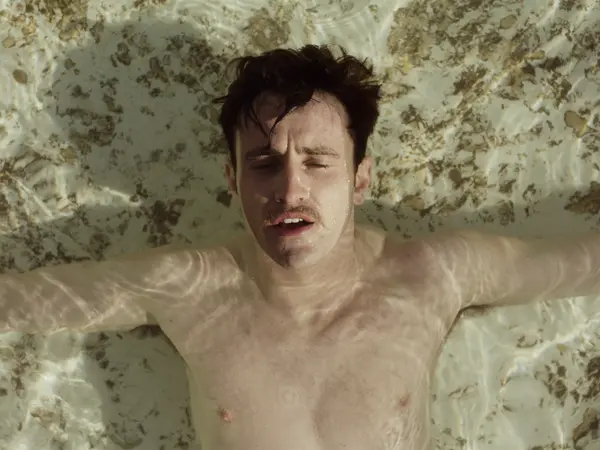
Two musicians set out to record the folk songs of rural America in Oliver Hermanus' restrained but affecting drama.
When Lionel Worthing (Paul Mescal) and David White (Josh O’Connor) meet over the top of a piano in a Boston college bar, the spark between them is instant. One is a talented vocal student, the other a composition major preoccupied with recording and cataloguing the folk music of rural communities – their shared passion for song is what brings them into each other’s orbit, and the onset of the First World War is what cruelly divides them for the first time. While David goes off to fight, Lionel returns to his family’s farm in Kentucky, where the work is hard and honest. By the time they meet again, they’re both a little worse for wear. A sojourn to rural Maine to continue David’s folk recording project provides both with a new sense of purpose, and rekindles their tentative romance, but like all great ballads, there’s tragedy on the horizon.
Oliver Hermanus’ sixth feature takes him to North America for the first time, casting two bona fide heartthrobs: Paul Mescal and Josh O’Connor. When The History of Sound was announced in 2021 it set the internet ablaze, with many excited about the prospect of a tender gay romance starring two of the hottest young actors in the industry – but the resulting film is perhaps more restrained and delicate, sparing in its sexual content, for better or worse. In fact, there’s something even a little distant about the film, in which Lionel and David’s romance amounts to a few months across several years, and much of the focus is on its aftermath. The film is more concerned with how this pivotal moment in Lionel’s life changed everything about the person he would become.
Josh O’Connor, seemingly incapable of delivering a bad performance, is wonderful and tragic as David, charismatic and glib and fantastically handsome. Who wouldn’t fall in love with him, or the way his tired smile never seems to reach his eyes? It’s a pity there isn’t more of him, and Mescal opposite is perhaps a little lost as Lionel, despite his best efforts to deliver a serviceable American accent and the charming chemistry between them. There’s just something a little too interior about his performance – it’s difficult to buy that his relationship with David really is as significant as the film wants us to believe it is. It’s also a little unfortunate for Mescal that he’s outperformed by Chris Cooper as an older version of Lionel; he delivers a searing emotional monologue in the film’s final act which provides some much-needed resonance. But to Mescal’s credit, his singing sequences are quite beautiful, as are O’Connor’s, and the folk soundtrack evokes Inside Llewyn Davis in its soulfulness.
The film feels weighed down by some unnecessary sequences that don’t help to drive the story forward, occasionally forgetting that the crux of the film should be Lionel and David’s relationship and its long shadow; a sharper cut might prevent the film from sagging once the lovers part ways. While comparisons with Brokeback Mountain are inevitable among those with a limited understanding of queer cinema, The History of Sound has far more in common with Merchant Ivory – particularly The Remains of the Day and Maurice – in its pervasive melancholy and sense of profound regret at past inertia. It’s not repression that powers The History of Sound, but the tragedy of understanding something far too late to chase it. Its buttoned-up nature and chasteness might frustrate those hoping for a more salacious story, but Hermanus and writer Ben Shatuck (adapting from his own short story of the same name) have produced a unique and moving romance for those willing to listen.
To keep celebrating the craft of film, we have to rely on the support of our members. Join Club LWLies today and receive access to a host of benefits.

Russian exile filmmaker Kirill Serebrennikov selects Auschwitz’s “Angel of Death“ as the subject of the first film made in his new home, Germany.
Kirill Serebrennikov had a film in competition for the Palme d’Or at three of the first four Cannes Film Festivals post-COVID, a period immediately following his unjust conviction, in his native Russia, on trumped-up charges of embezzlement from the state-funded theatre of which he was president — widely understood to be politically motivated persecution of a dissident artist.
Then came Russia’s invasion of Ukraine and Serebrennikov’s self-imposed exile to Berlin. As a gadfly figure in Russian culture, he was known for taking on protagonists with knotty, oppositional politics, portraying Soviet-era rock punks, flu-stricken comic artists, delusional spouses and radical poets as flawed antiheroes tearing through the fabric of society — often literally, in strutting, rock-and-roll tracking shots across elaborate sets that were liable to collapse midway through the scene, breaking the fourth wall and piercing the veil.
Serebrennikov is back in Cannes with his first German-language film and the first to complete principal photography since he left Russia; it’s about a German antihero this time. The Disappearance of Josef Mengele, which covers the life of Auschwitz’s “angel of death” in hiding in South America in the decades after the fall of the Reich, is a study of a fellow exile, but one still loyal to his homeland, and who moved, before then at least, in lockstep with his government and with his historical moment.
Perhaps it’s Serebrennikov’s contempt for a protagonist he has every claim of superiority to; perhaps it’s in deference to what is still a sore subject in his adopted homeland and beyond, but in comparison to his recent work, the film’s politics are more legible and respectable — and its style more staid.
“We can learn a lot from these bones,” says an avuncular medical school instructor in modern-day Brazil in the film’s first scene, inviting his students to think about forensics – and history – while contemplating the remains of a doctor whose spirit of inquiry was far less scientific: Dr. Mengele, who sorted arrivals at Auschwitz for the gas chambers and conducted sadistic experiments, like attempting to produce blue eyes by injecting chemical dyes, in support of Nazi race theories.
Largely historically accurate in its outlines, the film follows Mengele’s life in Argentina, Paraguay and Brazil, under a series of aliases and in decreasing comfort and health, from bourgeois ease to hardscrabble rusticity to decrepit poverty. The chronology hopscotches around; as Mengele, August Diehl grows contorted with age (at the end of his character’s life he looks and moves much older than 67) in the kind of showy performance Serebrennikov favours, one that spans impossible changes in circumstance with the help of stage makeup.
Shooting in widescreen and black and white, with a score of noir saxophone and Joker cello, Serebrennikov gives Mengele’s story the high-gloss, high-contrast look of a noir; though he still prefers to work in long takes, his perspective feels coiled, aligned with a character who paces like a caged animal. The cinematography is mostly not showy, except at Mengele’s 1950s wedding (divorced from his first wife by proxy, he married his brother’s widow in Uruguay), the best scene of the film, which is covered in a single Steadicam moving from the parlour where wedding guests in Iron Crosses Sieg Heil for the bride and groom, to the kitchen, where the servants stick a swastika flag into the wedding cake and play “Here Comes the Bride” (Wagner, of course) on the phonograph.
Among friends, the wedding party, which includes members of the ratlines who got the Nazis out of Europe, speak German in front of the help, who only speak Spanish, and exult in the reminders of their glory days as the camera roams from outbuilding to mansion and room to room in one of Serebrennikov’s charismatic tracking shots.
For the most part, though, the filmmaking is restrained by the director’s standards, staying close on Mengele as he busts in and out of hiding, even returning to West Germany in the mid-1950s, where his wealthy family, taking stock of the prominence of former Nazis in postwar government and society, suggest he comes back. “No one cares,” he’s told, not even the Americans, but either through ego or guilt, he remains paranoid about potential consequences for his crimes, intuiting that Eichmann is being indiscreet even before his kidnapping by Mossad.
As the political regimes in South America become less favourable to former Nazis — the ouster of Perón in the 1950s is a turning point — his persecution complex sharpens as his body deteriorates. The film returns repeatedly to 1977, when a visit from the doctor’s estranged son Rolf brings forth undiminished invective against the Jews and raging rationalisations. Within the relatively slick and safe Roma-lite visual scheme, Diehl’s fulminations, about the forthcoming film of The Boys from Brazil or the hypocrisy of the postwar society that singles out him for depravity above and beyond other Nazis (“and they call me the angel of death!”), approach camp in their extremes of its deluded self-pity, without a mad mise en scène to match the Wagnerian performance.
In his two-hander with Rolf, Mengele hammers again and again at the acknowledged pathologies of the Nazi era, the nationalism and natalist race pseudoscience, a flagellating awareness of which is the paradoxical source of many of contemporary Germany’s most treasured moral certainties. When Rolf — who came to despise his father, but refused to reveal his whereabouts to Nazi hunters — finally gets Mengele to discuss Auschwitz, the film launches a centrepiece flashback, and switches from black and white to colour. Anyone wondering why the new film from Competition regular Serebrennikov has been shunted off to Cannes Premieres will figure out why at this specific moment, as the Auschwitz sequence opens with a shot of Nazis at leisure, picnicking by a river and frolicking in the long grass, with a blatant, unavoidable resemblance to the opening of Zone of Interest; the comparison does not flatter the newer film. Next to the fixed distance, ominous ambient sound design, and fearsomely chilly rigour of Glazer’s film, this is pat bucolic irony.
Serebrennikov strains to avoid the generic in depicting the death camp, reaching about halfway down his bag of tricks in filming it in the style of a Super 8 home movie, with Nazis including Mengele mugging for the camera in between assigning new arrivals to labour or death, taking relish in separating families and picking out special cases for medical experiments. Like a hack horror movie director, Mengele was particularly interested in twins and people with dwarfism and other physical deformities, and that’s duly emphasised here, as a performance by an orchestra of little people is intercut with the cruel examination, brutal execution, and grotesque dissection and disposal of a man with exaggerated kyphosis. In cheery subtitles (not, oddly, silent-movie intertitles; you’d expect a flourish like that) Mengele discusses the best way to separate tissue from bone, whether through chemicals, or boiling down bones like in a stew. The aim is for disgust and visceral shock, but it’s hard to find unclaimed aesthetic territory when depicting the Holocaust, and I’m frankly skeptical of the purpose being served here.
Shortly before Serebrennikov left Russia, in 2022, he traveled to Cannes to present his film Tchaikovsky’s Wife — a revisionist take on the national icon and closeted homosexual, which was insufficiently respectful of Russian culture according to the Russians, and insufficiently forthright in its condemnation of it according to (some) Westerners. He and his cast, especially those still living and working in Russia, were pained and self-censoring throughout the festival, foreshadowing Serebrennikov’s departure from his authoritarian native land for liberal Western Europe. But free speech has its limits in Germany, too, particularly on issues touching, as The Disappearance of Josef Mengele does, on Zionism. A polite guest in an artistic and political climate which is flamboyantly hostile to any criticism of Israel — which is something like the structuring absence of the film — Serebrennikov is circumspect on the subject.
Jewish “boys will grow into men” who want revenge on the Nazis, Mengele rages at one point — a justification for genocide which has some contemporary echoes. But this is an exception. Mengele also rants and raves about the influence of Israel, as you’d expect from a Nazi, and lives in fear of Mossad, with the eventual abduction, trial and execution of Eichmann hanging over him as a memento mori, as you’d also expect from a Nazi.
But in fact, after the hugely symbolic Eichmann trial, Mossad chose not to pursue Mengele despite possessing promising and, as it turned out, accurate intelligence on his whereabouts, focusing their efforts, instead, on Israel’s competition with its Arab neighbours. Meir Amit, head of Mossad in the early 1960s, specifically gave the directive to “stop chasing after ghosts from the past and devote all our manpower and resources to threats against the security of the state,” ie, Egypt’s missile program, and later Palestinian militants. The evidence suggests that Mossad in those years was not adverse to recruiting ex-Nazis to help with these aims.
The film, which includes one last Auschwitz flashback during Mengele’s death, at age 67, from drowning, posits the Jewish state, or the threat of it, as the avenging conscience of the six million. The film’s view of Israel is filtered through the awareness of its protagonist, which is hard to fault as a formal choice, hard to second-guess as a sketch of the flailing, haunted and hateful conscience of an evil man, and even hard to critique as portrait of at least one facet of a government which, with the Holocaust very much fresh in its mind, brought Eichmann to justice despite Argentina’s refusal to extradite him.
Yet this time last year, Serebrennikov was in Cannes with Limonov: The Ballad, a sprawling almost-musical that exulted in the defiant, incoherent, intermittently galvanic and ultimately vile ethos of the Russian literary gadfly and eventual nationalist militia founder Eddie Limonov, played with bilious insouciance by Ben Whishaw. A self-implicating portrait of artistic ego and the urge to provoke, which can lead equally down avant-garde and reactionary paths, the film looked at Limonov with mingled loathing and fascination, and had contradictory, confusing, risky things to say about the relationship of individuals to the state and its pieties.
One the one hand: yes, of course, the first thing Kirill Serebrennikov would do upon arrival in Germany is to make a movie about a Nazi. But on the other hand, in zeroing in on an oft-repeated narrative of national shame, he handles a characteristically inflammatory subject with uncharacteristic inoffensiveness, yielding limited insight.
To keep celebrating the craft of film, we have to rely on the support of our members. Join Club LWLies today and receive access to a host of benefits.

Iranian director Jafar Panahi delivers a Palme-ready thriller exploring the high price of revenge on a potentially evil man.
You’d be right to want to exact cold revenge on a person who tortured you and planted nightmare imagery of death and suffering in your mind for life. Yet would you go so far as to murder them for the greater good, as penance for not only your own trauma, but for the many others who suffered as a result of their state-approved methods?
This is a question at the forefront of Iranian filmmaker Jafar Panahi’s mind, as he was one of those people who was arrested, placed in custody under spurious charges and made to suffer the gross indignities of physical and psychological torture because he dared to resist the regime. His brilliant new film, It Was Just an Accident, extrapolates and dramatises his wavering, post-incarnation thought patterns as he ponders the true value or mortal revenge against his patriotic oppressors.
It starts, as so many Panahi films do, in a car, with a man driving his heavily pregnant wife and pre-teen daughter through the night. They hit a stray dog and the car stalls in the middle of nowhere, yet they find a kind man who offers them assistance in a small factory.
The car’s driver has a prosthetic leg and walks with a distinct squeak, which is heard by and triggers another man on the upstairs floor named Vahid (Vahid Mobasseri). He enters into a state of frenzied shock and, when the family eventually drives off, he decides to follow them discretely in his minivan. With the help of some shackles and a shovel, he waits for his moment and then attacks the man on the street for reasons that aren’t initially clear. He bundles him in the van, and then with mad-eyed desperation he comes within a hair’s breadth of burying his prisoner alive.
He firmly believes that the man with the squeaky limp is the feared jailer known as “Peg-Leg” whose actions caused lasting damage to Vahid’s body and mind, as well as countless negative knock-on effects in his family life. But at the very last second, he questions whether this is in fact the right man, and his doubt fuels a road-trip around a bustling Tehran in search of corroborators who can positively identify this potential monster.
It’s a beautifully-written and executed work, one of Panahi’s most formally straightforward yet powerful, gripping and generous. As the clock ticks on and the van fills up with folks from all walks of life who also want their pound of flesh, the messiness of life makes itself felt and the simple task at hand becomes more complex as a broader picture of their captor emerges.
Panahi has always been a philosophical and magnanimous filmmaker when it comes to questions of censorship and violence, often proposing creative and peaceable solutions to problems that could easily be dealt with through violence. In the case of this new film, it’s bracing and a little bit scary to see him shift towards an ambiguous middle ground, where whimsical diplomacy may no longer be an option.
To keep celebrating the craft of film, we have to rely on the support of our members. Join Club LWLies today and receive access to a host of benefits.
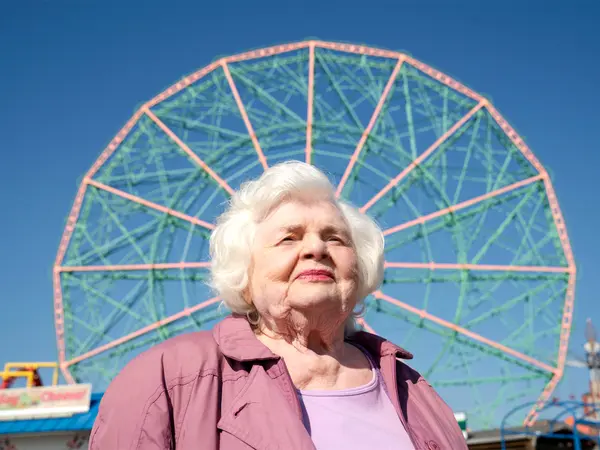
June Squibb plays a spirited nonagenarian who moves back to New York from Florida in Scarlett Johansson's underwhelmed directorial debut.
When 94-year-old Eleanor’s (June Squibb) best friend of 70 years and roommate Bessie (Rita Zohar) passes away, she decides it’s time for a change, and moves back to her native New York. In an attempt to get her out of the house and socialising, her daughter Lisa encourages Eleanor to attend classes at their local Jewish Community Centre, where she accidentally sits in on a group for Holocaust survivors. When they ask her to share her story, Eleanor (who is not a Holocaust survivor) panics, and recounts Polish-born Bessie’s story instead. She’s approached by journalism student Nina (Erin Kelliman), who wants to profile her for a class project: chaos ensues.
The problem with the premise of Scarlett Johansson’s directorial debut, Eleanor the Great, is that the story can ultimately only end one way. From the second Eleanor tells her lie we know that she’s going to get found out (because this is a gentle comedy drama) and so it’s down to Tory Kamen’s script to provide enough entertainment that the journey to this inevitable destination that it doesn’t feel like a slog. Unfortunately the writing in Eleanor the Great is less than stellar, with character painted in broad strokes (Eleanor’s disinterested daughter and grandson; Nina’s workaholic father) and precious little done to breathe new life into the fish-out-of-water narrative. The reliably charming June Squibb does her best, but Eleanor isn’t a very interesting character, partially because we don’t really learn much about her beyond her grief regarding her friend Bessie’s death. Similarly, Kelliman does her best to inject personality into Nina, but there’s very little to hold our interest, and Johansson doesn’t prove herself a particularly talented director of performances. In fact, as the film goes on, it feels like Eleanor has less and less personality, hollowed out from the snarky, spiky old biddy we meet at the beginning of the film.
Similarly disappointing is the look and feel of Eleanor the Great, which isn’t for a lack of talent. Alice Rohrwacher and Claire Denis’ regular DoP Hélène Louvart shot the film, but it has all the personality of a New York tourism board advert, and Dustin O’Halloran’s score is similarly devoid of personality. The images within the film are too general and familiar – there is nothing new about what Johansson is attempting in her directorial debut, which leads one to wonder why she bothered making it at all. It’s not a disastrous film – in fact, it’s quite inoffensive. But this glaring niceness reflects a crucial lack of ambition, and that seems more egregious than taking a big swing. In a Cannes year that also brought us directorial debuts from Kristen Stewart and Harris Dickinson, it’s safe to say that Johansson, while the most experienced actor of the group, achieves the least with her leap to filmmaking.
To keep celebrating the craft of film, we have to rely on the support of our members. Join Club LWLies today and receive access to a host of benefits.

Arab and Tarzan Nasser's thriller transports us to 2007, where two friends running a drug dealing business out of a falafel cart soon come into conflict with a corrupt police officer.
As of 2007, the Levantine nation of Palestine had already been under Israeli occupation for exactly forty years. This precise era is where twin Gazan directors, Arab and Tarzan Nasser, opt to transport us to for their latest cinematic homage to their unlawfully besieged home, Once Upon A Time In Gaza. As with their previous forays into filmmaking, the brothers shot the film in Jordan, a neighbouring country and state of refuge for many displaced Palestinians, including the directors who fled Gaza in 2012. This removal from the strip is for the sake of safety, but also has the effect of evoking a version of the city that was in no way perfect, but now fails to exist entirely. The tangible longing and affection for their motherland serve as a reminder that the Palestinian people will continue to persist and fight for their liberation.
Osama (Majd Eid) owns a seemingly inconsequential falafel shop, which frequently operates under the supervision of his only employee, Yahya (Nader Abd Alhay). The fun-sized restaurant serves up fluffy stuffed pita breads on freshly torn sheets of newspaper, inked with headlines detailing the radical resistance movement Hamas’s rise to power, a retaliatory result of the grotesque Israeli occupation.
However, falafel isn’t their only offering. Despite his hesitation, Yahya follows instructions to tuck aluminium tabs of crimson red pills, which Osama sources through forged prescriptions and pharmacy crawls, underneath the deep-fried snacks in a select few sandwiches, until a run-in with Abou Simi (Ramzi Maqdisi), a corrupt high-ranking police officer in the narcotics division, has fatal repercussions.
Two years later, Yahya remains haunted by the murder of his only companion and leads a solitary existence, until he is scouted by a director (Issaq Elias) poised to create an 80s-esque hyperstylized action flick turned propaganda project titled The Rebel. Yahya is an unassuming choice to play the titular rebel and quickly becomes a symbol of the revolution. He’s painfully shy and has little assertiveness, but his lack of self-assurance makes him a perfectly moldable figure to be the Ministry of Culture’s mouthpiece.
At times, the balance of theatricality and dark comedy in Once Upon A Time In Gaza becomes reminiscent of a medium known across the MENA region as Musalsalat – soap operas (most commonly produced in Egypt) that tackle social and political commentary, which air nightly throughout the month of Ramadan. The melodrama derives from rich cultural specificity that lends itself well to this tale of love, loss, and unrest.
The film is divided into these two solid chapters, but they don’t quite click together to become a singular cohesive piece. Nevertheless, the creative swings taken by the Nasser Brothers to craft something that breaks free from the country’s gloomy modern subtext and explores a reality beyond the ongoing genocide are something to be genuinely admired.
That’s not to say that it evades discussing the decades of suffering which Palestinians have been subjected to. Still, it finds ways to weave webs of subtext, rather than becoming a supercut of fetishized tragedy intended for Western consumption. Despite the seemingly never-ending cycle of devastation and revolution, the Nasser Brothers refuse to let their resilience and optimism for the future slip, concluding with the hopeful message that one day it will end.
To keep celebrating the craft of film, we have to rely on the support of our members. Join Club LWLies today and receive access to a host of benefits.
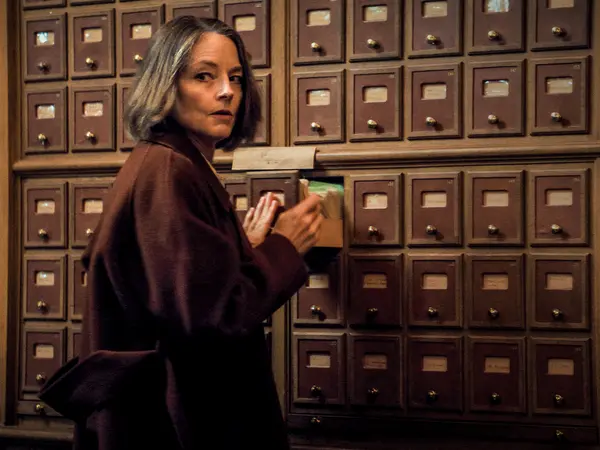
Jodie Foster stars as a psychiatrist trying to solve a potential murder in Rebecca Zlotowski's underwhelming drama.
The sight of Jodie Foster speaking fluent French is the most engaging element of this limp and convoluted psychodrama from the usually reliable Rebecca Zlotowski. Foster plays a psychiatrist named Lillian Steiner who we meet just before she storms upstairs to tell her neighbour to turn down the volume on ‘Psycho Killer’ by The Talking Heads.
Soon she receives a call from the daughter of an MIA patient to say that Paula (Virginie Efira) is dead. Is a psycho killer to blame? Or is the existence of a killer pure psychosis? Our process of discovery is as uninspired as the opening song choice.
Lillian is a confident American expat turned bourgeois Parisian whose status and poise is expressed through her lifestyle –the staircase she storms up is a gorgeous spiral with wrought iron balustrades – and the brisk handling of the men in her life. She is as disinterested in son Julian’s new baby as she is dinner invitations from her ex-husband (Daniel Auteuil) – although the latter’s profession as a doctor comes in useful when she finds that her eye is involuntarily weeping. A hypnotist tells her that she is in deep mourning, while Lillian sees it simply as a physical annoyance.
Lillian discovers the hypnotist via an aggrieved patient who has spent eight years and €32,ooo on the couch trying to quit smoking, only to achieve this in one session and €50 with a woman who walked him through his dreams. “Don’t mistake scepticism for intelligence,” the hypnotist tells Lillian, and although Lillian leaves with a parting barb, the door has already opened to a parallel life in Nazi Germany in which she and Paula were lovers who played in an orchestra together. Now convinced of a historic bond with Paula, Lillian ropes in her ex to play detective in what she suspects (based on scant evidence) is a case of murder.
The issue is not so much the varied machinations, for labyrinthine threads are par for a murder mystery, as it is the lack of tension surrounding set pieces. Whether Lillian is stalking Paula’s husband (Mathieu Amalric) or having her apartment ransacked, the tone remains perky and untroubled. Personal relationship decisions are made without so much as an italicisation from Zlotowski’s film language. Flashbacks to sessions with Paula are full of rambling details that have not been sufficiently well seeded to land as revelations.
An unwieldy script fails to account for the impact of switching lanes from sedate psychiatrist to intrepid detective or the emotional scope of reuniting with an ex. The mystery itself is powered by prosaic clues like a hair straightener. Zlotowski is much more interested in small character details that arise in the course of ordinary life than she is in the big reactions that follow dramatic incidents. There is more intricacy in the depiction of Jewish mourning than in the sweep of the story. Consummate pro that she is, Foster finds small moments to bring to life and Auteuil is afforded some charming moments, however the rest of the cast is frittered away in a forgettable flick that is much more filler than killer.

Denzel Washington stars in Spike Lee's updated version of Akira Kurosawa's High and Low, about a music mogul who is targeted by a vengeful kidnapper.
You come at the king, you better not miss – but unfortunately, Yung Felon (A$AP Rocky), an aspiring rapper and first-time kidnapper, who meant to abduct the son and heir of hip-hop mogul David King (Denzel Washington), accidentally grabbed the chauffeur’s boy instead. No matter, he still wants 17.5 million Swiss francs – cash, unmarked, in a black Jordan brand backpack – or the wrong kid dies. The setup of Akira Kurosawa’s High and Low, adapted from Ed McBain’s novel ‘King’s Ransom’, has been updated for Spike Lee’s Highest 2 Lowest, set in up-to-the-second New York City: his son, aged up to a teenager, is a budding influencer whose best friend gets nabbed while buying a chopped cheese a bodega during LIU basketball camp. The chauffeur is Jeffrey Wright, as a five-percenter with a durag and criminal record; he and King go all the way back to the hood together, and share an easy rapport in old-head slang. This gives the bootstrapping, cash-strapped CEO more to think about as he weighs his obligation to another man’s child against his family’s well-being, the demands of his business, and the court of public opinion, all while struggling to do the right thing. King’s been on the cover of Time and Rolling Stone, per the framed photos behind his desk, but despite owning multiple Basquiats and he doesn’t have £15 million liquid – it’s all tied up in a scheme to buy back a controlling interest in his record label from a soulless conglomerate.
In King’s Ransom and High and Low, Douglas King and Kingo Gondo (Toshiro Mifune) were shoe-company CEOs unwilling to compromise on quality; here, King David, as he’s called, is the founder of a Roc-A-Fella–like music company, who once boasted “the best ears in the business,” swimming upstream to reclaim his sense of artistry. 40 Acres and a Mule Filmworks founder Lee is likewise an auteur who became a brand, and judging from this movie, he’s as hungry as King is to prove that he’s still got it. He puts himself in the company of the best of Black American culture with references to James Brown and Aretha Franklin, Sula by Toni Morrison and Investiture of Bishop Harold as the Duke of Franconia by Obama presidential portrait artist Kehinde Wiley, while filling out the cast with young stars like Ice Spice and Princess Nokia; he delivers a sprawling NYC panorama in the vintage Lee style, filled with a pungent pan-ethnic supporting cast, gratuitous shoutouts to the Knicks, and Rosie Perez emceeing a Puerto Rican Day salsa concert.
In High and Low, Kurosawa literalized the gaping class divide in Japanese society by placing Kingo’s mansion on a hill above the slum where the kidnapper lives; here, the scheme is both spatial and geographic. Yung Felon looks up to King on the terrace of his apartment in one of the new high-rise luxury towers in Dumbo near the Brooklyn Bridge, high above Fort Greene Park where Lee shot his much scrappier first feature, and literal and metaphorical miles from his digs in the South Bronx. Both McBain’s novel and Kurosawa’s film are studies of the law-of-the-jungle capitalism of the postwar economic boom, which Lee updates for a more entrepreneurial age with the constant patter of grindset homilies – though we don’t know much about King’s rise out of the ghetto, we can imagine it. Highest to Lowest follows High and Low in changing the novel, having King eventually agree to pay the ransom after many minutes of every-man-for-himself denial and wrenching self-justifications. Alan Fox’s script filters this moral quandary through modern media tropes, as King and his advisors weigh a fear of cancel culture against the realities of celebrity worship in the social-media attention economy, but the film doesn’t develop many original thoughts about the nature of modern stardom, our alternate admiration and suspicion of wealth and privilege, and social attitudes to crime. The moralizing Japanese newspapers whose pro-business, police-friendly editorials were the background noise of High and Low are here replaced by a meagre handful of notably unconvincing facsimiles of memes that characters pull up on their phones and show each other.
The homebound first act of High and Low is largely exposition, with the police listening in on phone calls as Kingo struts and frets like a caged tiger and wrestles with his dilemma. This is fundamentally static material, a limitation which Kurosawa transcended with the greatest widescreen blocking of all time. Lee’s staging is comparatively rushed, flat and antsy (in comparison, what staging wouldn’t be? But even still)… but he does dynamic work when the action leaves King’s apartment and moves onto a Bronx-bound 4 train. He’s always been a filmmaker who feeds on the energy of the city and its people and does great, cacophonous work on the film’s equivalent of the film’s MTA update of Kurosawa’s bullet-train ransom drop, filling the car with screaming Yankee fans on the way to a game and contriving a kidnapping scheme involving a brake bandit and electric moped chase. After Washington’s King claims a movie star’s privilege not afforded to Mifune and overtakes the cops with his own investigation into the kidnapping, Lee returns to the 4 for a subway-surfing fight scene. This is, simply, one of the great New York City subway films – up there with The French Connection, which it references – though there’s also a very unintentionally funny moment in which A$AP Rocky jumps a turnstile, quickly followed by Denzel Washington’s stunt double.
Washington is too old for this part, but also perfect for it. In tailored suits and blingy earrings, he’s an alpha dog who’ll intimidate his own son when challenged but also flash his veneers when glad handling the investor class. He’s presumably dined with presidents, but code-switches when he gets on the phone with the kidnapper, dropping into a peacocking street-corner patois. A$AP Rocky has a mumble-rapper’s standoffish apathy and he draws out notes of musicality and Shakespearean urgency from a very motivated Washington in the first of two confrontations that echo High and Low’s immortal closing scene, with Kingo and the kidnapper staring each other down from opposite sides of a prison’s bulletproof window. Here, King and Yung Felon meet for the first time while separated by the soundproof glass of a recording studio, and producer and artist face off with freestyles and opposing ideas about hustle culture and individualism, black fatherhood, and generational values. It’s far more effective than the second such scene, a mere echo of High and Low that’s followed by a cringey coda celebrating Black Excellence. But you take the good with the bad, the high with the low, all included in the price of admission for a showcase of Spike Lee’s undiminished vitality.
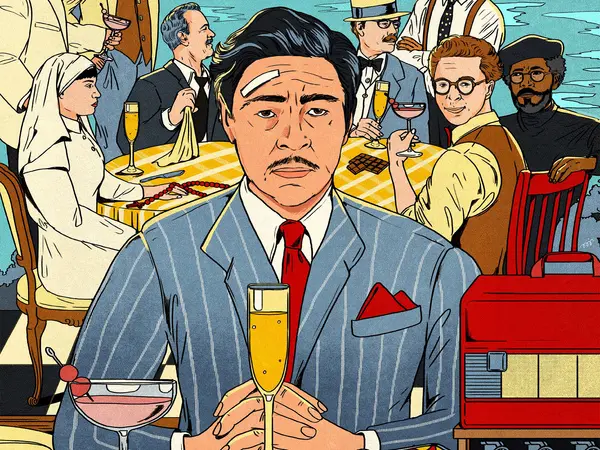
Pack your bags for a madcap, cross-country adventure with our issue dedicated to Wes Anderson’s latest, The Phoenician Scheme.
Every Wes Anderson film is a major event on the cinematic calendar. It’s not merely the film that is played in cinemas and you saunter along on a Friday night to see it as big as possible; a whole world emerges around it and the immersive lore draws you in with its irresistible whimsy.
The Phoenician Scheme is a film whose roots snake back to the premiere of The French Dispatch in Cannes, where Anderson mentioned to one of his many stars, Benicio del Toro (at that point a Wes World debutant), that he had another project in the pipeline that he’d be keen to collaborate on. Whisk on four years, one feature (Asteroid City), a handful of shorts (including Oscar-winning The Wonderful Story of Henry Sugar), and del Toro is suited, booted and very bruised as the most charming arms dealer in cinema history, Zsa-zsa Korda.
Styled after the great Luis Buñuel (in both his style choices and his grappling with spiritual morality), Zsa-zsa is initially seen piloting a sabotaged plane as it plummets to earth. He miraculously survives the crash and then decides its high time he put his legacy in order. Enter Sister Liesl (Mia Threappleton), his estranged daughter who is now a woman of the cloth and duly appalled by her father’s activities. He explains to her his “scheme” and assures that upon completion she will be shot of him and have her birthright. With Michael Cera’s Norwegian insect scholar Bjorn along for the ride, we’re finally set for adventure.
The Phoenician Scheme is a film obsessed with ephemera, objects and art, possibly more so than any Anderson film before it. We have jumped on this intriguing design aspect and made an issue collecting together books, film, art and music. And for this issue, in the spirit of this overwhelmingly tactile, physical filmmaker, we have included an array of handmade artwork of the type where you can see the human fingerprints on each piece.
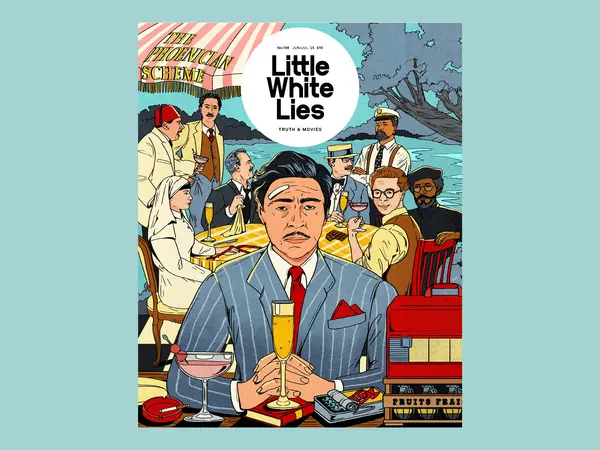
On the cover…
We have been massive fan of the Chilean illustrator María Jesús Contreras whose colourful works offer a dazzling combination of the expressive and the absurd, and so we hoped she would answer a call for a Wes Anderson-based commission. The extraordinary piece she delivered for us which adorns the cover of issue 108 was very loosely inspired by August Renoir’s famous painting, Luncheon of the Boating Party, in reference to Zsa-zsa’s own formidable art collection and Anderson’s love of a great ensemble.
Also in this issue we have incredible new work from Maddie Fischer, Elio Moavero, Zoe Pappenheimer, Judith P. Renault, Stéphanie Seargeant and Nick Taylor.
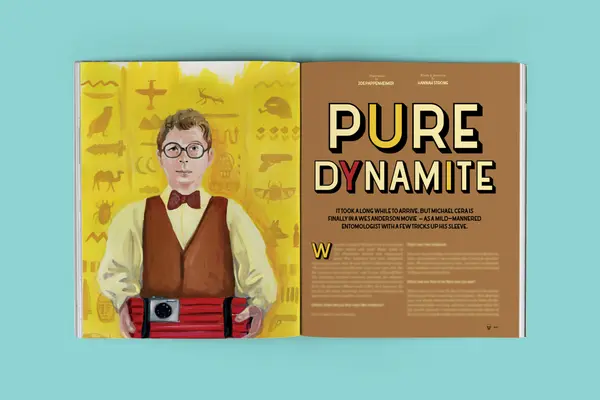
In the issue…
Artists and Models
Hannah Strong has a long chat with the maestro himself, Wes Anderson.
Rolling With the Punches
An introspective Benicio del Toro on playing an absolute rascal and the troubles of seeing himself on screen.
Sister of Mercy
A deadpan star is born in the form of The Phoenician Scheme star, Mia Threapleton.
Pure Dynamite
Michael Cera x Wes Anderson is a match made in heaven, and the actor himself heartily agrees.
Set It Off
The production design legend, Anna Pinnock, talks building a world fit for Zsa-zsa Korda.
Rotters! Rascals! Rapscallions!
Inspired by Zsa-zsa Korda, 49 rotters plucked from the films of the 1940s.
A Wes Anderson Book Depository
A three-pronged celebration of books – real and fake – in and around the world of Wes Anderson.
In the back section…
Ben Rivers
David Jenkins speaks to Ben Rivers about his return to the Scottish wilderness for his new feature.
Daisy-May Hudson
Katherine McLaughlin talks to the writer/director about the ambiguous and sometimes tragic nature of motherhood that is the subject of her forceful debut.
Athina Rachel Tsangari
The industrious and passionate Greek filmmaker on her subtly apocalyptic new work, Harvest.
In review…
David Cronenberg’s The Shrouds
Beatrice Minger’s E.1027 – Eileen Gray and the House by the Sea
Ben Rivers’s Bogancloch
Mariano Llinás’s The Triptych of Mongongo
Sean Byrne’s Dangerous Animals
John Maclean’s Tornado
Katell Quillévéré’s Along Came Love
Andreas Dresen’s From Hilde, With Love
Daisy-May Hudson’s Lollipop
Hind Meddeb’s Sudan, Remember Us
Amalia Ulman’s Magic Farm
Rúnar Rúnarsson’s When the Light Breaks
Kei Pritsker and Michael T Workman’s The Encampments
James Griffiths’s The Ballad of Wallis Island
Athina Rachel Tsangari’s Harvest
Rebecca Lenkiewicz’s Hot Milk
Aylin Tezel’s Falling Into Place
Matt Turner and David Jenkins review eight exciting Home Ents releases; Marina Ashioti sends a postcard from the IndieLisboa film festival, and for her Sticky Gold Stars column, writes about the digital archiving efforts preserving Palestinian and trans visual culture.
Join Club LWLies as a 35mm or 70mm member to subscribe, or get a copy of LWLies 108 via our online shop.
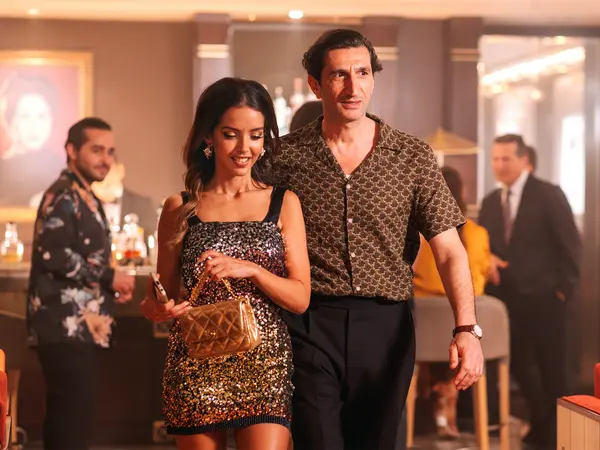
A slick screen icon becomes a political pawn in this brash movie industry satire-cum-political spy thriller from Tarik Saleh.
From films such as István Szabó’s 1981 Mephisto to Rainer Werner Fassbinder’s Veronika Voss from 1982, we all know that no good comes to artists who chose to bend the knee to fascist powerbrokers. What may initially seem like a clever play for patriotic credo always leads to disaster when the political high-ups inevitably come tumbling down from their gilded perch.
Egyptian filmmaker Tarik Saleh closes off a trilogy of films exploring high-level corruption in his homeland (preceded by 2017’s The Nile Hilton Incident and 2022’s Cairo Conspiracy), with a glossy portrait of a modern screen icon whose own cultural dominance is forcibly leveraged by the ruling party, and suddenly his lofty image of progressive artistic excellence is transformed into something else entirely.
Leading man Fares Fares delivers a commanding and charismatic performance as George Fahmy, known in Egypt as “The Pharaoh of the Screen” and whose face adorns movie posters, murals and social media feeds up and down his country. Indeed, the film draws numerous allusions to ancient times with its city penthouses framed as modern pyramids and the ruling class as untouchable elites with the power of life or death.
George is also the bane of the fundamentalist all-female censorship board with his sexually suggestive and amoral movies (one of which includes The First Egyptian on the Moon), and his off-screen, Stella Artois-quaffing hi-jinx sits him somewhere between a cad and a rotter, with a son from a wife who he is now separated from and young mistresses in apartments all over town who all want to get ahead in the movie business.
With the world apparently at his feed, George suddenly finds himself smack-dab in the middle of an ethical minefield, when goon-like government officials simply insist that he not only accept a role in a bloated hagiography of sitting (since 2014) Egyptian president Abdel Fattah al-Sissi, but also deliver a rousing keynote speech at an upcoming military parade on the anniversary of the 2013 revolution/coup d’etat (delete as applicable) which ensconced Al-Sissi in power.
It’s a sticky wicket for sure, but the supremely confident George feels that his level of celebrity is such that he’ll come out of all this smelling of roses, and with a fat paycheque from his dubious, bureaucratically top-heavy paymasters. The presence of a person known as Dr. Mansour (Amr Waked) on set who seems to be pulling the strings of the avatar director, sets up the first of many dark players on our hero’s increasingly dicey journey into the unknown.
Initially, Saleh’s film suggests itself as a gaudy ensemble satire that hits its fish-in-barrel targets with amiable precision. The idea of a film production that’s being made by committee perhaps transcends the context behind this story and could be a stand-in for the majority of big studio productions across the globe. Yet the film pivots awkwardly into political thriller territory, as shady government enforcers are very quick to prove that they have ways of making you act.
It’s a slick and fitfully amusing affair that never quite penetrates deeper than the surface in its broad critique of the uncomfortable intersections between culture and state. George has his agency and power drained from him, and the film duly loses interest as he becomes little more than a handsomely turned-out tumbleweed in the winds of unscrupulous power.
To keep celebrating the craft of film, we have to rely on the support of our members. Join Club LWLies today and receive access to a host of benefits.

Two couples find themselves caught up in a love quadrangle after one of them separate in Michael Angelo Covino's romantic comedy.
The course of true love never did run smooth, and for the kind but clueless Carey (Kyle Marvin) he’s in for a rude awakening. His wife of 13 months, whom he met at a concert for soft-rock crooners The Fray, has just announced she wants a divorce. Ashley (Adria Arjona) is a free-spirited life coach, and just can’t see a future with Carey, despite his clear adoration of her. He seeks solace from his wealthy friends Paul (Michael Angelo Covino) and Julie (Dakota Johnson) who reveal the secret to their own seemingly harmonious relationship: an open marriage. Paul and Julie theorise that in removing the shame associated with cheating, they give themselves no reason to break up. At first Carey is surprised, but he quickly comes around to the idea. After all – it seems to be working for Paul and Julie. Right…?!
Marvin and Covino are real life best friends (who also wrote and starred in 2019’s The Climb together) so it figures their on-screen chemistry is natural and charming, but the buddies quickly come to blows when Carey gets himself mixed up in Paul’s marriage, and a ludicrous fight scene between the two of them in Paul’s architecturally splendid lake house is an early highlight of the film. There’s less chemistry between the actors and their on-screen wives, despite the fact Arjona and Johnson are quite convincing comedians. It’s never really clear what these beautiful, savvy women see in Carey and Paul, particularly the latter, who repeatedly proves himself to be at best a liability, at worst a psychopath – which is shrugged off as endearing by his friends and wife, as is the behaviour of their tearaway child Russ who keeps stealing jet skis and getting in trouble at school.
It’s a highly macho sort of romantic comedy posing as progressive by showing two sexually liberated modern women, but we don’t really ever get much insight into their characters beyond the fact that their pursuit of other partners stems from a lack of satisfaction rather than, y’know, just wanting to live their lives. Despite its supposed progressive premise about the way modern relationships can work, Splitsville is in fact quite traditional by its conclusion, rendering most of the plot ultimately a waste of time. It’s a film not without occasional moments of spark, and flits along quite happily, but Splitsville seems continually intent on undermining itself, and in the process becomes totally forgettable.

Launching in July, Collective Film Festival London will offer a variety of inclusive, international film screenings alongside multidisciplinary, DIY workshops.
The first ever Collective Film Festival London (CFFL) will take place later this summer with the aim of building a new community for emerging and established filmmakers alike.
The one-day event in July will include screenings of shorts and feature films from around the world (both in and out of competition), and host activities that celebrate filmmaking while broadening attendees’ skills in a variety of disciplines.
Festival director Anthony Vander, a guerrilla filmmaker for over a decade, says the idea for CFFL was born out of a need to “bridge the gap” between seasoned and less-experienced filmmakers, and the desire to equip more underrepresented voices with the tools and personal connections to make themselves heard.
“Creating community is something that the film industry could always do with improving”, Anthony explains. “It’s not just from my own experiences, but more so the experiences of creatives that really want to break into the industry.”
This sentiment is echoed by deputy festival director, Bethany Taylor-Goh, who having “caught the filmmaking bug” in 2024 believes she wouldn’t be where she is now without the people that she’s met along the way.
“I didn’t go to film school. I didn’t have these contacts or this knowledge of the industry that you feel like sometimes you need to, and it can feel very alienating,” she says. It was very important for her and Anthony to create a festival that’s valuable for first-time and emerging filmmakers, and that they themselves “would love to go to and learn from.”

CFFL aims to help develop filmmakers’ skills through workshops and Q&As focused on overcoming various filmmaking roadblocks such as difficulty networking, restrictions on budget or access to locations.
Bethany adds, “Whether you’re interested in cinematography, lighting, sound, you’re an actor, or you’re multidisciplinary, there’ll be things at the festival that everyone can learn from.” She and Anthony believe that the festival’s community spirit will be further fostered by slightly unorthodox activities like karaoke.
The pair believe in the power of social media in building community, and will be leaning on it heavily to help promote creatives’ work online and make their collaboration and networking easier. Bethany describes how in the past many of her collaborations have happened from seeing what people share on Instagram, rather than through film festivals.
“It can be difficult sometimes. You go to these film festivals and meet so many people and then it’s just silence afterwards. If you don’t manage to see someone’s film or catch them, and they leave the festival immediately afterwards, you’re not sure how to follow them up.”
Through mailing lists and social media posts, including vox pop-style interviews, Bethany and Anthony hope to build a platform to help filmmakers keep in contact with each other long after the first CFFL comes to an end. They also hope to inspire other festivals to emphasise their potential to build communities, an essential for amplifying underrepresented voices.
Looking to the future, CFFL aims to be a yearly event and eventually join the Association of Independent Film Festivals.
In terms of the screening programme, the festival will have an international flavour, showing films from around the world. The CFFL team has received submissions from the likes of Nigeria, India, Iran and Taiwan, among others.
“They’re not just shorts, they’re features and documentaries”, Anthony remarks. “We’re not just looking for films that are set in stone and have a particular budget or crew cast attached, but also first-time and second-time filmmakers, and stories that are not just rooted in the UK but also worldwide.”
The inaugural Collective Film Festival London takes place on Friday 18 July at Collective Acting Studio. Book tickets at collectiveactingstudio.co.uk and follow the festival on Instagram.

Returning to Cannes after winning the Palme d'Or for Titane, Julia Ducournau shifts gears with a unique drama inspired by the AIDS crisis.
“I’m not afraid to die.” The refrain of Nick Cave and the Bad Seeds’ ‘The Mercy Seat’ seems hardcoded into the DNA of Julia Ducournau’s third feature, which sees the Palme d’Or winner move away from the shock and awe body horror of Raw and Titane into something somehow sadder and stranger. That’s how 13-year-old Alpha (Mélissa Boros) fancies herself, reckless and angsty in her adolescent way, kicking against her mother’s (Goldshifteh Farahami) parenting with drinking and smoking and having an affair with her classmate Adrien even though he already has a girlfriend. But if Alpha is the screaming guitars and defiant snarl of Cave’s first iteration of this song, her Uncle Amin (Tahar Rahim) is the soul-wrenching resignation of the version recorded a quarter of a century later. He turns up mid heroin detox, sprawled on Alpha’s bedroom floor, rail thin, shivering and sweating through his clothes with trackmarks on his arms. Alpha doesn’t recognise him; she threatens him with a knife. Amin just laughs.
The stab of a different needle sets Alpha into motion: when the teenager returns from a house party with a crude stick-n-poke tattoo of the letter A on her arm (not quite a scarlet letter but not far off), her mother is understandably angry, but more than that, she’s frightened. A fatal blood-borne illness has swept through society, causing the sick to slowly, painfully turn to stone, and as one of the few doctors willing to treat the sick, she’s witnessed it first hand. Alpha’s cluelessness sends her mother into a tailspin. Amin has already contracted the disease through his drug use and she can’t bear to lose another loved one.
The unnamed virus is an obvious stand-in for AIDS, perceived with the same hushed disgust by outsiders. In Alpha’s English class her teacher (Finnegan Oldfield) is subject to homophobic slurs from his students; when Alpha later sees him in the hospital waiting room, accompanying his sick partner, she’s the only person who doesn’t recoil. But the painful transformation of the sick into stone relics is a curious twist. They become monuments to the very thing that killed them, not just the sickness but the treatment of the sick – their ostracisation and abandonment. Here Ducournau positions the dead as martyrs, as worthy of a monument as any king or general, a testament to the burden of shame placed upon them by society which placed the blame for AIDS at the feet of the LGBTQ+ community. The burden of shame that reverberated for generations and still isn’t taught in schools, as we slide backwards towards conservatism in our present and run the risk of learning nothing from the past.
In school, rumours swirl that Alpha has contracted the virus and she is bullied accordingly – she remains stony-faced, but her fierce defence mechanisms can only hold out for so long, especially when Adrien turns on her too. She seeks comfort in her uncle’s company, the only person truly willing to be honest with her. (The only person who seems to truly understand her.) Even dying Amin is fiercely alive, his mouth fixed into a grin like he understands a joke no one else is in on, as he’s begging Alpha and her mother to let him go. It’s a towering performance of pathos but not pity from Tahar Rahim, and the newcomer Mélissa Boros, with her expressive eyes and wild animal physicality, is a revelation as his foil. There’s such loneliness here, of a teenage girl, a single mother, a drug addict and scores of the sick, pushed to the fringes and bound by their isolation.
Meanwhile the timeline slips between the past and present, as Alpha’s exhausted mother becomes just like her own, grasping at old superstitions. Her rational, scientific mind is traumatised by her own experience and Amin’s illness as well as the new threat to her daughter; she remembers how her mother used to think Amin was sick with ‘The Red Wind’ and could be cleansed with water. In her grief she’s willing to believe in anything that might give her a little longer with a loved one.
It’s become a running joke how many films seem to revolve around the vague concept of grief these days, but considering it’s only five years since a global pandemic, it’s understandable that the collective process of mourning continues to dominate art and culture. While Covid was largely different from the AIDS pandemic due to the inherently homophobic and classist narrative pedalled during the 70s and 80s that led to thousands more deaths and delays in healthcare advancement, it’s hard to not see the frozen stone statues of Alpha and think of how our collective relationship to death might have changed as a result of what we lived through (then and now). What’s more, grief is an undeniable part of the human experience: to love someone is to eventually grieve them. It’s an inherently vulnerable act, and Alpha is an inherently vulnerable film, no gross-out moments or big body horror showstoppers for us – or Ducournau – to hide behind. Alpha is as thorny as her previous two features, but there’s something lonely and longing here too.
But if death is a part of life, so is dancing. Kissing. Laughing. Running. Holding a ladybird in the palm of your hand, gentle and awed, or arguing with someone who loves you down to your bones. For all its cool stone, Alpha is not a cold film, and vibrates with life in the way Raw pulsed with desire and Titane with white-hot fury. Grieving is a process of letting go, but it’s also a process of finding the parts of people we’ve lost that eventually become a part of us – of learning how to carry on even as we can’t forget.
To keep celebrating the craft of film, we have to rely on the support of our members. Join Club LWLies today and receive access to a host of benefits.

Hlynur Pálmason's close-to-home new dramedy documents a year in the life of a family following the parents' separation.
When he speaks of his inspirations, the Icelandic filmmaker Hlynur Pálmason mentions as many visual artists as movie directors: in particular, he has cited the photographer Sally Mann, who photographed her family over the course of many years, and Monet, who painted the water lilies in his own garden again and again. Godland, Hlynur’s previous feature, was a historical period piece, about a Danish priest on an errand into the 19th-century Icelandic wilderness, that was praised for its rigorous and magisterial formalism, in shots like the time-lapse montage of a horse decomposing across a year, in all kinds of light and in all kinds of weather; the horse was Hlynur’s father’s, and he would photograph it every day on the way home from dropping the kids off at school, part of an artistic practice that is deliberately interwoven with his everyday life.
His new film, The Love That Remains, is ostensibly a slice-of-life dramedy about a very Icelandic family: mom Anna (Saga Garðarsdóttir) and dad Magnus (Sverrir Guðnason) are separated, but he comes over for dinner and stays late into the midsummer white nights to play basketball with the kids. But more than a particular narrative, the film is an attempt to, as Hlynur has described, “work with what surrounds me,” and to allow the raw materials of family and landscape to unfold over time in a process that might be called “slow filmmaking” (as opposed to “slow cinema”; he generally has several projects on the boil at once, each taking multiple years to finish).
Anna and Maggi’s children are played by Hlynur’s own children, twin sons Grímur and Þorgils and teen daughter Ida, who is more mature and moody than she was in her supporting role in Godland just a couple years ago. The family hike and gather blueberries and mushrooms near Hlynur’s real family home in the shadow of the glacier Vatnajökull; fisherman Maggi goes out to see to reel in the herring nets;on a fencepost overlooking the North Atlantic; the kids rig up a dummy, a knight in armor, on a fencepost, and shoot at it with a bow and arrows. Hlynur films it from the same angle in every time of year and in every kind of weather: rain, snow, wind, mud, endless summer nights and dark icy winters. Time flows on in montages of still images and tableaux, particularly close-ups of the children posing for the camera, which, especially when accompanied by Harry Hunt’s gentle piano score, seem like photos in a family album. And the seasons, they go round and round…
Anna is an artist whose work, like Hlynur’s, is time-based: she covers large canvases in abstract metal shapes and leaves them outdoors in a field for months, letting the metal rust and the rust transfer to the canvases in unpredictable ways. This is also the method by which the eminent Icelandic sculptor Jóhann Eyfells made his majestic sculpture-on-canvas “Cloth Collapsion”; The Love That Remains is filled with visual echoes, deliberate or otherwise, of contemporary Icelandic visual art, including Olafur Eliasson’s photo series Cars in Rivers and the overhead views of moss, grass and wildflowers, bordering on abstraction, of Eggert Pétursson.
At the outset of her career, Saga was a standup comic whose act was built on her goofy, windmilling stage presence and edgy hanging-with-the-boys quips; here, in lithsome early middle age, she’s strikingly grown-up and wind-whipped as she considers romantic independence and artistic frustration (including a mean-spirited and very funny interlude in which a pretentious Swedish gallerist visits, talks nonsense at her nonstop, and then declines to represent her). It’s a wistful central performance in a film that sketches out the easy rhythms of family life (and features the Icelandic sheepdog Panda in a scene-stealing turn as herself), but though grounded in the domestic, verisimilitude is not the film’s primary concern.
Hlynur’s scripts, organized around stark elemental oppositions and broad thematic strokes, have the feeling of being composed more than written; striking vignettes illustrating the push-pull of old lust, or the burgeoning rift between a parent and a child, unfold in frozen gestures moreso than as dramatic choreography; the film arranges elaborate visual concepts to demonstrate violent chance, earthy sensuality, and especially patriarchal self-flagellation. Maggi’s directionless outside the nuclear family is here rendered literally with a striking shot of Sverrir floating on his back in the ocean, buffeted by the tides with a setting sun in the far distance. The Love That Remains becomes increasingly surreal as it goes, with Hlynur’s cast acting out slapstick sight gags and dream sequences inspired by B-movies and Bergman. The movie corkscrews along until it finally just ends — but Hlynur’s life, and the lives of his children and the natural world that surrounds them, continue.
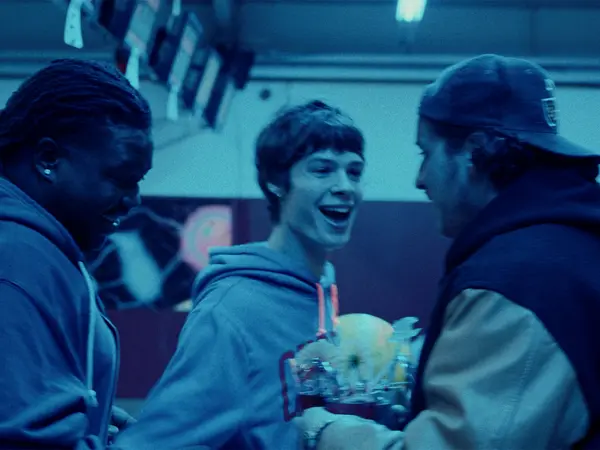
A reckless act of youthful troublemaking sends two best friends on a downward spiral in Hubert Charuel's drama.
Boys will be boys. That’s the kind of idiom that would be used to brush off a fleeting encounter with Mika (Paul Kircher) and Dan (Idir Azougli), two twenty-somethings from sleepy French suburbia, who are arguably too old for their reckless habits. After an evening at a bowling alley, drinking colourful cocktails made from cheap liquor and sharing a few puffs from a pristinely rolled joint, the pair jump in Mika’s car and head back to their minorly dilapidated shared flat. As they weave through tree-lined country roads, Dan abruptly demands they stop the car, only to return with a marmalade coloured Maine Coon. Little do they know that the temperamental creature – which Dan is already bargaining to sell – is a prized cat aptly named Sunset, whose GPS collar tips its owner off to their catnapping. Before long, the two boys are apprehended and faced with several charges, fines, and even a potential jail sentence.
In his first fictional feature for the better part of a decade, writer-director Hubert Charuel uses this introductory scenario as a comical red herring to set in motion the melancholic way in which the paths of two best friends, whose lives until that point were on a similar trajectory, gradually diverge for good. Where the threat of punishment is a wake-up call that Mika uses to clean up his act and get sober, it becomes Dan’s breaking point and the beginning of a downward spiral.
It’s undeniable that Dan’s alcoholism stems from the hopelessness exuded by the wasteland of their small town, which also stifles his ability to dream of achieving bigger and better things. Neither of the two boys seems to have a present family member, or any wider support system for that matter, other than their friend Tony (Salif Cissé). Though he must be of a similar range, Tony appears to have a far steadier existence, living in a gated house and stable work in construction at a nuclear waste plant. To no surprise, it’s Tony that the duo turn to when they are told to accumulate paperwork proving they have income and employment for their pending trial, and so they too spend their days navigating eerie mazes of concrete walls emanating mild radiation.
A nuclear waste plant seems hyper-specific, but serves its eventual function. Dan and Mika seemingly begin to experience symptoms of acute radiation exposure, which begins to worsen the physical ailments Dan began to experience in the first act as a result of his excessive drinking. After a workplace accident, it dawns on Mika that he must take action to safeguard the person who means the most to him. He negotiates monetary compensation to set Dan on a better course and implores him to enter rehab, but it’s no use; his best friend is too far gone.
Météors rests on the shoulders of two youthful newcomers in French cinema who are quickly rising to prominence. Both as a duo and individually, Kircher and Azougli offer robust performances that sway between rowdy displays of masculinity and hushed tenderness as these lost fledglings on the fringes of society. As their intertwined fates unravel, we are reminded that while the path of life is in part about the involuntary circumstances you find yourself in, it is equally a matter of what you choose to make of it. Still, no cautionary message from Mika and Dan’s parable resonates more deeply than the truth that losing a loved one is the harshest punishment of all.
To keep celebrating the craft of film, we have to rely on the support of our members. Join Club LWLies today and receive access to a host of benefits.

There are hidden gems ripe for discovery in the youngest and smallest Cannes sidebar.
On April 15 of this year, ACID, the youngest and smallest of the parallel selections at Cannes, announced its lineup, which included Sepideh Farsi’s Put Your Soul on Your Hand and Walk, a portrait of the 25-year-old Palestinian photographer Fatima Hassouna and her work documenting the ongoing atrocities in her native Gaza. The next day, Hassouna was killed, along with 10 members of her family, when an Israeli airstrike targeted her home. Both ACID and Cannes released statements in response to her death; the difference between the two is illuminating. Cannes said that Hassouna and her family “were killed by a missile that hit their home,” and numbered among “the far too many victims of the violence that has engulfed the region.
The Programme Committee of ACID 2025, meanwhile, said that “an Israeli missile had targeted her home, killing Fatem and several members of her family,” making her “one more death added to the list of targeted journalists and photojournalists in Gaza, and at the time of writing, to the daily litany of victims who die under bombs, out of hunger, and because of politics of genocide that must be stopped and for which the Israeli far-right government must be held responsible.”
Cannes is, for better or worse, one of the defining bodies of contemporary institutional film culture, and letting individual filmmakers make political statements while assiduously pretending not to know what they’re saying is about the best we can hope for from institutional film culture at the moment. ACID’s tickets are available for booking through the Cannes website, but it is very much its own thing, even if, by programming Put Your Soul on Your Hand and Walk, it made Fatima Hassouna the festival’s business, and motivated Palme d’or jury president Juliette Binoche to devote a couple minutes of her remarks at the opening ceremony to the martyred journalist.
Founded in the early 1990s, “L’Association du cinéma indépendant pour sa diffusion,” the independent film association for its distribution, supports independent film in France and internationally through a number of festival and theatrical exhibition initiatives. Its selection at Cannes every year is selected by a programming committee of association members, and its selection, this year as every year, reflects the affirmative priorities of the film artists who make up the association. This year, that seems to mean films whose politics are embodied in their urgency and ambition, as well as indie-universalist humanism from filmmakers from different backgrounds.
Another documentary, Sylvain George’s Obscure Night – “Ain’t I a Child,” registers among of the former category. George embeds with migrant boys in Paris as they hang out all at night in large throngs late night below the Eiffel Tower, sleeping rough, scavenging for coins and cigarette butts, comparing trajectories through Europe’s bureaucracies and custodial systems, plans for papers and arrest histories. Two and three quarter hours long and the culmination of a three-part series, the film uses duration, particularly within distended bull sessions and peacocking fights, similar to the earlier works of Pedro Costa, and the frames are classical as Costa’s are, too, but differently so: the film is in magazine-glossy black and white, full of striking angles on famous landmarks and unfamous, acne-scarred faces, both made equally heroic.
Like Lance Oppenheim, George finds revealing moments all the more striking for being conveyed in a conspicuously cinematic language of continuity editing and striking compositions. Given the film’s rapport with youth exploring an urban environment, comparisons could also be made to author-subject collaborative films like Bill and Turner Ross’ Tchoupitoulas or Michal Marczak’s All These Sleepless Nights, here achieved in the service of moving lives from the margins of Europe to the looming foreground.

Of the fiction films, the opening night selection, L’Aventura, is like Aftersun, seemingly inspired by autobiographical home movies of the filmmaker’s childhood family vacation. In Sophie Letourneur’s film, 11-year-old Claudine, her harried mother, her feckless stepfather, and her not-yet-potty-trained 3-year-old half-brother travel around Sardinia on their summer holidays. The film jumps back and forth, its chronology occasionally garbling as memory does, as the family re-narrates their trip as voice memos for Claudine’s cellphone. A rare acknowledgement of the lower-maintenance older sibling (but not so old that she’s forgotten the power of a sulk), these recaps, taking place at restaurants and recapitulating the bickering, lost wallets, missed turns, improvised itineraries, disappointing meals, gorgeous sunsets, and all-ages tantrums, are a classic memory-making exercise as well as a rare moment of calm in a family frazzled by meeting the very different demands of a tween and a toddler, and by the rivalries of a mixed family. Any film which features a 3-year-old boy in every scene is necessarily a documentary; Letourneur’s is relatably lively (if it’s not your family) and tense (if it is).
Drifting Laurent is a story of quarterlife male malaise, in which the eponymous failure to launch crashes for the offseason in a family friend’s empty ski condo in the foothills of a not-so-magic mountain. Then he stays, orbiting an inevitably quirky constellation of lost souls, among them a dying woman, hippie caretaker Béatrice Dalle, and her large adult son, a Viking reenactor and vlogger. The tone established by filmmakers Anton Balekdjian, Léo Couture and Mattéo Eustachon is tender, almost morose at times, but enlivened by comic moments of frankly confrontational social awkwardness, and a few gags dependent upon drolly specific camera positioning.
Another twentysomething malaise movie, Lauri-Matti Parppei’s debut A Light That Never Goes Out, is more pungent with textures of Braff. A classical flautist retreats to his childhood home in provincial Finland’s Rauma after a breakdown, and thaws under the watchful and antic ministrations of a manic pixie dream performance artist — a type that really does tend to thrive in the indulgent DIY culture of the Nordic welfare state. It helps that the director is also an experimental musician, and that the avant-punk band the wayward protagonist sort-of forms, which mixes ambient drone with d.i.y. effects like the sound of a hand mixer immersed in a gallon of water, is actually pretty good; also that the filmmaking is attentive to the subtleties of a novel location. (Attention to the masculine postures of the rougher urban areas outside of Lisbon is also the high point of Pedro Cabeleira’s Entroncamento, an overlong neon-night/interlocking character crime thriller that strikes its poses unconvincingly.)
One more young man in limbo is at the center of the best film I saw in ACID, and one of my highlights of the festival. A young student in New York City to catsit in a vacant apartment, sit idly at the front desk in a mostly empty art gallery, and cruise the mostly empty weeknight residential streets and dark park for sex is the subject of Drunken Noodles, from Lucio Castro. Castro’s End of the Century, a modular melodrama about boxes within boxes (apps on home screens of phones of people passing through Airbnbs and looking for sex on Grindr). His third film — the second, After This Death, just premiered at the Berlinale earlier this year to mixed reviews — follows End of the Century, one of the last great films of the 2010s, in taking abrupt leaps forwards and backwards in time, and maybe into and out of alternate realities, opening and foreclosing alternate human connections and life paths. Castro’s soothingly paced, exquisitely poised vision of queer life and city life defined by contingency and possibility is both radical and bittersweet.

An undercover agent discovers he can't escape his troubled past in Kleber Mendonça Filho's gripping new drama about the height of Brazil's military dictatorship.
When Marcelo (Wagner Moura) first arrives in Dona Sebastiana’s building, he is greeted by a curious cat whose head is split into two fully formed faces, each facing an opposite direction. In a way, Brazil is much like that cat, constantly looking at two realities at once: the past that has shaped it, and the future it resiliently stumbles towards.
Kleber Mendonça Filho’s The Secret Agent first finds Wagner Moura’s character arriving back in his homeland of Recife after a stretch in São Paulo. Driving a bright yellow VW Beetle, the man’s first glimpse of his home state is an ominous one: a body stretched in front of a petrol station, blood and oil seeping into the arid grounds of the Northeast. It is a sign of what is to come, a gnarly omen in gnarly times when violence is not only common but sanctioned. It is 1977, and Brazil has just crossed the halfway mark of a dictatorship that would last another eight years but come to define much of the country’s identity for the decades that come.
The Secret Agent arrives two years after Filho’s Pictures of Ghosts, an intimate film about the movie palaces of his beloved Recife. That project would take seven years, some of them shared with the writing of his latest. This intersection is ever felt, the two works seeping into one another, coexisting in a land of memory where one is made time machine, the other a paracosm.
Alexandre, the projectionist of Recife’s Cinema São Luiz and a prominent figure in Pictures of Ghosts, returns here as part fiction, part truth. Played by Carlos Francisco with the same lopsided limp and open terracotta shirt, the fictional Alexandre is Marcelo’s father-in-law and, most importantly, grandfather to his young boy, Fernando. The man is the gateway to bringing Filho’s beloved cinema to the thriller, a movie palace whose labyrinthine corridors and small hidden rooms prove the perfect location for Marcelo’s secret testimonies.
The reason for those testimonies, given by the elusive man to the even more elusive Elza (Maria Fernanda Cândido), is at the heart of this political thriller that drinks from the fountain of the classic American genre and fiercely spits back its Brazilian counterpart. Like Bacurau, the film is shot in anamorphic Panavision, and just like Bacurau, it harnesses the specificities — and history — of the format to pay homage to the great classics Filho perhaps once watched at the same screens Marcelo peeks at through the projection booth window where sweat drips onto celluloid.
Filho’s cinephilia is stitched through The Secret Agent both diegetically and non-diegetically. It is present in the world of the film through Fernando’s drawings of Steven Spielberg’s nightmare-inducing poster for Jaws and the São Luiz, where Richard Donner’s The Omen sends customers running out in panic attacks and John Guillermin’s King Kong is teased on the marquee. But it is also heavily present in the film’s construction, with Evgenia Alexandrova’s stunning cinematography — marking Filho’s first fiction feature without frequent collaborator Pedro Sotero — gnawing at the wide frame of Panavision to evoke a Brian de Palma-esque tension and playing with depth to amplify a sense of foreboding.
In this, The Secret Agent is also self-referential, not only in its umbilical connection to Pictures of Ghosts, but in how Filho revisits central themes and aesthetic proddings of his previous work to construct his boisterous thriller. You have the feeling of community and camaraderie of Neighboring Sounds, with Sebastiana’s refugee commune proving a bustling microcosmos of shared loves, joys, and grief; much like Aquarius, this is a film deferential to the preciousness of belonging, of rooting oneself in a home that goes beyond the proverbial; and the riotous violence and punk of Bacurau is here once more, with the director chopping at limbs and skin and bone alike, exploding and tearing and cutting with delicious mercilessness.
The filmmaker reenlists some key repeat creative partners to realise this ambitious recreation of 1970s Recife. Production designer Thales Junqueira makes cocoons out of safe homes, lining shelves with precious souvenirs and knick-knacks, each in itself a portal to another world, another time. Bureaucratic offices become escape rooms, overstuffed and austere, the click-clacking of typewriters merging into an eerie countdown. Costume designer Rita Azevedo fashions Moura after the Brazilian flag, with yellow graphic tees, blue polos, and green shirts composing a wardrobe that feels more confrontational than patriotic.
But The Secret Agent is, of course, a film of its own, and feasibly Filho’s most refined, outright auteurist work yet. Moura anchors this tale of history as an afterlife with a terrific encapsulation of the kind of hopelessness that masks itself as resilience, his gaze infused with the aching longing of a future condemned to remain possibility. The large ensemble cast, plural and charming and ever-interesting to look at and listen to, crowns a film that grabs at the fabric of a people with the confident, hungry hands of those who love it.
To keep celebrating the craft of film, we have to rely on the support of our members. Join Club LWLies today and receive access to a host of benefits.

A charming arms dealer heads on the road to redemption in this pristine shot of pure pleasure from filmmaker Wes Anderson.
Allow me to propose a theory: The Phoenician Scheme is the third part of what we shall loosely and unofficially refer to as Wes Anderson’s ‘Life of a Filmmaker Trilogy’. 2021’s The French Dispatch was his unabashed ode to the maverick American journos and culture writers of the ’50s and ’60s, yet when taken in the longview it is also a film about that is fascinated with the writing process itself, particularly how the human mind sculpts reality with the use of literary and documentary tools. The film is about finding entertainment in the apparently mundane, and Anderson himself could stand in for any of the scribes on show. Then in 2023 we got the meta-cinematic jewel, Asteroid City, a film that’s about directing, but more specifically, the process of dramatising, as in, how we transpose these fantastic texts into the visual medium.
The Phoenician Scheme, then, shifts its focus a little ways away from the conventional artistry of writing and directing, and here we have a story about producing, and the people whose role it is on a film set to bring a plan together. It’s questionable whether Anderson sees this trilogy as being specifically reflective of his own personal methods, but these three films when taken in concert comprise a top-to-tail dissertation on the joys and the traumas of making movies. This project is in many ways his cinematic rejoinder to Benjamin Britten’s ‘The Young Person’s Guide to the Orchestra,’ a classical composition he employed so beautifully in Moonrise Kingdom.
In this instance, there’s a sense that Anderson feels that making a film is less an act of skill or knowhow more than it is an act of diplomacy and making sure you have the right people just on side enough to make the whole thing happen. Benicio del Toro is introduced as a melancholy arms dealer named Zsa-zsa Korda, father to a small phalanx of inquisitive young sons (whom he forces to live in a house across the street from his own castle-like mansion), and one daughter, a cantankerous and semi-estranged pipe-smoking nun named Sister Leisl (Mia Threapleton). Due to his various destabilising antics in the region, he has become the target of multiple (failed) assassination attempts, but like a cat who just burned through its eighth life, a moment of existential reflection is now forced upon him.
Del Toro plays Zsa-zsa as a fearless rogue who refuses to dwell on a checkered past. He sees no irony or good luck in his ability to survive, and deals with all aspects of life in a tone of high, almost grandiose seriousness. When he’s flying his private jet and the hull starts to wobble, from turbulence perhaps or an incoming missile, he will glance up from his latest doorstop reading material (usually a dry entomological textbook), and assure his fellow passengers of his total lack of worry. As with a film producer, you reach a point in your career where you can’t allow yourself to be scared of such trivialities as personal antagonism, financial stress, physical injury or death from above, and that’s Zsa-zsa to a tee.

The “scheme” of the title is Zsa-zsa’s high-falutin attempt at a legacy statement; he’s finally accepted his inevitable fate and wants Liesl to benefit from both his considerable holdings and skim off a tidy percentage of the various civic utility projects he has planned to enhance Phoenicia. The fine detail of his elaborate proposal is contained within a number of neatly-stacked boxes, yet the real challenge is to make sure all his various comrades are on side and with chequebooks at the ready.
You have the Ivy League dandies Leland (Tom Hanks) and Reagan (Bryan Cranston) who demand a level of sporting prowess before they pony up for a tunnel project. You have the fez-wearing nightclub owner Marseilles Bob (Matthieu Amalric) who requires a physical bond of trust. There’s dodgy American sailor Marty (Jeffrey Wright) who is inspired by earnest passion. There’s Cousin Hilda (Scarlett Johansson), who is willing to hand over her birthright for a bigger stake in the Korda family. And finally, there’s Uncle Nubar (Benedict Cumberbatch), who looks like Orson Welles and refuses to allow old personal tensions to lie.
Also along for the ride is Michael Cera’s Bjorn, a bumbling Norwegian tutor who’s allowed to tag along to add an educational dimension to this jolly jaunt and whose character feels inspired by Jerry Lewis’s The Nutty Professor. It feels like we’ve been waiting decades for Anderson to cast Cera in a movie, and now it has finally happened and it is a beautiful thing. Threapleton, meanwhile, is able to hold her own on the deadpan bandwagon, never once allowing the façade to drop as her pops and his cronies land her in ever more bizarre scrapes.
It goes without saying, but the film dazzles with its trompe-l’oeil-like worldbuilding, which inhabits the fairy tale reality of Anderson’s mind without ever giving over to the wayward indulgence of dream logic. As Zsa-zsa himself has a give for getting people to rally around his cause, so too does Anderson have a rare knack for gathering up the cream of artisan craftspersons and have them do his wondrous bidding.
In terms of its story, the notion of a private businessman who made his fortune through weapons of war suddenly embracing the role of the great philanthropist and saviour of social infrastructure, is a curious one. As America in particular is currently being asset-stripped by the real-life pre-crisis Zsa-zsas of the world, here we have a scenario which suggests that if the billionaire bros gained a modicum of perspective on the finality of existence, maybe they wouldn’t be such awful and destructive douche-nozzles? In terms of Anderson’s saga, maybe it will be ongoing, and the next film will be about the challenge of exhibiting these amazing tales to the people.
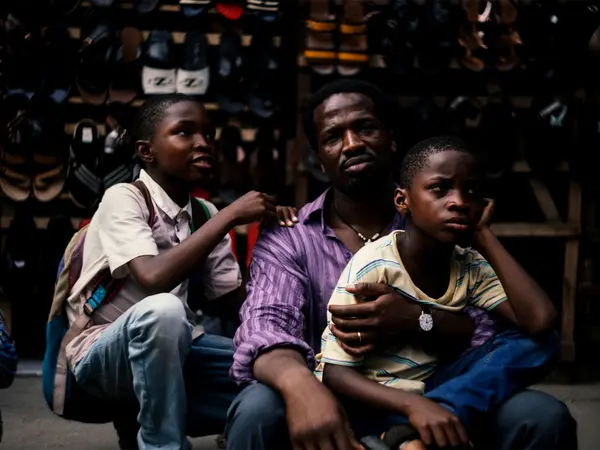
Akinola Davies Jr announces himself as the real deal with this mightily impressive and affecting debut.
The outskirts of Lagos, 1993: a harried father, Fola (Sope Dirisu), returning to his tumbledown home, makes the snap decision to scoop up his two bored, pre-teen sons and take them on a road trip into central Lagos to collect wages owed to him. He has an ulterior motive: so they may all be at ground zero when the results of a national election are announced and, all being well, M. K. O. Abiola will triumph over the ruling military junta and bring democracy and order back to Nigeria.
He proceeds with an element of caution, knowing that he has for too long been an absent father, earning money from a far-flung factory job (so he tells the boys) but has actually been moonlighting as a political lobbyist for Abiola. His duty of care extends to making sure that his sons have a better future, and in many ways this affecting and beautifully-judged first feature from Akinola Davies Jr is about a father wanting his kids to see first hand the fruits of his (often dangerous) labours and understand that he has been there for them on a national level, even if he hasn’t on a private one.
This entire review could be dedicated to the immense central performance by Sope Dirisu who, as the eternally conflicted father, is withholding a lot of information from his family for their safety. He also seems to have to alter personas with every new person he encounters. Initially, he’s a stern father who wants his boys (incredibly natural and funny performances by Chibuike Marvelous Egbo and Godwin Egbo) to understand a bit more about the country they’re living in, but perhaps not too much.
Soon he becomes the desperate grafter who urgently needs wages for upkeep; then he’s the shady political operative who people refer to as “Kapo” as he tucks a few notes in their pocket for survival. One thing’s for certain: he’s a pivotal, well-liked presence in the capital, emphasised by the fact that roving military police can’t stop staring at him as if they recognise him from somewhere
The first half of the film comprises a survey of Lagos in the 1990s, and through a landscape of severe socioeconomic contrasts he is able to give his sons a sense of the uphill battle that they face. They begin to see signs of the life he lives in the city, and sometimes the survival tactics he uses cut through his self-painted image as a righteous family man.
At the centre of a film is a dialogue scene on a beach in which the father leaves himself open for questioning and is able to impart both his wisdom and attempt to furtively cultivate a sense of national pride in his inquisitive offspring. Dirisu channels tenderness, but his indignation constantly bubbles beneath the surface. Yet their conversation is cut short by a gang of marauders suddenly hacking chunks off of a beached whale, and the film constantly leans on the interplay between the protagonists and the strange things occurring in the backdrop.
The direction by Davies Jr is absolutely top-notch, not just how he is able to capture the fine nuances of the actors on camera, but also how they are immersed into the chaotic melée of Lagos at this powderkeg moment. The plot ends up hinging on some strange coincidences in its final stretch, and the ending perhaps withholds a little too much detail for it’s on good, but otherwise this is a very fine picture on a formal and emotional level.
The film played as part of the Un Certain Regard strand at the 2025 Cannes Film Festival, and could’ve very much held its own in the main competition.
To keep celebrating the craft of film, we have to rely on the support of our members. Join Club LWLies today and receive access to a host of benefits.

Lynne Ramsay finds a kindred spirit in Jennifer Lawrence, joining forces for a blistering portrait of a woman on the verge of a nervous breakdown.
If you haven’t lived it, it’s hard to explain, that gnawing discomfort that makes you want to do something certified-capital-C loony-bin-admission Crazy. Walk into traffic or throw your body down the stairs or slash up your skin with a razor blade or bite one of your fingers off like a baby carrot. It’s like a lot of things. Like bugs playing house under your skin. Like the hum of television static after programming stops for the night. Like going out of your fucking mind. Times used to be that they’d just call you hysterical and throw you in an institution indefinitely; maybe try electroconvulsive therapy or a lobotomy to make you more agreeable. (I joke about lobotomies a lot with my other mentally ill friends. I guess the idea of removing a part of my brain to make me a little easier to manage is pretty funny, like that old Wanda Sykes gag about the detachable pussy.)
So here are Grace (Jennifer Lawrence) and Jackson (Robert Pattinson), transplants from New York who take on the ruin of his uncle’s old prairie home after he shot himself. He’s a musician, she’s a writer. They’re truly, madly, deeply in love, and soon enough baby makes three: a sweet, chubby-cheeked little poppet who gurgles and cries and babbles and does all the things babies do. Jackson goes back out to work, then brings home a dog that barks constantly and pisses on the floor. Grace plays with the baby and dances in her underwear and masturbates and drinks from sweating bottles of Budweiser in the summer heat. And Grace goes out of her fucking mind.
Ariana Harwicz’s novel ‘Die, My Love’ is a stream-of-consciousness assault on the senses; a nameless woman lives with her husband and baby and in-laws in a rural French farmhouse, and retains a tenuous grasp on reality. Her thoughts are violent and tragic and animal – she fantasises about a neighbour with a motorbike, about the creatures in the forest, about killing and being killed. It’s easy to understand why a filmmaker like Lynne Ramsay might be interested in adapting a text as wilfully offputting, as tragic and complex and feral as ‘Die, My Love’. And this filmable script – co-written with Enda Walsh and Alice Birch – doesn’t always work, certainly not with the same heft of Morvern Callar or You Were Never Really Here, frenetic and disjointed with lots of wriggling tendrils and not much interest in exploring more than a handful of them. (LaKeith Stanfield gets short shrift as Grace’s mysterious biker neighbour.)
But the cinema of Lynne Ramsay is cinema of the senses, raw and delicate and alive, like holding a butterfly cupped between your palms and feeling its wings beat against your skin. Jennifer Lawrence completely understands this, inhibiting Grace with a total lack of vanity as she crawls on all fours, as she violently wrecks a small bathroom, as she tries to come back into commune with her body after something as destabilising as bringing another person into the world. She’s never been better, vulnerable and terrible and totally unpredictable, matched gamely by the always compelling Robert Pattinson, utilised as a wet, sweaty, semi-useless man completely ill-suited for Grace’s needs. But a classic Wife vs Husband meltdown à la Scenes from a Marriage or Possession would be too tempting and familiar; the heart of Die, My Love is that Grace and Jackson do love each other, do want each other, underscored by the use of John Prine and Iris DeMent’s country classic ‘In Spite Of Ourselves’. Their romance is one of pushing and pulling, a dance you don’t learn the steps to so much as feel in the geography of your bones. And sometimes you go where the other can’t follow. Love is its own sort of psychosis.
While much will be made of Die, My Love’s gut-wrenching portrayal of postnatal mental illness, a little-studied and even littler-understood condition that makes witches out of women, the experience Ramsay captures in Grace’s story isn’t unique to those who have children or are ill in the aftermath of their birth. Psychosis is much bigger, much stranger and vicious, and while Grace is a new mother, her illness isn’t solely attributed to her son’s arrival. She adores him, even if she looks at him like he’s an alien. And how then, if you are psychotic, can you divorce your illness from your art? Grace’s husband, her mother-in-law and her well-meaning neighbours all keep asking how her writing is going. Grace tells them she’s quit. It’s less trouble than trying to explain blood comes easier than ink.
Ramsay articulates the inarticulate, here through her saturated blues, yellows, browns and greens, the colours of grief and sickness and rot…but also new life, summer skies, and hope. The Academy ratio is an homage to Repulsion and Rosemary’s Baby that gives the sensation of being boxed in (of climbing up the walls) and Seamus McGarvey’s cinematography renders the beautiful terrible and vice versa. Ramsay also contributes music to the film’s noisy, messy, intentionally untethered score, including the exquisite cover of Joy Division’s ‘Love Will Tear Us Apart’ that plays over the film’s credits – but Die, My Love isn’t a eulogy. It’s a forest fire, destructive, angry, hotter than hell. And when it burns out, something new springs out from the ground.
To keep celebrating the craft of film, we have to rely on the support of our members. Join Club LWLies today and receive access to a host of benefits.
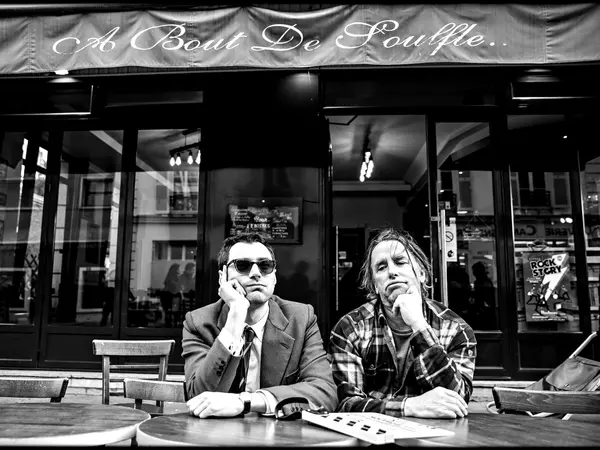
Richard Linklater's homage to the filming of Jean-Luc Godard's Breathless brings precious little new to the story of the New Wave.
It is ironic that Richard Linklater has chosen to homage a film carved out of spontaneous new techniques with one so mired in contrivances that it is impossible for it to breathe. To be fair, Breathless is the name of the game in this black-and-white reconstruction of the making of Jean-Luc Godard’s first film.
The year is 1959 and Cahiers du Cinema critic JLG is aware that he is amongst the only of his contemporaries not to have made a feature film. Claude Chabrol has. Éric Rohmer has. François Truffaut’s The 400 Blows is about to premiere at Cannes. (As Nouvelle Vague premiered in Cannes, the local audiences hooted and hollered.)
JLG wants to make a non-traditional film out of natural emotions and essential moments, meaning that he refuses to give actors a full script and, later, pioneers the jump-cut. There is hysterical resistance from his financier at every turn while his movie star, Jean Seberg (Zoey Deutch), is only prevented from pulling out by her manager husband. As we know, JLG was unflappably confident and Linklater arms him with an arsenal of bon mots that he deploys to silence objections. Guillaume Marbeck does an entertaining impersonation of the famous auteur, permanently sporting dark glasses and a nonchalant drone of a voice.
There are limited larks to be found in the ‘getting the band together’ procedural elements. A gimmicky approach to introducing all creatures great and small loses its charm faster than you can say “girl and a gun”. Fresh from Otto Preminger’s Bonjour Tristesse, Seberg is famous and sceptical. Untested boxer, Jean-Paul Belmondo (Aubry Dullin) is fresh and game. MVP is Matthieu Penchinat as DoP Raoul Coutard. Asked in reference to a specific shot composition if he has seen Ingmar Bergman’s Summer Interlude he replies with total sincerity, “No, I was in Vietnam.” Linklater is aware of the absurdity of making cinema your religion when there’s a world of pain out there, and yet in this parish it is a truth we hold to be self-evident.
This is a rare moment where the world beyond the production of Breathless is acknowledged and it stands out, not because movies about movie-making are inherently limited (see Fassbinder’s wonderful Beware of a Holy Whore and indeed – sorry to JLG – Truffaut’s Day For Night). The problem with making it the axis here is that the ‘will they won’t they pull this off?’ central tension is a moot point. There are no stakes because the destiny of Breathless is a foregone conclusion. So enjoyment here rests entirely upon how much you enjoy historical reenactments.
Full of inside cinema jokes while, on the flip side, offering a film history 101 class, Linklater has not worked through the contradictions in his approach. He pitches provocations to cinephiles (short films don’t count as films apparently!) while undertaking a doomed effort to charge the enterprise with tension. A Bout de Souffle is a canonical classic anointed as changing the course of cinema, a fact that drains all mystery out of JLG’s position within this story as a young, untested upstart.
To keep celebrating the craft of film, we have to rely on the support of our members. Join Club LWLies today and receive access to a host of benefits.
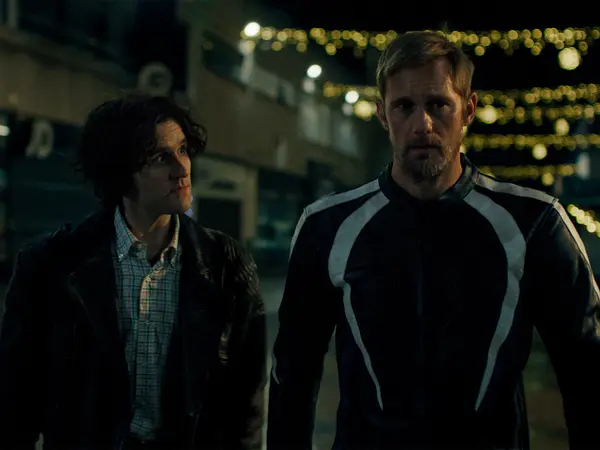
A meek young traffic warden embarks on a sexual odyssey with a taciturn biker in Harry Lighton's loose adaptation of Adam Mars-Jones' Box Hill.
Although based on the 2020 novel ‘Box Hill’ by Adam Mars-Jones, Harry Lighton’s Pillion is mostly unrecognisable from its source material, retaining only a few crucial details. Gone is the 1970s Surrey setting, along with the first-person narration and reckoning with queer identity at the height of the AIDs crisis. Kept are the names – Colin and Ray – and the latter’s ties to the local BDSM biker community, but where Mars-Jones’ novel skewed heartbreaking, this loose adaptation is broadly buoyant, as the mild-mannered traffic warden Colin (Harry Melling) finds himself entangled in a dominant/submissive relationship with the near monosyllabic Ray (Alexander Skarsgård), a gorgeous unknowable alien who seems to get exactly what he wants every second of every day without having to ask for it. And as unlikely as it seems when they first meet – one performing with his barbershop quartet in a pub, the other in his biker leathers, not looking up from a stack of Christmas cards he’s filling out – Ray wants Colin.
Colin is flummoxed by the attention but immediately game, accepting a written instruction to meet outside Bromley Primark on Christmas Day, much to the concern of his well-meaning parents (who insist Colin take the family’s long-haired dachshund with him for protection). What Colin lacks in worldliness he makes up for in enthusiasm. Ray, unreadable, sees potential, and quickly installs him in his spartan flat, where their sexual relationship begins in earnest. From here Colin is inducted into a world of leather, lube and delayed gratification; he takes to it like a duck to water.
Harry Melling has been doing consistently great work as a character actor, particularly in The Ballad of Buster Scruggs and Harvest, but Pillion marks his first bona fide leading role, and the delicate balance of Colin’s character is a testament to Melling’s skill. He’s a nervous, awkward sort, with a hangdog expression and one foot constantly in his mouth, but as he grows in confidence through his relationship with Ray, Colin comes into his own, understanding himself better through exploring his sexual desires. He’s the perfect foil to Ray, a towering monument of quiet machismo with just a glint of good humour, and the chemistry between Melling and Skarsgård in their tricky tightrope double act is essential to Pillion’s effective emotional core.
While some of the weight of Mars-Jones’ novel is lost by updating its time period and giving Colin a more supportive family, the biggest misstep comes in a changed ending, opting for an ambiguous end to Colin and Ray’s story. While the general lightness injected in ripples across Pillion is to the film’s credit, the final act threatens to reduce the poignancy of the central relationship by suggesting it’s quite replicable. Perhaps the intention is to indicate that Colin’s life doesn’t end with Ray (while it may have started with him) but the conclusion undermines the well-balanced mixture of tenderness and turmoil in both Lighton’s script and the two central performances.
Nevertheless, Pillion understands the excruciating vulnerability of vocalising desire both sexual and emotional, realised on-screen with some of the most erotic and uninhibited sex scenes in recent memory (with special credit to intimacy coordinator Robbie Taylor-Hunt). The boldness, nuance and humour with which Lighton navigates BDSM dynamics as well as Colin and Ray’s personal and joint complexities results in a film that’s frequently touching and surprising, less of an adaptation and more of a reimagining that compliments the source material rather than replicates it.
To keep celebrating the craft of film, we have to rely on the support of our members. Join Club LWLies today and receive access to a host of benefits.

An 11-year-old girl attempts to find a way to cope with her father's death in Chie Hayakawa's second feature.
Death seems to be an omniscient spectre and perennial fascination for promising filmmaker Chie Hayakawa. In her debut Plan 75, Japan’s elderly are encouraged to sign up for a euthanisation programme in an attempt to curb the country’s aging population. Dying is sold and commodified, and is as normalised as groceries. Though not remotely as dystopian, there’s a throughline to Hayakawa’s follow-up in its relationship with mortality: that death has become so embedded in everyday life that it’s almost unremarkable.
For 11-year-old Fuki (Yui Suzuki), she’s lacking the road map for grief when time is running out for her terminally ill father (a little-seen but always devastating Lily Franky). Her mother (Hikari Ishida) is so occupied with her busy career during 1980s Japan’s economic boom that she approaches funeral arrangements with the casualness of a business call. In one quietly devastating scene, Fuki’s father turns on the light of a closet to see mourning clothes hanging by the doorway. It’s as if his family is already so prepared for his imminent passing that he’s already gone.
Crucially, Renoir is framed through Fuki’s perspective, carried by the revelatory newcomer Suzuki. Grief is a difficult feeling to process, especially for a young child, and without anyone to lean on, she retreats to her own fantasies. Dreams collide with reality so frequently that it’s hard to parse what’s real in Fuki’s world – and Hayakawa’s restrained mode of filmmaking doesn’t differentiate between the two either. Inspired by a magician on TV, Fuki even begins testing her abilities in telepathy and hypnotism: perhaps magic can make sense of her situation.
Fuki’s own feelings about death seem almost apathetic – her teacher alerts her mother that she’s written an essay titled “I Want to be an Orphan” – but even then, she doesn’t want to experience it alone. Left to her own devices almost everyday, Fuki searches for connection in ways that swing from innocent to dangerous. She looks to classmates, neighbours, and art from the titular French impressionist. Later, she strikes up a conversation with a groomer over a dating phone line. Hayakawa treats it all with such a delicate hand that it can verge on becoming too light a touch. The film’s heavy ideas can feel like they’re not being given the weight they need, always keeping the emotion at a distance.
Still, few films have depicted coming of age quite like this. The first promotional stills released in the lead-up to Cannes are a clever misdirect: one features Fuki smiling and dancing against a clear blue sky, and you’d be forgiven for believing you’re in for a sweet journey of self discovery. Renoir does retain that summery bright colour palette, creating a startling contrast to the core darkness that permeates Fuki’s isolation. It’s a strange and oftentimes brutal portrait of a singularly curious child, left to wrestle with grief in her imagination when real life can’t provide the answers.
To keep celebrating the craft of film, we have to rely on the support of our members. Join Club LWLies today and receive access to a host of benefits.
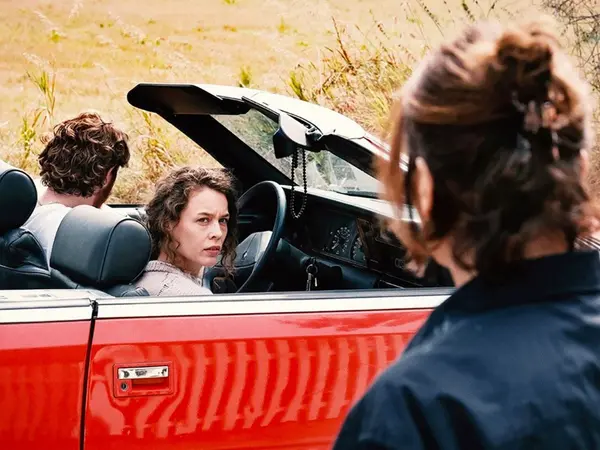
German director Christian Petzold delivers once again with this deviously-structured psychodrama starring his current muse, Paula Beer.
When sad-eyed music student Laura (Paula Beer) is involved in a car crash that leaves her boyfriend dead from an horrific head injury, she shows no signs of trauma or grief. In fact, with the intimation that she was plagued with interior suffering prior to the event, this moment appears to have jolted her back towards some semblance of calm reason. Betty (Barbara Auer), an older woman living alone in a country house on a quiet lane is the first on the scene, and comes to Laura’s aid even though she has been flung from the wreckage with only superficial scratches.
This being a Christian Petzold film, every frame comes drenched in the cool, clear waters of ambiguity, and even the very specific and strange manner in which the accident occurs leaves it open as to whether Laura herself may have caused it in a fit of emotional pique. She then hovers, ghost-like, into Betty’s house where she asks if she can stay for an undetermined amount of time. Without hesitation, Betty allows it, and you’re left to ponder why she would invite a discombobulated stranger to nestle under her wing.
As usual, Petzold draws in a number of artistic inspirations and touchpoints, then riffs around them without ever erring into anything as déclassé as homage. The title of the film is a reference to a piece by Maurice Ravel that Laura is practicing for a recital and that is heard a number of times on the car radio of Betty’s son, Max (Enno Trebs), who is quietly perturbed by her mother’s decision and Laura’s presence. As in the director’s previous films such as 2007’s Yella and 2014’s Phoenix, music acts less as an enhancer of mood than it does a trigger-point for dormant memories; a hypnotic tool that unlocks the enclosed recesses of the psyche – and that applies to both the characters in the film and the audience watching.
Another sneakily-deployed literary allusion comes in the form of Mark Twain’s ‘The Adventures of Tom Sawyer’, specifically the fable of how Tom hoodwinks his compadres not only into painting a fence for him, but paying him for the pleasure. Betty is first introduced painting the fence in her front garden, and she regales the story to Laura when she asks if she can help. Perhaps she does so to come clean early on and admit that she may be exploiting her visitor for an obscure (but possibly benign) ulterior motive.
As the story of Miroirs No. 3 unfolds with an intractable and wholly compelling internal logic, Petzold gravitates towards a twist which is too signposted and obvious to have any real bearing on what the film is actually about. Instead, its ramifications colour the intense final act in which Betty and Laura are given time to reflect on their experiences and work out how they will continue to live their lives. And, more importantly, will they learn not fall into the same traps as they did the first time around? Did this chance encounter in which the two protagonists are able to inhabit the roles of emotional surrogates for each other actually provide a form of performative therapy and consolation? Or is Laura – like in the old Otto Preminger movie – just a ghostly siren transfixing all who meet her? (Beer even looks identical to Gene Tierney, no?)
All of which is to say, no-one, absolutely no-one is doing it like Petzold. As with the titular Ravel piece, this is a work that is mellifluous, melodious and mysterious in equal measure. A Sphinx-like Beer, once again, seems to connect with her director on a level which transcends the purely professional, and through her economic yet forceful use of body language and expression, she makes certain that the film adheres perfectly to Petzold’s immaculate calculations.
To keep celebrating the craft of film, we have to rely on the support of our members. Join Club LWLies today and receive access to a host of benefits.

Harris Dickinson's fierce directorial debut is a poignant tale of a down-on-his-luck drifter, featuring a star-making performance from Frank Dillane.
It’s easy to feel invisible in a city of 8.8 million people – even more so if you’re one of London’s estimated 12,000 rough sleepers. Mike (Frank Dillane) seems to take it mostly in his stride; he’s figured out the best spot to hide his meagre possessions (behind two commercial bins) and only seems mildly irritated when he’s woken from his spot on the pavement by an over-zealous street preacher with a PA system. But to the legions of fast-moving commuters in East London, he might as well be a ghost. Even when Mike does receive a small gesture of kindness from a stranger, desperate and distrusting as he is, his instinct is to do something deeply cruel in response. So sets in motion the plot of Harris Dickinson’s Urchin, a contemporary tragedy that draws on the likes of Mike Leigh’s Naked and Agnés Varda’s Vagabond in its piercing observation of modern life on the fringes.
Dillane (also brilliantly nasty later this year in Athina Rachel Tsangari’s Harvest)is a remarkable discovery, totally at the heart of Dickinson’s script and lens. His puppy dog eyes and shaggy haircut project a certain softness; he’s boyish and charming in fits and bursts, clearly street smart and charismatic, but knocked down enough times that getting back up is that little bit harder each time. Mike’s obvious vulnerability in juxtaposition with his occasional violent outbursts evokes De Niro’s Travis Bickle with a dash of Kes, while Dickinson’s decision to give us only a few details about the circumstances that have led to Mike’s perilous existence encourages empathy without exception. There’s no real need to know how or why Mike got here; the details are largely immaterial to his situation. Yet Mike’s reluctance to confront his past (and his personal shortcomings) hardly help; time and time again, it’s Mike who trips himself up just as the ground ahead seems sure. His tendency to glaze over his own sadness or frustration with a placid grin is only effective for so long.
If a story about an unhoused young man trying to pick his way through the hellscape of the modern capital doesn’t sound very sunny, it’s true that there’s something deeply melancholy about the existence Mike is barely eking out, and his isolation is palpable and raw. But Dickinson – a talented comedic force on-screen in his own right – finds lightness there too, and a combination of sharp dialogue and excellent delivery from Dillane et al (including Dickinson himself as Mike’s sometime mate Nathan) keep the audience on their toes. Urchin is never relentlessly grim, even if it finds enough bleak moments that Leigh comparisons are well-earned. Nor is this a posturing ‘issue’ movie, peering down at London’s rough sleepers with a patronising pat on the shoulder. There’s a clear understanding of the forces that lead people to addiction and homelessness, and how without proper infrastructure and support, willpower can’t sustain recovery alone. Dickinson affords more tenderness to his protagonist than London is willing to, but it’s also clear Mike’s no angel (nor should he have to be to earn our empathy). Instead he’s familiar in his specificity, emblematic of thousands slipping through the cracks as those in power show more and more contempt for the most vulnerable.
As for Harris Dickinson, it’s only mildly galling to see how bloody good he is at everything he turns his mind to, here on writing, directing, producing (through his production company Devisio with Archie Pearch) and supporting actor duties, yet deftly refuting any vanity project allegations by virtue of creating a phenomenally impressive debut feature.
To keep celebrating the craft of film, we have to rely on the support of our members. Join Club LWLies today and receive access to a host of benefits.
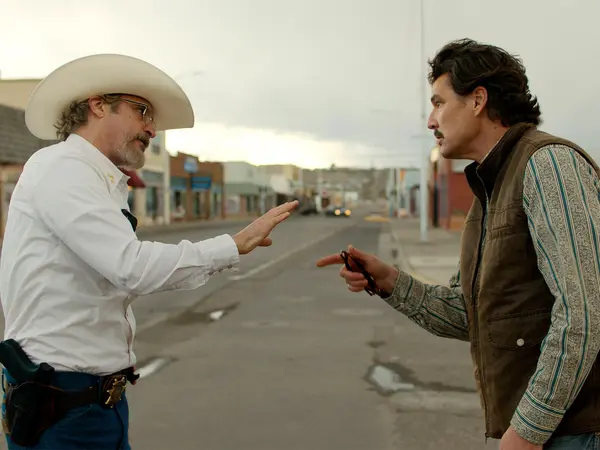
Everyone and everything has a target painted on their ass in Ari Aster’s gaudy portrait of American decline.
Up front: I am not the world’s biggest Ari Aster booster. You might even say I was a tad Ari-nostic about his over-committed and insistent works that, if nothing else, are coloured by the fact that the success of his 2018 feature debut, Hereditary, has allowed him to work freely from the traditional constants of the Hollywood machine.
With Eddington, it feels a little like he’s wound his own leash in a tiny bit following the aggressively indulgent, pseudo-Freudian clusterfuck that was 2023’s Beau is Afraid, but this new one comes across as if the filmmaker is trying once more to force a litany of good ideas, solid ideas and some bad ideas in a jar that just doesn’t have space to fit them all.
America was already some way down the road of auto-destruct by the year 2020, with President Donald Trump having already pounced on the convenient capacity of electronic media to obscure the nature of common-sense truth. In the sleepy township of Eddington, New Mexico, sheriff Joe Cross (Joaquin Phoenix) refuses to employ his state-mandated powers to enforce mask usage during the early days of the Covid-19 pandemic, seeing the global pandemic which laid waste to millions of lives as somebody else’s problem. No-one has it in Eddington, so maybe it doesn’t exist?
Incumbent mayor of Eddington, Ted Garcia (Pedro Pascal), meanwhile, demands that Cross put his unhelpful personal beliefs aside and promote public safety during this unprecedented moment. Though he may be responsible for slick, manipulative campaign videos and seems like an intellectually reliable and empathetic political candidate, Garcia, it transpires, is merely a pawn for the wider party, but also for shady big tech interests who want to open a resource-sapping server farm on his territory.
When Cross decides that his personal liberty has been tainted to the point of indignation, he decides on a whim to run a grassroots campaign against Garcia, opting to whip up his blindly receptive online-following with slander and back-biting rather than play by the rules. Meanwhile, his widowed mother-in-law Dawn (Deirdre O’Connell) has gone full QAnon with her voracious ingestion and parroting of online conspiracies, while his clearly-truamatised wife Louise (Emma Stone) is on an anti-paedophile jag with the help of Austin Butler’s tattoo’d rightwing svengali.
This is the basic set-up of the film, and across an admirably light-footed 2 hours and 15 minutes it charts the incremental (but perhaps inevitable) process of American degradation via its to-do list of sacred cow targets. These range from fervent 2nd Amendment champions, small government proponents and shady white supremacists to BLM protesters, White saviour complex types and even Antifa, who in this world are portrayed as an elite, well-funded commando unit posted by private jet to take down specific irritant targets. With Joe’s spiralling, ideologically-driven antics now receiving national coverage, he duly courts the ire of the Antifa enforcers.
Eddington is a deeply cynical film for deeply cynical times, and if you’re looking to find a hero to root for in this fucked-up fresco, then you need to keep on walking. Perhaps the closest we come to a locus for empathy is Micheal Ward’s newly minted police-sergeant Michael, who is trapped between working for a racist, ignorant, self-serving menace, and his white millennial ex-girlfriend who has at the front of BLM protests and wants him to join the as a Black officer who acknowledges the rot in the system.
This avowedly switched-on film is gorgeously shot by the great Darius Khondji and packed to the gills with easter-egg like gags which emphasise how the collective brain-rot that comes from obsessive posting has almost reached Defcon One. The film certainly is rare in actually offering an authentic depiction of social media and its noxious capabilities, even if its insistence on proving there’s no righteous moral that can’t be swiftly liquidated does become a little tiresome by the home stretch. Phoenix, as ever, commits to the bit and then some, and he keeps his gallon-hat sporting tinpot demagogue anchored with enough downhome charm to keep you second-guessing his motives.
I wouldn’t say that Ari Aster has entirely won me over with the full buffet, amuse bouche, entrées, two deserts, cigars, digestifs and petit fours that is Eddington, but the needle is set closer to zero for his next madcap, everything-and-the-kitchen-sink offering slides down the chute.
To keep celebrating the craft of film, we have to rely on the support of our members. Join Club LWLies today and receive access to a host of benefits.

A young Muslim woman struggles to reconcile her blossoming sexuality with her identity and family expectations in Hafsia Herzi's adaptation of Fatima Daas' novel.
For all its big themes, there is a vagueness to Hafsia Herzi’s anecdotal character study about a 17-year-old named Fatima (Nadia Melliti in her first screen role). Adapted from Fatima Daas’s autofiction novel ‘The Last One’, published in 2020, there is much to admire in the tenderness that saturates depictions of the nude female form and in the euphoria pulsing through a handful of lesbian club scenes.
It’s hard to shake the feeling elsewhere that specific characterisation has been sacrificed in order to dutifully service the identity markers of Fatima’s life. She is defined through the prism of being a queer Muslim navigating the transition between home with her Algerian parents and adulthood according to her own values in Paris. There is a little sense of how Fatima exists as a person unplugged from these headline tussles. We are told that she is a keen footballer, but it’s only in the final scene that we witness these skills. This is a character study about a character that remains out of view.
Divided into seasonal subheadings – Spring, Summer, Autumn and Winter – Herzi introduces Fatima in boisterous scenes with sisters at home. At school male friends talk loudly and graphically about (imaginary?) sexual encounters. When a quiet scene finally comes its consequences are louder still. She sneaks a meeting with her sometimes boyfriend who negs her for not dressing more femininely before suggesting marriage. The spectre of traditional patriarchal gender roles looms. Perhaps this is why Fatima is primed to fly at a gay classmate who correctly notices that she is of his tribe.
All the thanks he receives is a broken pair of glasses, nonetheless, his observation pushes Fatima into exploring the women-only section of dating apps. She gives a fake name and a fake nationality as she hoovers up experiences until a real life encounter with Ji-Na (Park Ji-Min, iridescent) opens her up to first love.
Mellit works overtime to emote something between the lines of a character required to be impassive and contained in most situations. Scenes of intimacy, dancing and a dream where she grinds to a halt at a swimming pool reveal a potential otherwise sublimated by a script overly preoccupied with moving us from A to B. There is a, perhaps appreciable, lack of trust in the audience to understand the cultural forces at play. Hence there are scenes unpacking everything from homophobia within traditional Islam to a list of what lesbians do for sexual gratification
The cost of the film’s need to spell out the conflicting elements of Fatima’s life is that she is not afforded the same gorgeous vitality that animates Ji-Na and a lesbian couple she meets in another season. This is a frustrating film that ticks all the boxes that make up a person without pumping in the oxygen that would make them come alive.
Herzi convinces that the out lesbian life is a rich one and that Algerian/French/Muslim culture is full of texture and nuance. The backdrops in La Petite Dernière are carefully wrought, it’s only the teenager herself who is crushed by the burden of all that she represents.
To keep celebrating the craft of film, we have to rely on the support of our members. Join Club LWLies today and receive access to a host of benefits.

Kristen Stewart makes her directorial debut with a rousing adaptation of Lidia Yuknavitch's memoir.
The transformative power of water lies at the heart of American writer Lidia Yuknavitch’s memoir, informed by her adolescent dreams of swimming being her escape from an abusive childhood home. The Chronology of Water tracks the tides of her life as she battles addiction, abuse, and the lingering scars from a sexually violent upbringing. It’s heavy material, and Yukanvitch’s stylised prose doesn’t naturally lend itself to adaptation, but it’s easy to see why her story appealed to Kristen Stewart for her directorial debut. Yuknavitch’s defiant spirit seems to mirror Stewart’s own kicking back against Hollywood for its repeated attempts to box her in.
Imogen Poots carries the weight of the film as Lidia, from a wide-eyed teenager clawing out from under her father’s thumb to a celebrated writer and English teacher, through turbulent romances, personal crises and her continued reckoning with the desperate sadness of her childhood. Water – in lakes, pools, bathtubs and tears – offers a source of physical and metaphorical cleansing (in the opening scene we see bright red blood swirl down a shower drain while Lidia cries in pain) and Stewart adopts the same five chapter structure as her source material: Holding Breath, Under Blue, The Wet, Resuscitations and The Other Side of Drowning. There’s a loose timeline in place, though the narrative slips and slides through Lidia’s memories, fragmented and shifting, as she tries to find order in chaos.
Stewart’s directorial debut doesn’t lack ambition; the opaqueness of the timeline and grainy, 16mm emphasise the dreamlike nature of Yuknavitch’s prose, though the film’s tendency to repeat images becomes a little tiring. The continual noise and narration also create a claustrophobic feeling that threatens to overwhelm the narrative, with little room given for the weight of Lidia’s words to breathe. If the intent is to create a film as stifling and chaotic as Yuknavitch’s story this is achieved, but the film sags under the weight of its many artistic flourishes.
But there’s a potent earnestness about The Chronology of Water – Stewart shows a deep empathy for her subject, and Yuknavitch’s memoir is transformed with an unapologetic confidence. Sex, violence, fear and joy: Lidia feels it all, and feels it all deeply. Her transformative experience working with Ken Kesey (Jim Belushi) is particularly tender; it’s here she finds confidence in her writing, while later, exploring her sexuality on her own terms finally allows Lidia the freedom her father tried desperately to deny. It’s an imperfect but compelling first feature, bolstered by Poots’ committed performance, even with the distracting bells and whistles of a filmmaker trying things out for the first time. But if this is a statement of intent about Stewart’s filmmaking future, there might be a truly great film in her yet.
To keep celebrating the craft of film, we have to rely on the support of our members. Join Club LWLies today and receive access to a host of benefits.

A young girl living in a sleepy Chilean mining town reckons with prejudice that emerges when a mysterious illness sweeps the residents in Diego Céspedes' modern western.
In striking opening credits, boiling copper pours from atop a grey mountain like lava, a sluggish, powerful current that exists as a dichotomy: the light it powers shines over the lands it’s made barren. This mesmerizing sequence is how we are introduced to Diego Céspedes’s atmospheric feature debut, The Mysterious Gaze of the Flamingo, where sex is also a powerful current and, in that, a dichotomy of its own.
It’s 1982 in a small mining village in Chile, where the men have two options for entertainment: violence or sex. More often than not, the two intertwine, aggravated by a lingering sense of shame associated with isolated corners of the world that were once unpopulated and suddenly filled to the brim with male labourers — adult women are scarce. Therein comes the cabaret run by Mama Boa, home to a lively, lovely group of crossdressers with bedrooms filled with a rotation of hungry chasers.
When entering Mama Boa’s house, all her daughters are reborn, baptized with a new name after an animal. Boa bestows the name Flamingo to one of her most beautiful girls, taken by her ever-long, gracious legs. Flamingos, the strikingly pink birds, begin to lose their colour in the nesting period, hormones taking away their one singular feature. But Flamingo the performer is the opposite: when baby Lydia turns up on her doorstep, she immediately steps into motherhood, becoming even more singular, fuller. Flamingo is a mother, but a bird, too, and to the men in the village, she is one to hunt.
Céspedes’s labyrinthine drama flirts with absurdism in building a reality where the dark sores that mark the skin of the men who cross paths with Flamingo are not a virus eating away at the body, but the evil consequence of a mysterious plague, transmitted through looking into each other’s eyes. Interestingly, the Chilean director also nests his debut within the lines of a classic Western, the miners fashioned as gunslinging baddies kicking at the creaking wooden doors of Mama Boa to wreak havoc in search of revenge — and a cure they know won’t come.
It’s a captivating exercise in capturing a specific social malaise, more specifically, how the AIDS epidemic was felt outside the bustling metropolis where conversations around queerness happened in still hostile but much more open forums by comparison. Seen mostly through the eyes of 12-year-old Lydia as she grapples with her mother’s curse, this often tender drama does not shy away from the brutality queer bodies are often subjected to but rebels against making it its gravitational centre. Despite the blood that stains dirt and skin alike, this earnest debut is quick to jump back to compassion, arms that hold one another with ease, laughter that echoes through shallow quarries, beauty that refuses to dim under the weight of ostracisation.
In its ambition to grab many things at once — both formally and thematically — The Mysterious Gaze of the Flamingo stands as if on the legs of its titular bird, a tad wobbly and unsure. But its wobbliness also makes it deeply interesting to look at. Angello Faccini’s stunning cinematography plays with depth to expand small crowded rooms as if entire universes and constrict the vastness of the desert to amplify its inescapability, and Céspedes populates these spaces with a mix of professional actors and first-timers. This assured decision allows not only for the rawness required from such an aching tale of found love and family, but that also turns this confident debut into a display for fresh talent — none more so than its promising young director.
To keep celebrating the craft of film, we have to rely on the support of our members. Join Club LWLies today and receive access to a host of benefits.

A 12-year-old boy at a water polo summer camp experiences the vitriol of his peers in Charlie Polinger's arresting feature debut.
To stand out as a teenager is to make yourself a target. The pack mentality that dominates most group settings for children renders conformity a survival imperative; Ben (Everett Blunck) understands this as a recent Boston transplant attending the Tom Lerner Water Polo Academy for the first time. He instantly notices that the rambunctious Jake (Kayo Martin) is the ringleader in their small all-male cohort, and the quiet Eli (Kenny Rasmussen) is the designated punching bag. Owing to a skin condition, Jake and his cronies have started a rumour that Eli has a contagious plague and continually ostracise him, yet Eli, at least on the surface, appears strangely unbothered by their bullying. Is his apparent placidity a symptom of his illness? Jake and co certainly believe so, while their well-meaning coach (a masterful performance of ineffectualness by Joel Edgerton) remains relatively ignorant to the barbaric interpersonal dynamics of his young wards.
Charlie Polinger’s feature debut deftly navigates the excruciating tensions of preteendom, but The Plague also captures something less overtly explored in cinema: the difficulty of navigating the world as a neurodivergent individual. Eli’s exclusion from the group due to his perceived difference is the more obvious part of this narrative, but Jake’s frustration at (and perhaps envy of) Eli’s refusal to conform is key to the story’s freshness. This illuminates a rarely discussed part of the neurodivergent experience, revealing the complex intersection of lower and higher support needs, yet this specificity is not exclusory; anyone who has experienced or indeed observed the social pecking order of childhood will likely recognise some element of The Plague, particularly given the stellar performances Polinger has captured from his young cast.
Taking a few cues from Julia Ducournau’s Raw and Bo Burnham’s Eighth Grade with a shade of Josephine Decker’s Madeline’s Madeline in its frantic, breathy sound design, a palette dominated by greens, blues, browns and greys creates a claustrophobic atmosphere in which a pubescent blow-up never feels very far away. It’s an impressive addition to the coming-of-age canon, a modern take on ‘Lord of the Flies’ that doesn’t pull its punches. While the lack of adult oversight for these feral pre-teens may raise an eyebrow, Polinger positions the audience squarely at eye level, and as a youngster it really can feel like you’re totally alone even surrounded by supposedly responsible adults. Yet Polinger also resists the temptation to offer trite messages of support or overt self-acceptance; the film’s conclusion stings like the chlorinated pool water the group spend hours splashing around in.
It’s an auspicious debut for Polinger, technically ambitious and fiercely observant of adolescent anxieties. Sink or swim, the scars of childhood last much longer than any summer school.
To keep celebrating the craft of film, we have to rely on the support of our members. Join Club LWLies today and receive access to a host of benefits.
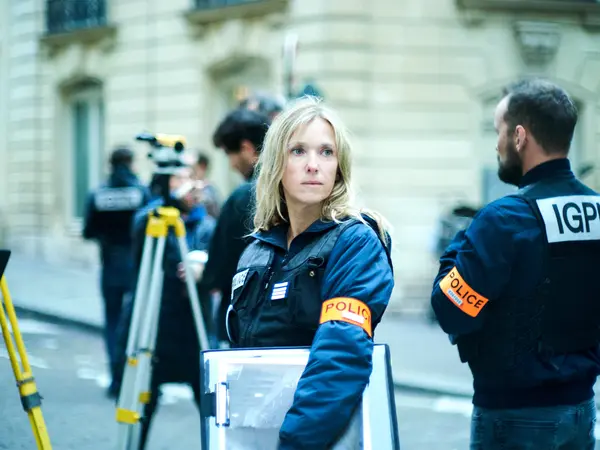
This robust if hardly revelatory police procedural coasts on an detailed and charismatic lead performance from Léa Drucker.
In late 2018, France ground to a halt on the back of the “gilet jaune” protests in which naffed-off labourers downed tools and expressed their grief on the streets. In Paris, members of the law-enforcement anti-terrorist brigade (BRI) were given a remit to tool up as quickly as possible and take whatever steps were necessary to calm tensions and suppress those protestors who were deemed a public menace. Get your helmets in from the local sports department store; pick up your anti-riot guns from the station.
This new film by reliable French director Dominik Moll zeroes in on the fate of a single teenager who, as the result of this open remit, is shot in the face and suffered life-altering brain damage as a result. Léa Drucker’s Stéphanie heads up an internal affairs unit – the person who polices the police – looking into the incident and the rogue band responsible for destroying this person’s life.
Yet it’s not so easy as just amassing the evidence and making the culprits pay. The BRI were riding a national PR high after their bravery following the 2015 siege of the Bataclan music venue, and so they now possess the image as France’s last line of defense against violent chaos. Stéphanie must tread carefully and cautiously in order to bring the net up and around her suspects, but all the members of the unit are united in their denial that any such malfeasance occurred on that fateful evening.
The first half of Case 137 is its most interesting, where Moll grinds down into the micro details of the investigation and showcases all the tools at Stéphanie and her team’s disposal. There are points where the film feels like an innovative desktop procedural where we snap back and forth between layers of windows, seeing videos of all different formats and resolutions and special data mapping software used to create a minute-by-minute sense of how things escalated up to and after this moment. It’s almost like how movies are made!
Yet in its second half, the film shifts into a more conventional moral debate about the issues that such a case throws up: whether police solidarity should be maintained in all instances so as to maintain the illusion of strength and order, or should the bad eggs be punished as a way to demonstrate that the police are not an impenetrable and monolithic unit who formulate the rules as they go along.
Drucker is reliably superb at the centre of the melee, often herself choosing to go off grid in order to secure vital evidence for her case. Which itself poses the question of how is this different to what the BRI officers did? The film ends up ultimately both-sidesing the question, suggesting that the deeper that you search for moral equilibrium and fairness in the eyes of all the relevant parties, the more complex things become. The film certainly canters along at a fair clip, and works as a fun police procedural, but it ends up spoonfeeding the issues rather than having them ascend naturally from the story.
To keep celebrating the craft of film, we have to rely on the support of our members. Join Club LWLies today and receive access to a host of benefits.

A phenomenal and unique portrait of a group of thrill-seeking ravers entering into a spiritual abyss in this extraordinary new film by Oliver Laxe.
Euphoria and devastation are the twin emotional poles that prop up the lopsided big top that is Oliver Laxe’ Sirât, a film about life, death, and music that’s not made for your ears but for your heart. The film opens with the building of a miniature ancient civilisation, the bricks and mortar being used are giant speakers that are being piled into skyscraper-like monoliths in the Moroccan desert.
A community of tattooed revellers who look like they have been sprung from a Mad Max movie have come to worship at the altar of rave, and the film sets its audiovisual template by having them commune with bass-heavy electronic music played at ear-splitting volumes.
Enter ambling, worried father Luis (Sergi López) and his pre-teen son Esteban (Bruno Núñez), handing out flyers for their missing daughter/sister, who left six months ago and was said to be at a desert rave like this one. They try not to harsh the other ravers’ mellow, but are ultimately futile in their search. But they do meet Stephy (Stefania Gadda), Josh (Joshua Liam Herderson), Tonin (Tonin Janvier), Jade (Jade Oukid) and Bigui (Richard Bellamy), who mention they’re going to be driving down to another rave in Mauritania, and so they follow the gang on their long road trip in a dinky people carrier.
Laxe is a filmmaker whose early work, such as We Are Not Captains and Mimosas, inhabited a more playful metacinematic territory, while his most recent Fire Will Come from 2019 saw him erring a little more towards conventional narrative and directly articulated themes. Sirât is his most expansive, unique and troubling (in a good way!) film, initially proposing something that would seem cosily approachable – a study of a makeshift family formed around the search for a missing woman – but pivots very suddenly into the realms of symbolic fable, where the base elements that have been served to us are suddenly made to look and sound completely different.
Bubbling in the background of the film is the suggestion of an apocalyptic societal meltdown, as the first rave we join is eventually raided by the military and everyone is told to disband and return to their homes. Our ad-hoc convoy never receive any direct threats from this ominous military presence while on their journey, but the rugged, forbidding landscape they travel across has been beaten in and manipulated by years of struggle and conflict. They drive over ghosts, history, the memories of failed attempts to built the type of community which they take for granted.
The gang are very easygoing and chill, and Luis and Esteban can’t help but form a deeper bond than one where they’re mere navigators. The pair are even a little amused when their gorgeous little dog Piu Piu is found convulsing having consumed a dose of LSD through one of the raver’s nighttime shits. Laxe turns certain character stereotypes inside out with these juiced-up ravers being considerate, philosophical, empathetic, humorous and completely in tune with other’s needs. It’s a vision of a roughshod utopia, self-built and nestled on the outer fringes of a civilisation that is crumbling in on itself.
Yet just like pulsing, repetitive EDM music, the tone, the key, the melody and the BPMs suddenly pivot to invite a different type of dance and a new set of movements. Paradise found is now paradise lost, as the treacherous route suddenly gets the upper hand and this fragile unit begins to disintegrate. If you’re reading anything about this film and it starts to go into too much detail about its extraordinary second half, then you should stop reading instantly, as part of the magic of this thrill is the expert way in which evolves into something that is both overwhelmingly (even comically) dark, but also offers the same rhapsodic bodily disconnect that the characters themselves are searching for.
Sirât is a truly staggering and major film, one that has to be seen to be believed – a masterful gambit of affectionate character and community building that mutates into a work that deals with the primal instincts of human survival and the idea that we create our own gods through the things that we chose to worship.
To keep celebrating the craft of film, we have to rely on the support of our members. Join Club LWLies today and receive access to a host of benefits.
On Truth & Movies this week, we discuss Final Destination Bloodlines and spoke its directors Zach Lipovsky and Adam Stein about the latest entry in the horror franchise and then the LWLies team will be talking us through the latest from the Cannes Film Festival.

On Truth & Movies this week, we discuss Final Destination Bloodlines and spoke its directors Zach Lipovsky and Adam Stein about the latest entry in the horror franchise and then the LWLies team will be talking us through the latest from the Cannes Film Festival.
Joining host Leila Latif are Hannah Strong and David Jenkins.
Truth & Movies is the podcast from the film experts at Little White Lies, where along with selected colleagues and friends, they discuss the latest movie releases. Truth & Movies has all your film needs covered, reviewing the latest releases big and small, talking to some of the most exciting filmmakers, keeping you across important industry news, and reassessing great films from days gone by with the Truth & Movies Film Club.
Email: truthandmovies@tcolondon.com
BlueSky and Instagram: @LWLies
Produced by TCO

Rosamund Pike and Matthew Rhys navigate parental fears in Babak Anvari’s gripping yet shaky psychological thriller.
Dread is a constant in this Babak Anvari directed chamber piece mostly set inside a car on a late night journey. Hallow Road is written by William Gillies and stars Rosamund Pike and Matthew Rhys as parents who are hurriedly rushing to aid their daughter Alice (the voice of Megan McDonnell over the phone) who has been involved in a car accident nearby. Playing out as part psychological chiller and part supernatural horror, it navigates parental fears and family secrets in a sinister liminal space.
The opening scene presents the aftermath of a family encounter in forensic detail. The loud ticking of a clock, a paramedic work-pass idly strewn in the hallway, the incessant beep of a smoke alarm when the battery has run low, and Rhys’ Frank passed out on his desk. Pike’s Maddie answers a call from Alice who is in distress. This is all shot on 16mm film. As soon as the couple jump in their car for a nightmarish drive to rescue their daughter the camera switches to digital.
The human drama works exceptionally well thanks to the talented trio of cast members, but the supernatural elements are so heavily signposted they distract from the emotional weight of the personal demons haunting the couple. Pike’s paramedic has grown distant from her husband and is struggling at work, while Rhys is upset at Alice for her behaviour involving a boyfriend who he doesn’t approve of. Both of them want to do what is best for their daughter but their differing moral responses to her situation create an atmosphere of unease.
Anvari’s nifty camerawork in the car reflects the couple’s state of mind. Tight angles, claustrophobic close-ups and the switching POVs work well to create twitchy, edge-of-your- seat viewing. Technically the editing is a marvel and the sound design is turned up to eleven for bone-crunching intensity. The screenplay too builds mystery surrounding an argument, which is eked out in a taut and credible fashion. Pike and Rhys’s performances are set to panic mode and it’s their fraught dynamic that drives the narrative forward. A resuscitation sequence in particular draws out their desperation in a novel way. There are some clever decisions taken in how the dual dilemma plays out but as soon as the film switches gears into a supernatural fairy-tale, with the couple literally getting lost in the woods, it loses potency.
The elliptical approach of the screenplay is less disorientating than something like Nicolas Roeg’s Don’t Look Now which dealt in similar thematic territory. The allegory is blindingly obvious from the very beginning which scuppers a reveal later on down the road. Formally, the initial set-up recalls Jeremy Lovering’s In Fear or Steven Knight’s Locke and it ends up exploring a comparable breakdown in communication between a family. Gillies’s script asks compelling questions about the lengths parents will go to in order to protect their child but cementing together two genres is a difficult task and it’s one that doesn’t entirely work due to the screenplay’s shaky foundation.
To keep celebrating the craft of film, we have to rely on the support of our members. Join Club LWLies today and receive access to a host of benefits.
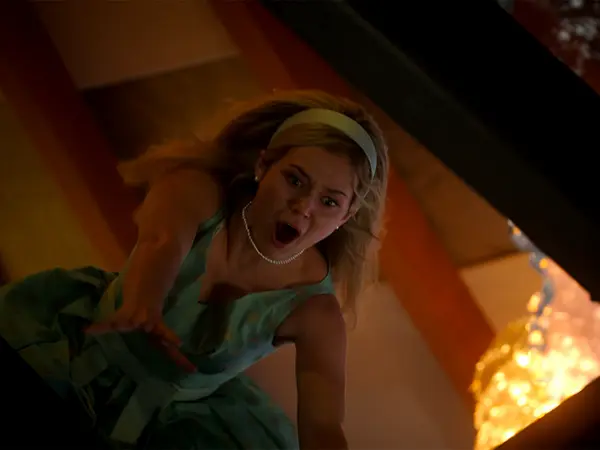
Death comes a-calling once more in this long-overdue sixth instalment into the most morbid horror franchise around.
It’s now 25 years since Fly 180 departed JFK airport bound for Paris and promptly blew up above the New York skyline. In the interim, countless unfortunate souls have perished at the hands of the Final Destination franchise in myriad creative ways. Logs, lifts, pool drains and tanning beds are just a few of the unlikely culprits for some of the most memorable on-screen deaths in New Line Cinema’s long-running death-obsessed series, which last received an instalment in 2014. But the sick souls who love watching death at work can finally rejoice: he’s back and more bloodthirsty than ever.
Zach Lipovsky and Adam Stein serve as co-directors – a duo hitherto best known for their work of 2018’s indie thriller Freaks and, er, the live-action Kim Possible film. But they’re joined by Guy Busick and Lori Evans Taylor on script duties, with Busick having had a hand in numerous recent horror smashes including Ready or Not, the 2022 Scream reboot, and last year’s vampire home invasion breakout Abigail. But for all the slight unknown quantities at play with Bloodlines, there was one green flag from the off: the return of franchise totem Tony Todd, who sadly passed away in 2024 from cancer, after production had wrapped.
Todd returns as William Bludworth, the baritone coroner who has a storied history with death, one of the few people within the Final Destination universe who understands the rules of the sick and twisted game. His role here is small, but brings with it a sense of poignancy, not least because it seems like a fitting tribute to a horror icon (and decidedly more than he was afforded by the Academy during this year’s Oscars In Memorium).
But from the old to the new: Bloodlines opens on a sky-high restaurant in 1968, as a young couple attempt to score a table. If you know anything about Final Destination, it’s that the opening scene of the film will always unravel into gory chaos, and that’s very much the case here. (No prizes for guessing how a restaurant with a glass floor atop a needle-thin tower might be a prime setting for some carnage.)
We smash cut to the present, as college student Stefani Reyes (Kaitlyn Santa Juana) awakens screaming from a recurring nightmare. Deeply disturbed by her hyperrealistic gory dreams, she sets out to uncover some tragic familial history, alongside her younger brother Charlie (Teo Briones) and cousins Erik (Richard Harmon), Julia (Anna Lore) and Bobby (Owen Patrick Joyner).
Let’s not beat around the bush. If you’ve seen any (or all) of the Final Destination films, you probably know that they follow a certain formula. The perverse pleasure that comes from these films is rooted in their familiarity. Death is always coming, when just don’t know how or when. As the Final Destination films have piled up like so many bodies, so has the Rube Goldberg machine quality of their executions. Here even a humble leaf blower becomes a harbinger of doom.
There’s no hope of Final Destination: Bloodlines converting any franchise agnostics – this is a supersize portion of what fans have come to know and love. Yet somehow, where fan service is usually considered a negative, here it feels affectionate and satisfying. There’s no Marvel-esque attempt to spin Final Destination out into various sub brands, and the humour remains as sick and twisted as ever. The acting too is ropey at best (aside from standouts Todd and Richard Harmon, as the sardonic tattoo artist Erik) but even that seems to work within the context of this schlocky delight. Be warned, though: you may never look at an MRI machine in the same way again.
To keep celebrating the craft of film, we have to rely on the support of our members. Join Club LWLies today and receive access to a host of benefits.

Amalia Ulman flexes her satirical writing chops, but her latest would have benefitted from more Chloë Sevigny and Simon Rex.
How do you follow up an acclaimed debut? Amalia Ulman’s answer is to commit to satirical absurdism wholeheartedly. Following her 2021 mother-daughter comedy El Planeta, Ulman’s Magic Farm sees the director return to her birthplace of northern Argentina for a farcical tale of a self-absorbed VICE-esque film crew descending on a rural community to profile a local, bunny-ear-wearing musician. However, they soon realise they’re in the wrong country (it didn’t occur to their producer that there’s more than one San Cristobal) and must scramble to amend their catastrophic error.
Casting herself as Spanish-speaking Elena, Ulman’s character stands apart from the outsiders as a native speaker. She’s repeatedly caught in the middle, translating for the kind-hearted locals and the crew as they fabricate a viral trend to save the documentary. Elena is part of the junior crew members alongside wannabe cowboy Justin (Joe Apollonio) and Alex Wolff’s whiny Jeff “scheming little bitch” Berger who brings boundless physical comedy, sprawling over every soft surface and cowering in corners in an attempt to escape the mess he’s got himself in. Then there’s apprehensive TV host Edna (Chloë Sevigny) and her husband and producer (Simon Rex).
Though Rex and Sevigny’s appearances are sparse, Ulman has plenty up her sleeve with the younger trio holding down the film’s diverging subplots of a secret pregnancy, a sexual harassment scandal and the assembly of locals into a fictional religious cult. The film’s abstract sense of humour naturally stems from the latter and the surreal situations that arise. Cumbia music and Latin American cultural nuances sprout from Ulman’s connection to the country and, like her character, her directorial voice guides viewers, translating as she goes but refusing to spoon-feed easy answers.
One of Magic Farm’s most compelling narrative branches is an omnipresent health crisis that looms over the film. Locals, including a bemused hostel manager (Guillermo Jacubowicz) and accidental documentary saviour Popa (Valeria Lois), murmur about undrinkable tap water and radio debates on the correlation between reproductive disorders and the toxic herbicides sprayed on fields. This is the real story, one that they can’t (or refuse to) see. The ignorant American archetype is prodded playfully, but there’s a wider comment here about how pressing stories can easily fly under the radar.
Cinematographer Carlos Rigo Bellver tracks these bumbling Americans down winding dirt roads and through colourful homes, chronicling their surreal expedition with equally hypnotising imagery. Ulman’s performance art background informs the film’s optical oddities, like a 360-degree camera, a visual distortion that places characters on a planet of her own creation, a blurred fish-eye effect and a ‘dog cam’ GoPro. Like a visual awakening, these vibrant images interrupt when the script veers towards convention. Magic Farm may not be a blanket crowd pleaser, but Ulman’s smart writing lands in a deeply optimistic place about the pure magic of human connection.
To keep celebrating the craft of film, we have to rely on the support of our members. Join Club LWLies today and receive access to a host of benefits.

Ukrainian filmmaker Sergei Loznitsa returns with this dark tale of Stalinist oppression that is very relevant for these current times.
Innocent people nabbed from their homes and imprisoned under false pretences. Terror-driven interrogation methods employed to secure phoney confessions. Revolting, filth-caked jail cells that wouldn’t be fit for your grandma’s old stink hound, let alone a prize academic. Sweeping, instant punishment for anyone who does not tow the party line. No, not America in 2025, but Russia in 1937 at the height of Stalin’s voracious and sweeping purges – his attempt to cauterize what he considered to be the festering wound of opposition.
Ukrainian filmmaker Sergei Loznitsa’s new paranoiac drama is adapted from a novella by Georgy Demidov, a Russian physicist who was forced to work in a Siberian gulag for much of Stalin’s reign. It follows an angelic young prosecutor named Kornyev (Aleksandr Kuznetsov) who responds to a note he receives on a folded piece of cardboard and penned in blood that contains a plea for help from a man who once lectured him at University.
Sincerely believing that his slightly elevated status will allow him to walk between the raindrops of the ever-watchful secret police, he takes his hat, coat and briefcase and manages to talk his way into the cell of his old charge Stepniak (Aleksandr Filippenko), on his last leg from ritual beatings and humilations. Loznitsa prolongs the journey from entrance to cell, as Kornyev is glanced top-to-toe by various guards and overseers, many of whom seem quite amused at his bald-faced moxie.
Kornyev, meanwhile, never once raises his voice or does anything that could be considered openly challenging, and so he’s eventually awarded his visitation. And yet it’s clear from the off that it’s unlikely that he will come out of this situation with his righteous sense of morality allowed to operate in public spaces. He sincerely believes that the pen is mightier than the sword, and that’s all very well until someone attacks you with with a massive sword.
Loznitsa’s lackadaisical film comprises three intimate set pieces based around extended and poetically-literate dialogue scenes. In between these moments, we see shots of Kornyev waiting and often dozing off. He fights with patience against this unseen foe, yet his naivety is all too conspicuous when it comes to believing for even a second that he might succeed in his well-meaning odyssey against the all-encompassing power structure.
Two Prosecutors offers a fairly standard critique of the bureaucratic superstate in which there is always someone a few steps ahead ready to stomp you under its boot heel. Shot in the oppressively boxy 1.37:1 aspect ratio, the film is beautifully framed, blocked and edited, with editor Danielius Kokanauskis in particular locating a series of hypnotic, pendulum-like rhythms in the extended conversation sequences.
Yet as serious and prescient as the film may be politically, it feels too much like a quaint variation on a story that’s been told many times before (not least by Loznitsa himself!), all likely herded under the clichéd thematic banner of “Kafkaesque”. It’s a supremely well-made piece of work whose function and message never quite manage to transcend the prosaic. Still, in the strange times we’re currently living through, maybe it’s worth sounding that necessary siren one more time for luck.
To keep celebrating the craft of film, we have to rely on the support of our members. Join Club LWLies today and receive access to a host of benefits.

We delve into the juicy screen offerings that are coming to the capital this June, from premieres to industry panels and more.
For nearly four decades the city of Austin, Texas, has played host to the SXSW festival, a massive multi-tendrilled celebration of film, music, tech, live events and general all-round good vibes.
That’s a long time to be afflicted with extreme FOMO – and so to soothe our festivalgoing ills, the good folks at SXSW have struck up a new iteration of the festival, which takes place from 2-7 June in and around East London.
Although the inaugural SXSW London will offer up everything its vaunted predecessor does (and probably a little more), here at LWLies towers we’re especially interested in the Screen programme, and it’s one that we’re pleased to see includes a range of hot titles from across the globe.
The festival has snagged itself a world premiere for its opener in the form of Steven Leckart’s Stans, whose name derives from the classic Eminem track of the same name which darkly satirised the life of an obsessive fan. It’s a documentary not only about the man himself, but also those who have dedicated their lives to repping for him.
Horror guy Mike Flanagan has made a bit of a name for himself as an expert adapter of Stephen King, and he returns for his third bite of the cherry with The Life of Chuck starring Tom Hiddleston. The film is not your usual grizzly King fare, and focuses on the denizens of a small American town and the solace they seek in the face of certain death.

We’re big fans of the British writer/director Tom Kingsley, and so it’s a thrill to see his newest and biggest work, Deep Cover, playing in the Centrepiece Gala slot at the festival; it’s a London-set heist thriller with a dash of comedy and starring Orlando Bloom and Bryce Dallas Howard.
Elsewhere, there’s the UK premiere of the 12-part ITV serial, What It Feels Like For a Girl, there’s Olivia Cappuccini’s Love & Rage: Munroe Bergdorf, a profile of the pathfinding trans activist, and also the world premiere of upcoming series, The Institute, based on a novel by (that guy again!) Stephen King.
And on top of all that, there’s a film competition strand with seven key titles vying for a prize and coming from locales such as Spain, India, Switzerland, Australia, Turkey, Lesotho and the US. It’s a huge and diverse programme, covering features, shorts, series and new XR work, so tonnes and tonnes to dive into and discover.
Oh, and we’re hosting our very own panel event all about the rise of physical media in the digital age, with a special focus on boutique Blu-ray labels in the UK. Please do join us for that on Friday 6 June at Rich Mix from 4.30pm.
To see the full SXSW London programme and to book tickets, visit sxswlondon.com
posted by ssss @ June 16, 2025
0 Comments


0 Comments:
Post a Comment
Subscribe to Post Comments [Atom]
<< Home